Overview
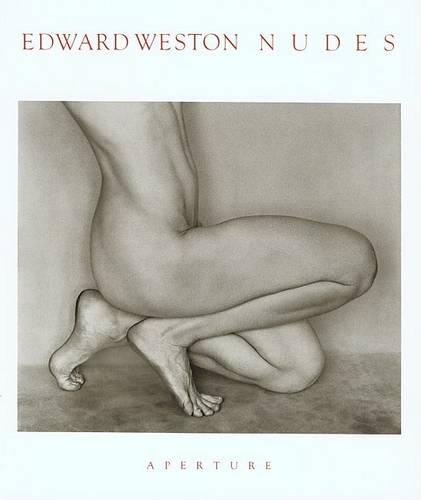
"Edward Weston was born in Highland Park, Illinois, in 1886, and began his career as a door-to-door portrait photographer in 1906. After a spell in Mexico City during the early 1920s--where he ran a studio with Tina Modotti--he moved to California and commenced the work for which he is most famous: close-ups of nature, nudes and landscapes. This volume celebrates Weston's nudes, of which Hilton Kramer wrote: ""To Weston's eye... the landscape of the human body was an unending revelation of forms both voluptuous and abstract. His genius as an artist lay in his ability to respond to both with equal passion."""
Full Product Details
Author: Edward Weston ,
Charis Wilson
Publisher: Aperture
Imprint: Aperture
Edition: New edition
Dimensions:
Width: 24.40cm
, Height: 0.80cm
, Length: 29.30cm
Weight: 0.690kg
ISBN: 9780893815325
ISBN 10: 0893815322
Pages: 120
Publication Date: 15 June 2005
Audience:
College/higher education
,
Professional and scholarly
,
General/trade
,
Undergraduate
,
Professional & Vocational
Format: Paperback
Publisher's Status: Unknown
Availability: In Print

Limited stock is available. It will be ordered for you and shipped pending supplier's limited stock.
Reviews
To Weston's eye . . . the landscape of the human body was an unending revelation of forms both voluptuous and abstract. His genius as an artist lay in his ability to respond to both with equal passion. --Hilton Kramer, the New York Times <br> It was as though the things of everyday experience had been transformed for Weston into organic sculptures, the forms of which were both the expression and the justification of the life within. The exhilarating visual purity of Weston's work is the product of a deeper achievement: He had freed his eyes of conventional expectation, and had taught them to see the statement of intent that resides in natural form. --John Szarkowski, Looking at Photographs <br> Edward Weston understood thoughts and concepts which dwell on simple mystical levels. His work--direct and honest as it is--leaped from a deep intuition and belief in the forces beyond the apparent and factual. He accepted these forces as completely real and part of the total world of man and nature, only a small portion of which most of us experience directly. . . . And it was Weston who accomplished more than anyone, with the possible exception of Alfred Stieglitz, to elevate photography to the status of fine-art expression. --Ansel Adams<br>
"""To Weston's eye . . . the landscape of the human body was an unending revelation of forms both voluptuous and abstract. His genius as an artist lay in his ability to respond to both with equal passion.""--Hilton Kramer, the ""New York Times"" ""It was as though the things of everyday experience had been transformed for Weston into organic sculptures, the forms of which were both the expression and the justification of the life within. The exhilarating visual purity of Weston's work is the product of a deeper achievement: He had freed his eyes of conventional expectation, and had taught them to see the statement of intent that resides in natural form.""--John Szarkowski, ""Looking at Photographs"" ""Edward Weston understood thoughts and concepts which dwell on simple mystical levels. His work--direct and honest as it is--leaped from a deep intuition and belief in the forces beyond the apparent and factual. He accepted these forces as completely real and part of the total world of man and nature, only a small portion of which most of us experience directly. . . . And it was Weston who accomplished more than anyone, with the possible exception of Alfred Stieglitz, to elevate photography to the status of fine-art expression.""--Ansel Adams"