Overview
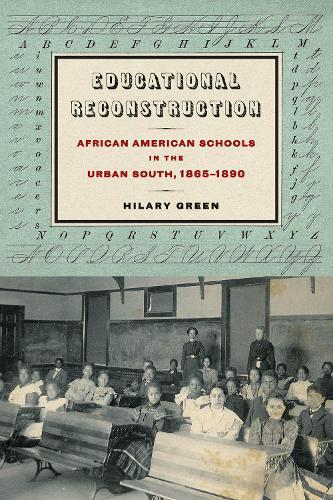
Tracing the first two decades of state-funded African American schools, Educational Reconstruction addresses the ways in which black Richmonders, black Mobilians, and their white allies created, developed, and sustained a system of African American schools following the Civil War. Hilary Green proposes a new chronology in understanding postwar African American education, examining how urban African Americans demanded quality public schools from their new city and state partners. Revealing the significant gains made after the departure of the Freedmen's Bureau, this study reevaluates African American higher education in terms of developing a cadre of public school educator-activists and highlights the centrality of urban African American protest in shaping educational decisions and policies in their respective cities and states.
Full Product Details
Author: Hilary N. Green
Publisher: Fordham University Press
Imprint: Fordham University Press
Dimensions:
Width: 15.20cm
, Height: 2.30cm
, Length: 22.90cm
Weight: 0.454kg
ISBN: 9780823270118
ISBN 10: 0823270114
Pages: 272
Publication Date: 01 April 2016
Audience:
Professional and scholarly
,
Professional & Vocational
Format: Hardback
Publisher's Status: Active
Availability: Manufactured on demand

We will order this item for you from a manufactured on demand supplier.
Reviews
. . . A significant contribution to our understanding of the long Reconstruction era, and to the origins of Booker T. Washington's ascendancy.. --Mike Fitzgerald, St. Olaf College
Green's book says something important. Even after Reconstruction ended in Richmond and Mobile, black pressure still secured major changes in the scope of public education and the composition of the teaching staff. In this arena, the 1870s and 1880s look like a time when community mobilization could still get results, even from political opponents. This is a significant contribution to our understanding of the long Reconstruction era, and to the origins of Booker T. Washington's ascendancy. -Mike Fitzgerald, St. Olaf College
... A significant contribution to our understanding of the long Reconstruction era, and to the origins of Booker T. Washington's ascendancy. -- -Mike Fitzgerald Green, by providing so much detail, has given today's urban schools activists a road map for change and perhaps the motivation to believe that their work will have a significant impact despite the naysayers and those who do not value the education of African American youth. * History of Education * Green's revised chronology of Reconstruction and meticulously researched book increases our understanding of the postwar efforts made to advance African American education. It motivates readers to want to learn more on the subject and should be required reading of anyone interested in our American past, African American education, and how ordinary people can do extraordinary things even when given only the slimmest of chances. * History of Education Quarterly * By providing a municipal view of African Americans' roles in shaping southern public schools during and after political Reconstruction, Green sheds important light on the factors that determined the extent of educational progress. * The Journal of Southern History * During this twenty-five-year-period in the post-Civil War era, the credo that education was a right of citizenship informed African American activism. African Americans remained resilient and adaptable as they fostered networks and alliances. Educational Reconstruction is thus a timely reminder of the power of education to bring about individual, collective, and societal transformation. * Journal of the History of Childhood and Youth * In addition to her tenacious primary research, Green also distinguishes herself with her organized and accessible prose. * Journal of African American History *
Green, by providing so much detail, has given today's urban schools activists a road map for change and perhaps the motivation to believe that their work will have a significant impact despite the naysayers and those who do not value the education of African American youth. * History of Education * ... A significant contribution to our understanding of the long Reconstruction era, and to the origins of Booker T. Washington's ascendancy. -- -Mike Fitzgerald
... A significant contribution to our understanding of the long Reconstruction era, and to the origins of Booker T. Washington's ascendancy.. --Mike Fitzgerald, St. Olaf College
Author Information
Hilary N. Green is the James B. Duke Professor of Africana Studies at Davidson College. A distinguished scholar, her research explores the intersections of race, memory, and education in the post–Civil War American South. She is the author of Educational Reconstruction: African American Schools in the Urban South, 1865–1890, co-author of the NPS-OAH Historic Resource Study of African American Schools in the South, 1865–1900, and co-editor of The Civil War and the Summer of 2020 (Fordham).