Overview
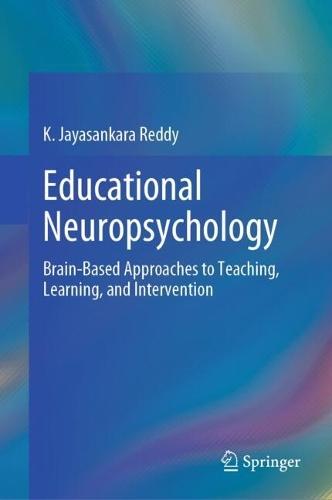
This book is a very comprehensive and practice-oriented guide that bridges the gap between cognitive neuroscience, psychology, and education. In order to effectively serve diverse learners, the book examines how insights from brain research might be utilized and improved in training, classroom procedures, teaching and learning tactics, and intervention models. This handbook offers educators, school psychologists, education psychologists, neurologists, neuropsychiatrists, researchers, and education students easily understandable frameworks and evidence-based tools for implementing brain-based teaching and learning principles in practical educational settings. It does this by drawing on the most recent findings in neuropsychology and cognitive neuroscience. The book is organized into four key units: foundational brain science for educators, brain-compatible teaching and learning strategies, neuropsychological perspectives on learning differences, and future directions in educational neuropsychology. Topics include executive function, memory, higher order cognitions, emotional regulation, neurodevelopmental disorders, and the impact of trauma on learning. It also addresses the integration of assessment and intervention, and emphasizes collaborative approaches between educators and healthcare professionals. By demystifying complex neuropsychological concepts and translating them into actionable strategies, the book empowers professionals to make informed, inclusive, and scientifically grounded decisions that improve student outcomes. This topic is of growing importance as the education field increasingly recognizes the value of interdisciplinary collaboration and neuroscience-informed practices. Amid rising concerns about student mental health, learning disabilities, and the need for personalized instruction, this book offers timely and practical guidance. The primary audience—educators, clinical practitioners, education administrator, and graduate-level students—will find this resource indispensable for its clarity, depth, and direct application to daily professional practice. Whether used as a reference, training manual, or academic text, Educational Neuropsychology meets the urgent need for a resource that aligns cognitive science with educational equity and innovation.
Full Product Details
Author: K. Jayasankara Reddy
Publisher: Springer Nature Switzerland AG
Imprint: Springer Nature Switzerland AG
ISBN: 9783032119902
ISBN 10: 3032119901
Pages: 521
Publication Date: 07 April 2026
Audience:
College/higher education
,
Professional and scholarly
,
Tertiary & Higher Education
,
Professional & Vocational
Format: Hardback
Publisher's Status: Forthcoming
Availability: Not yet available

This item is yet to be released. You can pre-order this item and we will dispatch it to you upon its release.
Author Information
Dr. K. Jayasankara Reddy is a distinguished Professor of Neuropsychology and Cognitive Neuroscience and currently serves as the Dean of the School of Social Sciences at Christ University, Bangalore, India. He earned his M.Sc. and Ph.D. in Psychology, specializing in Neuropsychology, from Sri Venkateshwara University, Tirupati, and completed a postgraduate program in Clinical Neurophysiology from the Department of Neurosciences at Sri Venkateshwara Institute of Medical Sciences. With over 25 years of academic and clinical experience, Dr. Reddy has guided numerous doctoral and M.Phil. scholars and has an extensive publication record in peer-reviewed journals. His research interests encompass cognitive neuropsychology, developmental neuroscience, and the integration of Eastern and Western perspectives in neuropsychological practice. Dr. Reddy has received multiple accolades, including the Indian School Psychology Association (InSPA) – P K Subaraja Trust Best Performance Award and the National Stress Management Research Award from the International Stress Management Association (ISMA). He is actively involved in academic councils and editorial boards, contributing significantly to the advancement of neuropsychology and education in India.