Overview
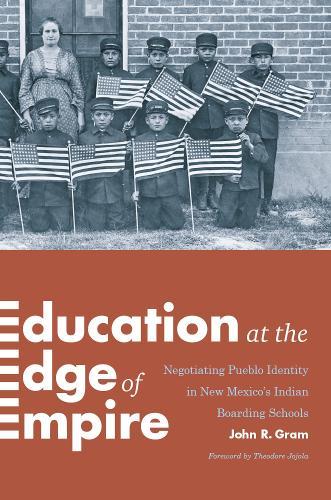
For the vast majority of Native American students in federal Indian boarding schools at the turn of the twentieth century, the experience was nothing short of tragic. Dislocated from family and community, they were forced into an educational system that sought to erase their Indian identity as a means of acculturating them to white society. However, as historian John Gram reveals, some Indian communities on the edge of the American frontier had a much different experience-even influencing the type of education their children received. Shining a spotlight on Pueblo Indians' interactions with school officials at the Albuquerque and Santa Fe Indian Schools, Gram examines two rare cases of off-reservation schools that were situated near the communities whose children they sought to assimilate. Far from the federal government's reach and in competition with nearby Catholic schools for students, these Indian boarding school officials were in no position to make demands and instead were forced to pick their cultural battles with nearby Pueblo parents, who visited the schools regularly. As a result, Pueblo Indians were able to exercise their agency, influencing everything from classroom curriculum to school functions. As Gram reveals, they often mitigated the schools' assimilation efforts and assured the various pueblos' cultural, social, and economic survival. Greatly expanding our understanding of the Indian boarding school experience, Education at the Edge of Empire is grounded in previously overlooked archival material and student oral histories. The result is a groundbreaking examination that contributes to Native American, Western, and education histories, as well as to borderland and Southwest studies. It will appeal to anyone interested in knowing how some Native Americans were able to use the typically oppressive boarding school experience to their advantage.
Full Product Details
Author: John R. Gram ,
Theodore Jojola
Publisher: University of Washington Press
Imprint: University of Washington Press
Dimensions:
Width: 15.20cm
, Height: 2.30cm
, Length: 22.90cm
Weight: 0.396kg
ISBN: 9780295999661
ISBN 10: 0295999667
Pages: 260
Publication Date: 01 August 2016
Audience:
Professional and scholarly
,
Professional & Vocational
Format: Paperback
Publisher's Status: Active
Availability: Manufactured on demand

We will order this item for you from a manufactured on demand supplier.
Reviews
[N]ot your typical book about Indian schools... Gram demonstrates a deeper complexity of the boarding school experience and its relationship to several dynamically active communities... This book is well researched through multiple collections and draws on the existing scholarship in ways that show a keen intelligence and great synthesis while incorporating rich primary source materials, many of them gathered from the Santa Fe Indian School. It is amazingly approachable, phenomenally thorough, and easily teachable. -- Brian S. Collier Western Historical Quarterly Scholars interested in Indian boarding schools, particularly as they compare to one another, will learn from this book, as will those who are interested in the intersecting ecologies of colonization and schooling. Gram's book, moreover, illustrates how education, particularly that of children, is a phenomenon that communities hold in a paramount position that need not be contained within the school itself. -- Andrea Lawrence History of Education Quarterly [A]ccessible and interesting... Education at the Edge of Empire is a wonderful addition to the literature of off-reservation boarding schools. -- Andrae Marak Journal of American History Gram provides a nuanced view of the power relationship between the Santa Fe and Albuquerque US government boarding schools and the New Mexico Indians these schools served from the 1880s into the 1930s. Choice
Scholars interested in Indian boarding schools, particularly as they compare to one another, will learn from this book, as will those who are interested in the intersecting ecologies of colonization and schooling. Gram's book, moreover, illustrates how education, particularly that of children, is a phenomenon that communities hold in a paramount position that need not be contained within the school itself. -- Andrea Lawrence History of Education Quarterly Gram provides a nuanced view of the power relationship between the Santa Fe and Albuquerque US government boarding schools and the New Mexico Indians these schools served from the 1880s into the 1930s. Choice
Scholars interested in Indian boarding schools, particularly as they compare to one another, will learn from this book, as will those who are interested in the intersecting ecologies of colonization and schooling. Gram's book, moreover, illustrates how education, particularly that of children, is a phenomenon that communities hold in a paramount position that need not be contained within the school itself. -- Andrea Lawrence History of Education Quarterly [N]ot your typical book about Indian schools... Gram demonstrates a deeper complexity of the boarding school experience and its relationship to several dynamically active communities... This book is well researched through multiple collections and draws on the existing scholarship in ways that show a keen intelligence and great synthesis while incorporating rich primary source materials, many of them gathered from the Santa Fe Indian School. It is amazingly approachable, phenomenally thorough, and easily teachable. -- Brian S. Collier Western Historical Quarterly Gram provides a nuanced view of the power relationship between the Santa Fe and Albuquerque US government boarding schools and the New Mexico Indians these schools served from the 1880s into the 1930s. Choice [A]ccessible and interesting... Education at the Edge of Empire is a wonderful addition to the literature of off-reservation boarding schools. -- Andrae Marak Journal of American History
Author Information
John R. Gram teaches at Southern Methodist University.