Overview
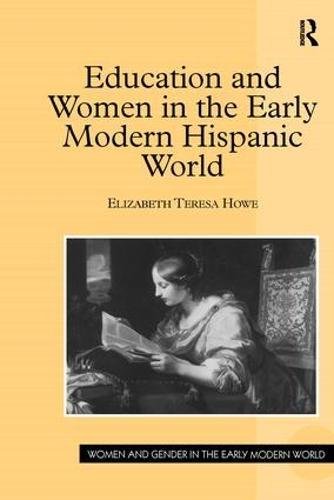
Considering the presence and influence of educated women of letters in Spain and New Spain, this study looks at the life and work of early modern women who advocated by word or example for the education of women. The subjects of the book include not only such familiar figures as Sor Juana and Santa Teresa de Jesús, but also of less well known women of their time. The author uses primary documents, published works, artwork, and critical sources drawn from history, literature, theatre, philosophy, women's studies, education and science. Her analysis juxtaposes theories espoused by men and women of the period concerning the aptitude and appropriateness of educating women with the actual practices to be found in convents, schools, court, theaters and homes. What emerges is a fuller picture of women's learning in the early modern period.
Full Product Details
Author: Elizabeth Teresa Howe
Publisher: Taylor & Francis Ltd
Imprint: Routledge
Weight: 0.381kg
ISBN: 9781138278318
ISBN 10: 1138278319
Pages: 258
Publication Date: 28 November 2016
Audience:
College/higher education
,
General/trade
,
Tertiary & Higher Education
,
General
Format: Paperback
Publisher's Status: Active
Availability: In Print

This item will be ordered in for you from one of our suppliers. Upon receipt, we will promptly dispatch it out to you. For in store availability, please contact us.
Reviews
'Howe's book makes a significant contribution to the study of women and culture in the early modern Hispanic world. In particular, her examination of women's access to education is a noteworthy addition to our understanding of their lives.' Elizabeth Lehfeldt, author of Religious Women in Golden Age Spain ’I recommend this study for its well-researched insight into what, until recently, was a largely unexplored area of study: the intellectual lives of Early Modern women in the Spanish-speaking world.’ Parergon ’By advancing our knowledge of women's education, Howe invites us to join her in the quest for female modes of learning and for diverse interpretations of literacy.’ Renaissance Quarterly
'Howe's book makes a significant contribution to the study of women and culture in the early modern Hispanic world. In particular, her examination of women's access to education is a noteworthy addition to our understanding of their lives.' Elizabeth Lehfeldt, author of Religious Women in Golden Age Spain 'I recommend this study for its well-researched insight into what, until recently, was a largely unexplored area of study: the intellectual lives of Early Modern women in the Spanish-speaking world.' Parergon 'By advancing our knowledge of women's education, Howe invites us to join her in the quest for female modes of learning and for diverse interpretations of literacy.' Renaissance Quarterly
Author Information
Elizabeth Teresa Howe is Professor of Spanish at Tufts University, USA. Her other books include The Visionary Life of Madre Ana de San AgustÃn (2004).