Overview
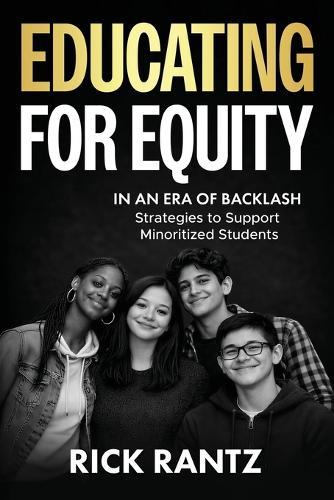
Educating for Equity in an Era of Backlash: Strategies to Support Minoritized Students is written at a time when education, long understood as both an endeavor of hope and a battlefield of enduring struggle, finds itself situated within an increasingly contested social and political landscape. Across the United States and in many parts of the world, highly organized campaigns against equity initiatives, critical race theory, and diversity, equity, and inclusion efforts have reshaped public discourse about schooling. These movements have not only elevated education into the center of political debate, but have also transformed classrooms into spaces of tension, scrutiny, and, at times, fear. These campaigns are not simply disagreements over pedagogy or curriculum. They represent deliberate and coordinated attempts to narrow the scope of knowledge, to regulate whose histories are told, and to determine whose identities are recognized as legitimate within educational spaces.At stake in these struggles is more than curricular content. What is being contested is the very purpose of education in a democratic society. Schools are not neutral institutions; they construct knowledge, affirm or deny identities, and shape students' sense of belonging and possibility. For minoritized students, these processes often determine whether schooling becomes a pathway to opportunity or a mechanism of exclusion. Recognizing this reality is essential to understanding why education remains central to broader struggles for equity and justice. When efforts are made to silence discussions of race, culture, language, gender, and power, the consequences extend far beyond the classroom. They shape how students come to understand themselves, how they relate to others, and how they envision their place within a broader social and political order.The central purpose of this book is to affirm that, even amid organized resistance, educators, families, and communities possess the capacity to create and sustain conditions that lift up minoritized students. This work is neither easy nor without risk, but it remains essential. The chapters that follow are grounded in the conviction that education is never neutral. Paulo Freire (1970) reminds us that it functions either as an instrument of oppression or as an instrument of liberation. This book is written for those who refuse to accept erasure as inevitable. It is for educators who continue to create spaces of belonging despite constraint, for students whose dignity and identities are too often contested, and for families and communities who persist in demanding that schools honor the full humanity and potential of their children. It is also for scholars, policymakers, and practitioners who recognize that the future of education is inseparable from the broader struggle for equity and justice.Above all, this book is for those who understand that lifting up minoritized students in the face of organized resistance is not only a moral imperative but also a democratic necessity. A society that restricts whose knowledge matters, whose voices are heard, and whose identities are affirmed cannot sustain itself as a just and inclusive democracy. Education remains one of the most powerful arenas for shaping that future. The work ahead is difficult, but it is also deeply consequential. To engage in this work is to affirm that education, even in an era of backlash, can remain a practice of freedom.
Full Product Details
Author: Rantz
Publisher: Anacapa Press
Imprint: Anacapa Press
Dimensions:
Width: 15.20cm
, Height: 1.40cm
, Length: 22.90cm
Weight: 0.358kg
ISBN: 9798995424086
Pages: 266
Publication Date: 11 May 2026
Audience:
General/trade
,
General
Format: Paperback
Publisher's Status: Active
Availability: Available To Order

We have confirmation that this item is in stock with the supplier. It will be ordered in for you and dispatched immediately.
Reviews
""In an era when educators face increasing pressure to silence discussions of race, culture, and identity, Rick Rantz offers both intellectual clarity and moral courage. This book provides educators with the historical perspective, theoretical grounding, and practical strategies needed to sustain equity-centered teaching even in hostile policy environments."" -Adrianna Kezar, Ph.D., Wilbur Kieffer Endowed Professor and Dean's Professor of Leadership; Director of the Pullias Center, University of Southern California Executive Editor, Change: The Magazine of Higher Learning ""This book comes at a pivotal time for educators navigating an increasingly polarized policy environment. Rantz offers both historical perspective and practical insight, demonstrating why culturally responsive and equity-centered approaches remain essential to supporting minoritized students."" -Fabienne Doucet, Ph.D., Professor of Education; Executive Director, Metropolitan Center for Research on Equity and the Transformation of Schools, New York University ""Rick Rantz has written a necessary book for this moment in educational history. At a time when equity initiatives are under sustained attack, Educating for Equity in an Era of Backlash provides a powerful reminder that schools are not neutral spaces. Rantz offers educators a deeply informed analysis of organized resistance while also providing pathways for sustaining culturally responsive and justice-centered education."" -Yolanda Abel, Ed.D., Associate Professor and Immediate Past Chair, Department of Advanced Studies in Education, Johns Hopkins University ""Rick Rantz has written a necessary book for this moment in educational history. At a time when equity initiatives are under sustained attack, Educating for Equity in an Era of Backlash provides a powerful reminder that schools are not neutral spaces. Rantz offers educators a deeply informed analysis of organized resistance while also providing pathways for sustaining culturally responsive and justice-centered education."" -James Earl Davis, Ph.D., Professor and the Bernard C. Watson Endowed Chair in Urban Education, Temple University
Author Information
Rick Rantz is a scholar, educator, and leader whose work focuses on educational equity, culturally responsive curriculum, and the structural dynamics that shape student experiences in educational institutions. His scholarship examines the intersections of culture, identity, and educational systems, with particular attention to the experiences of minoritized students. Through his research and writing, he seeks to advance more inclusive and responsive educational practices.