Overview
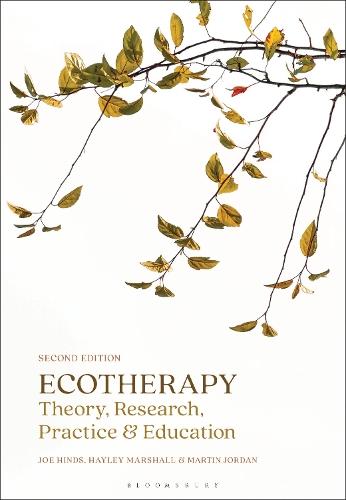
Building on the success of the first edition, this thought-provoking volume provides a comprehensive exploration of the developing field of ecotherapy, exploring our reciprocal relationship with nature and the therapeutic benefits of contact with natural spaces. Expanded into four parts, it offers a unique examination of a range of theoretical perspectives, unpacks the latest research and provides a wealth of illuminating practice and training examples. New to this edition: Fresh insights and updated research integrated throughout every chapter New contributing authors from the UK, Israel, Sweden and the US, adding a wealth of international experience and knowledge to the core areas of ecotherapy A brand-new section on education, exploring how ecotherapy principles can be incorporated into training programmes and supervision Expanded material on rewilding therapy, spiritual ecological practice, systemic practice and exploring the self in nature Written by a team of international experts in the field, Ecotherapy remains an essential introduction to this fast-growing area of therapeutic practice.
Full Product Details
Author: Joe Hinds (University of Greenwich, UK) ,
Hayley Marshall (Red Kite Training, UK) ,
Martin Jordan (School of Applied Social Science, Brighton, UK)
Publisher: Bloomsbury Publishing PLC
Imprint: Bloomsbury Academic
Edition: 2nd edition
Dimensions:
Width: 16.80cm
, Height: 2.20cm
, Length: 24.60cm
Weight: 0.680kg
ISBN: 9781350459847
ISBN 10: 1350459844
Pages: 312
Publication Date: 30 April 2026
Audience:
College/higher education
,
Tertiary & Higher Education
Format: Hardback
Publisher's Status: Active
Availability: Manufactured on demand

We will order this item for you from a manufactured on demand supplier.
Reviews
The book helps explore complex phenomena such as psychotherapy in the external environment. Clear, well detailed and applicable to practice. It is an emerging albeit important field that is likely to be organic and shaped by the ever-expanding evidence base. I think it may garner more interests as we starts to see psychotherapy/ ecotherapy as an art form. * Mark Edwards, Lecturer in Mental Health Nursing, University of Central Lancashire, UK * An excellent foundational book that includes important authors/scholars in the field. Needs updating on current research. I also think that adding NEW chapters about both research and practice by different authors would be interesting. I would also try to get voices of indigenous peoples, if possible as well as people of color – there are so many relationships to the natural world that are worth exploring. My own research is on the inclusion of ecotherapy in all mental health curriculums and how this work is critical in helping ourselves as helpers of others as well as a complete worldview of humanity/the natural world. The other thing I would consider adding is eco-grief due to the climate crisis. * Megan Delaney, Associate Professor of Counselling, Monmouth University, USA * This book is easy to read, and to navigate. It is concise yet supplies lots of information, examples and references for undergraduate students to use and follow up. Some case study examples from 1st nation peoples would be good and provide much needed balance currently missing from this field of study. The chapter on Buddhism could be argued to provide this, but the book is still very dominated by western approaches and would benefit enormously from input from some 1st nation people. Within the UK, the teaching of ecotherapy and adventure therapy within universities is very new, but interest is growing. The University of Highlands and Islands in Scotland now offer a post graduate course and Bangor University offer our third-year module only. We are currently looking at creating either an undergraduate or post graduate course at some point in the future. In respect to other countries, ecotherapy (and AT) are taught far more than in the UK e.g. The USA, Scandinavia, and Germany all have dedicated courses. The authors have created a wonderful and informative text. They have also successfully crossed the line between science and spirituality thereby provoking much thought and discussion. It will be an invaluable text for my students, both during their studies and beyond. * Trys Burke, Module Organiser Outdoor and Adventure Therapy, Bangor University, UK * I like the overall three-part structure of the book. I think it could be expanded into a more comprehensive text with some additional chapters. Transpersonal ecotherapy, ecospirituality, and earth-based RS received short-shrift in the previous edition. Cultural competence, humility, and diversity (RS and others). Chapter on The Role of Ecotherapy in Climate Change and Related Distress. MHC programs in America are slowly increasing awareness of ecotherapy because of COVID and climate change. I think the market will grow. * Paul Dean, Associate Professor in Counsellor Education, SUNY Plattsburgh, USA *
Author Information
Joe Hinds is a Psychotherapist and Counsellor, and is Senior Lecturer in Counselling at the University of Greenwich, UK. Hayley Marshall is a Certified Transactional Analyst (psychotherapy), based in the UK. She is a trainer and supervisor specialising in ecological practice. Martin Jordan was a Counselling Psychologist, Psychotherapist and expert in the field of Ecotherapy. Formerly, he was a Senior Lecturer at the University of Brighton, UK.