Overview
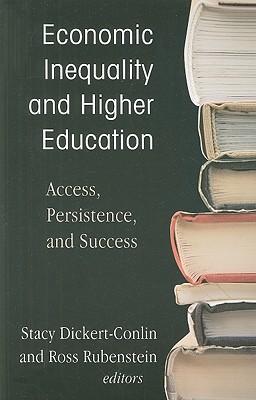
The vast disparities in college attendance and graduation rates between students from different class backgrounds is a growing social concern. Economic Inequality and Higher Education investigates the connection between income inequality and unequal access to higher education, and proposes solutions that the state and federal governments and schools themselves can undertake to make college accessible to students from all backgrounds. Economic Inequality and Higher Education convenes experts from the fields of education, economics, and public policy to assess the barriers that prevent low-income students from completing college. For many students from disadvantaged socioeconomic backgrounds, the challenge isn't getting into college, but getting out with a degree. Helping this group will require improving the quality of education in the community colleges and lower-tier public universities they are most likely to attend. Documenting the extensive disjuncture between the content of state-mandated high school testing and college placement exams, Michael Kirst calls for greater alignment between K-12 and college education. Amanda Pallais and Sarah Turner examine barriers to access at elite universities for low-income students--including tuition costs, lack of information, and poor high school records--as well as recent initiatives to increase socioeconomic diversity at private and public universities. Top private universities have increased the level and transparency of financial aid, while elite public universities have focused on outreach, mentoring, and counseling, and both sets of reforms show signs of success. Ron Ehrenberg notes that financial aid policies in both public and private universities have recently shifted towards merit-based aid, away from the need-based aid that is most helpful to low-income students. Ehrenberg calls on government policy makers to create incentives for colleges to increase their representation of low-income students. Higher education is often vaunted as the primary engine of upward mobility. Instead, as inequality in America rises, colleges may be reproducing income disparities from one generation to the next. Economic Inequality and Higher Education illuminates this worrisome trend and suggests reforms that educational institutions and the government must implement to make the dream of a college degree a reality for all motivated students.
Full Product Details
Author: Stacy Dickert-Conlin ,
Ross Rubenstein
Publisher: Russell Sage Foundation
Imprint: Russell Sage Foundation
Dimensions:
Width: 14.80cm
, Height: 1.70cm
, Length: 22.10cm
Weight: 0.313kg
ISBN: 9780871543219
ISBN 10: 0871543214
Pages: 224
Publication Date: 04 December 2009
Audience:
General/trade
,
General
Format: Paperback
Publisher's Status: No Longer Our Product
Availability: Awaiting stock

The supplier is currently out of stock of this item. It will be ordered for you and placed on backorder. Once it does come back in stock, we will ship it out for you.
Author Information
STACY DICKERT-CONLIN is associate professor of economics at Michigan State University. ROSS RUBENSTEIN is associate professor of public administration at Syracuse University and a senior research associate at the Center for Policy Research. CONTRIBUTORS: Stacy Dickert-Conlin, Ross Rubenstein, Eric P. Bettinger, Ronald G. Ehrenberg, Dan Goldhaber, Robert Haveman, Michael Kirst, Bridget Terry Long, Amanda Pallais, Gretchen K. Peri, Amy Ellen Schwartz, Sarah E. Turner, and Kathryn Wilson.