Overview
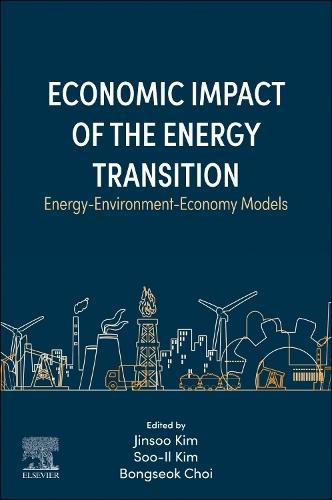
Economic Impact of the Energy Transition: Energy-Environment-Economy Models explores and analyzes the complex nature of energy transition, the inter-relationships between energy, environment, and economy, and the use of 3E models to assess economic impact, including a new energy-environment-economy model introduced by the book's editors. The book begins by introducing energy transition and economic impacts, explaining classical macro-econometric models, input-output and CGE models, and macroeconomic models. The second part of the book focuses on energy-environment-economy (3E) models developed globally, with in-depth chapters examining GEC, E3ME, NEMS-MAM, and finally the new System of Three E-Models (STEM). The last section of the book provides case studies demonstrating the utilization of different 3E models in various parts of the world. A final chapter carefully examines the advantages and limitations of each model, its policy implications, and considerations for empirical analysis, discusses how these can be applied, addresses the remaining challenges in the field of energy transition and economic impact analysis, and suggests directions for future research. This is a valuable resource for researchers, advanced students, faculty, scientists, engineers, analysts, policy makers, consultants, and other industry professionals with an interest in energy transition, modeling, policy, and the interconnection between energy, environment, and economy.
Full Product Details
Author: Jinsoo Kim (Professor of Resource Economics and Policy, Hanyang University, South Korea) ,
Soo-Il Kim (Senior Research Fellow, Korea Energy Economics Institute, Republic of Korea) ,
Bongseok Choi (Associate Professor of Economics, Department of Commerce and Finance of Kookmin University, South Korea)
Publisher: Elsevier - Health Sciences Division
Imprint: Elsevier - Health Sciences Division
Weight: 0.450kg
ISBN: 9780443334610
ISBN 10: 0443334617
Pages: 450
Publication Date: 01 March 2026
Audience:
Professional and scholarly
,
Professional & Vocational
Format: Paperback
Publisher's Status: Forthcoming
Availability: Not yet available

This item is yet to be released. You can pre-order this item and we will dispatch it to you upon its release.
Author Information
Dr. Jinsoo Kim is a Full Professor of Resource Economics and Policy at Hanyang University, South Korea. He has published over 70 peer-reviewed papers, covering socio-technical analysis of industrial decarbonization, criticality assessment of raw materials, multi-criteria decision making for renewable energy, and social cost-benefit analysis. Prof. Kim also conducted research at the University of Sussex (United Kingdom) with Prof. Benjamin K. Sovacool, publishing several papers on energy externalities and industrial decarbonization. He serves as associate editor or board member of several journals. Prof. Kim has also served as a member of the Policy Committee of Korea NGO's Energy Network and the Korean Society for New and Renewable Energy, and as Director of General Affairs of the Korean Resource Economics Association. He also contributed to the 3rd Basic Energy Plan as a member of the working group for the Ministry of Trade, Industry and Energy. Dr. Soo-Il Kim is a Senior Research Fellow at the Korea Energy Economics Institute, Republic of Korea. He has worked at KEEI since 2005 in the field of energy modelling and policy analysis. Dr. Kim also worked at the International Energy Agency as a Research Fellow for World Energy Outlook 2013 and 2014. With over 19 years of experience in energy modelling and policy analysis, Dr. Kim has worked on developing the new energy balance of Korea and the energy modelling system: Energy and Greenhouse-gas Modelling System and the System of Three E-Models. He served as Head of the Center for Energy Information and Statistics and has lead the long-term energy outlook team. Dr. Kim also contributed to series of National Basic Plan for Energy and Basic Plan of Electricity Demand and Supply as a working group member. Dr. Bongseok Choi is Associate Professor of Economics at the Department of Commerce and Finance of Kookmin University, South Korea. He received his Ph.D. from the State University of New York at Buffalo (USA). He was previously a Research Fellow at the Korea Energy Economics Institute. He explores the macroeconomics of environmental and energy transition, and the impact of international trade on business cycles. His current work focuses on environmental macroeconomics, especially optimal dynamic taxation, macroeconomic dynamics with transition risks. His work has been published in academic journals such as Energy Economics, Resource and Energy Economics, Global Economic Review, and Applied Economics.