Overview
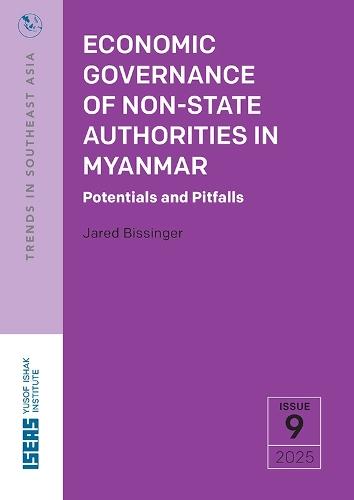
Since Myanmar’s 2021 military coup, the reach and influence of non-state authorities have spread considerably, providing them with greater scope to govern economic activity in parts of Myanmar. Taxation is among non-state authorities’ most widespread aspects of economic governance. Numerous groups rely on checkpoints and road tolls, with other common taxes covering natural resource extraction, agricultural production, and business activity. At least one non-state authority collects monthly household taxes, with higher rates for wealthier households. Other forms of economic governance implemented by non-state authorities include land titling and regulation, business licensing, business registration, and infrastructure repair/development. Numerous groups have authority over aspects of trade, and some have either stated policies or informal engagement with foreign investors. Economic governance varies due to historical experience and group capacity, among other factors, but there are numerous promising practices that show policy experimentation and responsiveness to local needs and concerns. The Karen National Union’s governance of land shows that sophisticated governance at scale by non-state authorities is possible. However, there are examples of policies and practices that distort economic activity, negatively affect livelihoods, and raise revenue in regressive ways. Non-state authorities face challenges in governing economic activities, including ongoing conflict; the international community’s state-centric economic approach; contestation between groups about the authority to govern; the scale of illicit economic activity in Myanmar; and differences in economic motivations. While some non-state authorities are focused on governing economic activities, others are focused on doing business—including illicit business—and have little interest in governing. Collaboration to develop and implement joint quasi-federal governance for national-level economic powers, such as trade, has been limited. This raises questions about whether Myanmar’s non-state authorities can offer a viable national-level alternative to the State Administration Council (SAC), or whether they constitute an alternative only for some subnational areas and powers.
Full Product Details
Author: Jared Nathan Bissinger
Publisher: ISEAS
Imprint: ISEAS
ISBN: 9789815306620
ISBN 10: 9815306626
Pages: 40
Publication Date: 31 December 2025
Audience:
Professional and scholarly
,
Professional & Vocational
Format: Paperback
Publisher's Status: Forthcoming
Availability: Not yet available

This item is yet to be released. You can pre-order this item and we will dispatch it to you upon its release.
Author Information
Jared Nathan Bissinger is Visiting Fellow with the Myanmar Studies Programme at the ISEAS – Yusof Ishak Institute, Singapore and the Research Lead at Catalyst Economics.