Awards
- Commended for Green Book Festival, General Non-Fiction 2012
- Winner of New Jersey Council for the Humanities Book Award 2012 (United States)
Overview
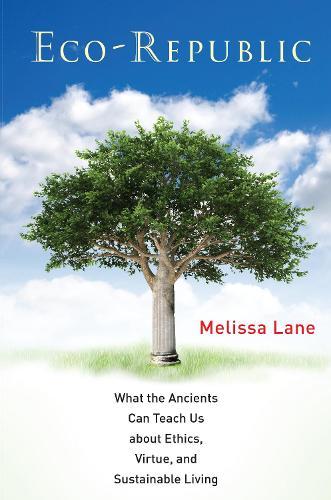
An ecologically sustainable society cannot be achieved without citizens who possess the virtues and values that will foster it, and who believe that individual actions can indeed make a difference. Eco-Republic draws on ancient Greek thought--and Plato's Republic in particular--to put forward a new vision of citizenship that can make such a society a reality. Melissa Lane develops a model of a society whose health and sustainability depend on all its citizens recognizing a shared standard of value and shaping their personal goals and habits accordingly. Bringing together the moral and political ideas of the ancients with the latest social and psychological theory, Lane illuminates the individual's vital role in social change, and articulates new ways of understanding what is harmful and what is valuable, what is a benefit and what is a cost, and what the relationship between public and private well-being ought to be. Eco-Republic reveals why we must rethink our political imagination if we are to meet the challenges of climate change and other urgent environmental concerns. Offering a unique reflection on the ethics and politics of sustainability, the book goes beyond standard approaches to virtue ethics in philosophy and current debates about happiness in economics and psychology. Eco-Republic explains why health is a better standard than happiness for capturing the important links between individual action and social good, and diagnoses the reasons why the ancient concept of virtue has been sorely neglected yet is more relevant today than ever.
Full Product Details
Author: Melissa Lane
Publisher: Princeton University Press
Imprint: Princeton University Press
Dimensions:
Width: 15.20cm
, Height: 2.40cm
, Length: 23.50cm
Weight: 0.539kg
ISBN: 9780691151243
ISBN 10: 0691151245
Pages: 256
Publication Date: 06 November 2011
Audience:
College/higher education
,
Professional and scholarly
,
General/trade
,
Tertiary & Higher Education
,
Professional & Vocational
Format: Hardback
Publisher's Status: Active
Availability: Awaiting stock

The supplier is currently out of stock of this item. It will be ordered for you and placed on backorder. Once it does come back in stock, we will ship it out for you.
Language: English
Reviews
Lane makes a compelling case that the Greek vices of pleonexia (overreaching desire for more than one's share) and hubris (arrogance against natural order) need to be disparaged with the same vigor today as they were by the ancients... Eco-Republic offer(s) important intellectual provocation to reevaluate current inertia on environmental policy. Whether or not Plato may be our guide on these matters, the roles of science and the humanities in grappling with ecological urgency deserve to be deliberated. -- Saleem H. Ali, Science
Author Information
Melissa Lane is professor of politics at Princeton University. She is the author of ""Method and Politics"" in Plato's ""Statesman"" and ""Plato's Progeny: How Plato and Socrates Still Captivate the Modern Mind"".