Overview
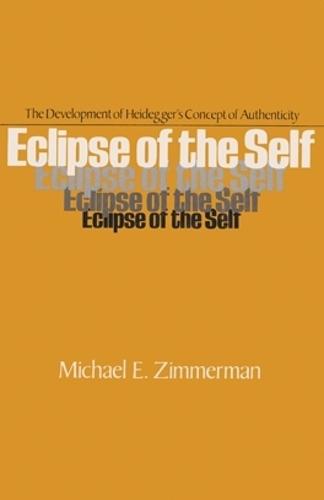
Although it is sometimes said that Martin Heidegger's later philosophy no longer concerned itself with the theme of authenticity so crucial to Being and Time (1927), this book argues that his interest in authenticity was always strong. After leaving the seminary to become a philosophy student, Heidegger began to u201cde-mythologizeu201d religious themes for his own philosophical purposes. Like the Christian notion of faith, Heidegger's notion of authenticity involves relinquishing the egotistical self-understanding which blocks our openness for possibilities. Yet authenticity as u201cresolutenessu201d includes an element of voluntarism foreign to the idea of faith. Heidegger's brief engagement with National Socialism (1933-1934) helped him to re-think the Nietzschean concept of will which had influenced his early views on authenticity. Although part of the meaning of resoluteness is to allow things to be revealed, it also suggests that an individual can somehow will to be authentic. After about 1936, Heidegger emphasized that an individual can only be released from egoism (inauthenticity) by a power which transcends him. The abiding theological issue concerning the efficacy of works as against the saving power of grace finds expression in the distinction between resoluteness and releasement.
Full Product Details
Author: Michael E. Zimmerman
Publisher: Ohio University Press
Imprint: Ohio University Press
Edition: Revised edition
Dimensions:
Width: 15.90cm
, Height: 2.20cm
, Length: 23.50cm
Weight: 0.576kg
ISBN: 9780821406014
ISBN 10: 0821406019
Pages: 357
Publication Date: 01 January 1986
Audience:
College/higher education
,
Professional and scholarly
,
General/trade
,
Undergraduate
,
Postgraduate, Research & Scholarly
Format: Paperback
Publisher's Status: Active
Availability: In Print

This item will be ordered in for you from one of our suppliers. Upon receipt, we will promptly dispatch it out to you. For in store availability, please contact us.
Reviews
This book deserves praise for its challenging presentation of Heidegger's ideas, and because it is a thoughtful and independent contribution to that larger dialogue -- David A. Kolb, Bates College, Canadian Philosophical Reviews
This book deserves praise for its challenging presentation of Heidegger's ideas, and because it is a thoughtful and independent contribution to that larger dialogue -- David A. Kolb, Bates College, Canadian Philosophical Reviews Zimmerman's book ... certainly offers an indispensable point of departure for anyone wishing to study the role of authenticity, resp. inauthenticity, in Heidegger's thought; it is to be recommended on account of erudition and eminent readability. -- A. Lichtigfeld, Tijdschrift Voor Filosofie Michael Zimmerman's Eclipse of the Self is a Heidegger study that is remarkable for its strong scholarly foundations, its newness of approach, and-thanks to exceptional clarity of style-its accessibility to a broad reading public. -- Michael Haar, Maire-Assistant, Universite de Paris-Sorbonne
Author Information
Michael Zimmerman is professor of philosophy at Newcomb College of Tulane University. He was granted the Mortar Board Award for teaching excellence in May 1979. He is the author of many articles on Heidegger.