|
|
|||
|
||||
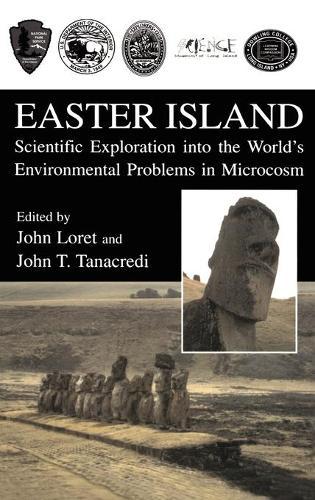
OverviewEaster Island, a World Heritage Site is still, after over 50 years since Jacques Cousteau's work on the island, a fascinating area to explore and learn about a culture that has only remnants remaining, while documenting a marine ecology still mostly unknown. This text presents the research results from three years of interdisciplinary expeditions to Easter Island. The primary objectives were to investigate the effects of human population growth on the ecology of the island and to discover whether any dramatic climatic changes such as a prolonged El Nino could have disrupted the island's fragile ecosystem. The interdisciplinary scientific team were mainly researching the paleontology, archaeology, climatology and geophysics of the island. This book brings together the results of the three expeditions, identifies new areas of research, and hopefully will continue to inspire aspiring scientists to revisit this island to explore and demystify this timeless enigma of human history. Full Product DetailsAuthor: John Loret , John T. TanacrediPublisher: Springer Science+Business Media Imprint: Kluwer Academic/Plenum Publishers Edition: 2003 ed. Dimensions: Width: 15.50cm , Height: 1.90cm , Length: 23.50cm Weight: 1.210kg ISBN: 9780306474941ISBN 10: 0306474948 Pages: 240 Publication Date: 31 August 2003 Audience: College/higher education , Professional and scholarly , Tertiary & Higher Education , Professional & Vocational Format: Hardback Publisher's Status: Active Availability: In Print This item will be ordered in for you from one of our suppliers. Upon receipt, we will promptly dispatch it out to you. For in store availability, please contact us. Table of ContentsIntroduction: An Easter Island Experience—How it all Started.- I: Documenting the World Heritage Significance of Easter Island.- 1. A Cultural Icon: Scientific Exploration into the World’s Environmental Problems in Microcosm.- 2. Rapa Nui National Park: The Protection from and Fostering of Ecotourism.- 3. Documenting Petroglyphs on Easter Island.- 4. The Coral Reefs of Easter Island - A Preliminary Assessment.- II: Ecological Considerations and Restoration/Protection Efforts of Natural/Cultural Resources.- 5. Rapid Vegetational and Sediment Change from Rano Aroi Crater, Easter Island.- 6. Mata Ki Te Rangi: Eyes Toward the Heavens - Climate and Radiocarbon Dates.- 7. Stable Isotope Record of El Nino - Southern Oscillation Events from Easter Island.- 8. Prehistoric Destruction of the Primeval Soils and Vegetation of.- 9. The Endemic Marine Invertebrates of Easter Island: How Many Species and for How Long?.- 10. Finfish in the Rano Kau Caldera of Easter Island.- III: Technological Applications to Protect Biological and Cultural Artifacts.- 11. Aerial Surveys of Isle de Paqua: Easter Island and the New Birdmen.- 12. Easter Island Under Glass: Observations and Conversations.- 13. Mapping the Poike Ditch.- Addendum.- List of Expedition Participants.ReviewsAuthor InformationDr John T. Tanacredi is Chief, Division of Natural Resources for the National Park Service at Gateway National Recreation Area. He is a Research Associate in the Department of Invertebrate Zoology at the American Museum of Natural History and at the Aquarium for Wildlife Conservation. He holds Adjunct Full Professor of Environmental Sciences at Hofstra University and Polytechnic University. Tab Content 6Author Website:Countries AvailableAll regions |
||||