Overview
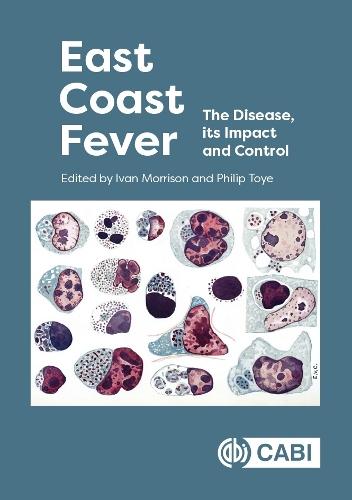
This book provides an up-to-date account of what is known about the tick-borne protozoan parasite Theileria parva. Disease caused by T. parva in cattle, particularly East Coast Fever, is one of the most important constraints to improving livestock productivity in eastern and southern Africa. Despite extensive research efforts, control and prevention of the disease is extremely challenging and, by placing a substantial economic burden on resource-poor livestock owners, it is a key factor in perpetuating poverty in rural communities. Beginning with a brief history, the book provides: - An account of the biology and distribution of the parasite, its tick vector and the nature of the disease, including immunity and genetic resistance. - A review of measures used for its control or prevention. - Important ancillary information which is not readily accessible in the scientific literature. - A concluding discussion of recommended research priorities for the future. The book brings together current knowledge about the parasite into a single volume for the first time in decades and forms a valuable resource for all researchers of human and animal protozoal diseases. It will also be of major interest to animal health workers, livestock farmers, government policy makers, scientific advisors and donor organizations.
Full Product Details
Author: Professor Ivan Morrison (University of Edinburgh, UK) ,
Dr Philip Toye (Principal Scientist, International Livestock Research Institute (ILRI), Kenya)
Publisher: CABI Publishing
Imprint: CABI Publishing
ISBN: 9781800626300
ISBN 10: 1800626304
Pages: 424
Publication Date: 31 March 2026
Audience:
College/higher education
,
Professional and scholarly
,
Postgraduate, Research & Scholarly
,
Professional & Vocational
Format: Hardback
Publisher's Status: Forthcoming
Availability: Not yet available

This item is yet to be released. You can pre-order this item and we will dispatch it to you upon its release.
Author Information
Ivan Morrison (Edited By) Following graduation in veterinary medicine from the University of Glasgow in 1972 and subsequent completion of a PhD in the same University, Ivan Morrison joined the newly established International Laboratory for Research on Animal Diseases (ILRAD) in Nairobi in 1975. His initial research focused on immunity and genetics of susceptibility to trypanosome infections. In the early 1980s, he switched his attention to the bovine protozoan parasite Theileria parva and built up a research group to study the mechanisms of immunity to this parasite, with the eventual aim of devising novel methods of vaccination. The research demonstrated that immunity is mediated by T cell responses and specifically identified the importance of CD8 T cells both in providing protection and determining the strain specificity of immunity. This work laid much of the foundation for subsequent research on subunit vaccine development for this parasite. In 1990, Morrison returned to the UK as Head of the Division of Immunology at the Institute for Animal Health, where he was involved in immunological research on a number pathogens of livestock. He joined the University of Edinburgh in 2002 and re-established a research group working on immunity to Theileria parasites. His recent research has continued to focus on understanding how different components of the immune response to Theileria contribute to immunity or enhanced pathology and how defined parasite antigens can be used to induce immunity. Phillip Toye (Edited By) Philip Toye is currently a Principal Scientist at the International Livestock Research Institute (ILRI), Nairobi. His research background is in the immunology and molecular biology of infectious diseases, and he has worked primarily on East Coast fever for over 20 years. His research has focused on the development of vaccines and diagnostic assays, including work aimed at elucidating the composition of the Muguga cocktail, the immune response it stimulates and its commercialisation. This has been extended more recently into the interaction between host genetic background and response to pathogens, in particular the resistance of cattle to disease caused by T. parva. He graduated with a degree in Veterinary Science from the University of Queensland, Australia. He completed a PhD in immunoparasitology from the University of Adelaide, followed by a postdoctoral appointment to the Harvard Medical School.