Overview
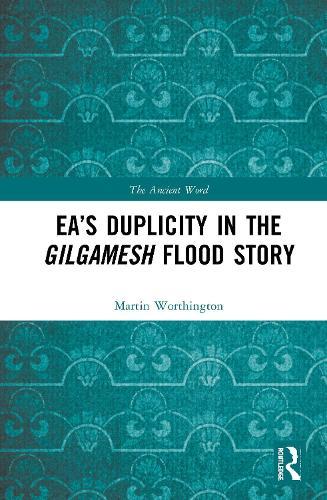
This volume opens up new perspectives on Babylonian and Assyrian literature, through the lens of a pivotal passage in the Gilgamesh Flood story. It shows how, using a nine-line message where not all was as it seemed, the god Ea inveigled humans into building the Ark. The volume argues that Ea used a ‘bitextual’ message: one which can be understood in different ways that sound the same. His message thus emerges as an ambivalent oracle in the tradition of ‘folktale prophecy’. The argument is supported by interlocking investigations of lexicography, divination, diet, figurines, social history, and religion. There are also extended discussions of Babylonian word play and ancient literary interpretation. Besides arguing for Ea’s duplicity, the book explores its implications – for narrative sophistication in Gilgamesh, for audiences and performance of the poem, and for the relation of the Gilgamesh Flood story to the versions in Atra-hasīs, the Hellenistic historian Berossos, and the Biblical Book of Genesis. Ea’s Duplicity in the Gilgamesh Flood Story will interest Assyriologists, Hebrew Bible scholars and Classicists, but also students and researchers in all areas concerned with Gilgamesh, word-play, oracles, and traditions about the Flood.
Full Product Details
Author: Martin Worthington
Publisher: Taylor & Francis Ltd
Imprint: Routledge
Weight: 1.130kg
ISBN: 9781138388925
ISBN 10: 1138388920
Pages: 490
Publication Date: 12 November 2019
Audience:
College/higher education
,
Professional and scholarly
,
Tertiary & Higher Education
,
Professional & Vocational
Format: Hardback
Publisher's Status: Active
Availability: In Print

This item will be ordered in for you from one of our suppliers. Upon receipt, we will promptly dispatch it out to you. For in store availability, please contact us.
Reviews
Worthington's Ea's Duplicity in the Gilgamesh Flood Story certainly considers nine lines from tablet XI of the best known epic from Mesopotamia, this passage forms the microcosmic core of a macrocosmic exploration of a world of Assyrian and Babylonian literature, prophecy, historiography, and ancient wisdom. Worthington unfurls new and hidden meanings in his passage from tablet XI, but to do so he takes a winding road, inviting the reader on a dizzying journey involving storm-demons, competing translations, species of ancient grains, and much more. - Review of Biblical Literature Worthington offers profitable insights into the Gilgamesh Flood Story[...] The complexities of his research will challenge and divide Assyriologists just as, as he claims, Uta-napishti may have been divisive to ancient audiences! -Alan Millard, University of Liverpool, Strata
Worthington's Ea's Duplicity in the Gilgamesh Flood Story certainly considers nine lines from tablet XI of the best known epic from Mesopotamia, this passage forms the microcosmic core of a macrocosmic exploration of a world of Assyrian and Babylonian literature, prophecy, historiography, and ancient wisdom. Worthington unfurls new and hidden meanings in his passage from tablet XI, but to do so he takes a winding road, inviting the reader on a dizzying journey involving storm-demons, competing translations, species of ancient grains, and much more. - Review of Biblical Literature
Author Information
Martin Worthington is Associate Professor in Middle Eastern Studies in the Department of Near and Middle Eastern Studies, Trinity College Dublin, Ireland.