Overview
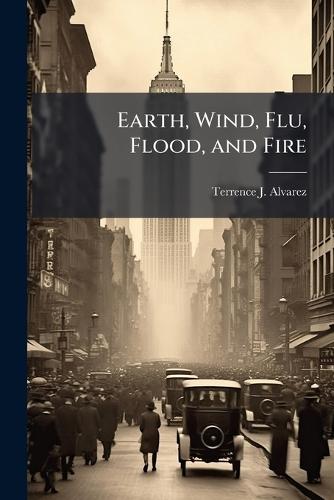
The beginning of the 20th century marked a departure point for the United States (U.S.) in several ways. Technological and scientific advances that would continue to influence the U.S. for decades occurred with seeming regularity. For the citizens of the U.S. and its leaders, this was an era of tremendous confidence in science, technology, and medicine. Storms could be predicted, diseases defeated, and structures built so they could withstand the worst of the earth's ravages. Or so they thought. Despite their confidence, or folly, the early 1900s brought about unparalleled destruction and death from natural disasters. The 1900 Galveston Hurricane and the San Francisco earthquake of 1906 leveled both cities. The Galveston disaster remains the largest casualty-producing storm in American history. An influenza pandemic, known as the ""Spanish Flu"" emerged in 1918 and killed more humans than any event in recorded history. American casualties would be between 550,000 and 675,000 and worldwide over 100 million most likely died. In 1927, the ""levees only"" policy along the Mississippi River failed, inundating 16,500,000 acres across seven states with up to 30 feet of water. During these events, governments, were overwhelmed all levels, technologies crumbled, and science stood by powerless. These events remain relevant today. They highlight the evolution of national response policy for major natural disasters from a laissez faire approach to a more progressive attitude. They also introduce lessons that should be incorporated in current response doctrine. Examples include the importance of preparedness at all levels, the responsibility of the press and leaders regarding information management, and the need for the military to include Defense Support to Civil Authorities (DSCA) in officer development. This work has been selected by scholars as being culturally important, and is part of the knowledge base of civilization as we know it. This work was reproduced from the original artifact, and remains as true to the original work as possible. Therefore, you will see the original copyright references, library stamps (as most of these works have been housed in our most important libraries around the world), and other notations in the work. This work is in the public domain in the United States of America, and possibly other nations. Within the United States, you may freely copy and distribute this work, as no entity (individual or corporate) has a copyright on the body of the work. As a reproduction of a historical artifact, this work may contain missing or blurred pages, poor pictures, errant marks, etc. Scholars believe, and we concur, that this work is important enough to be preserved, reproduced, and made generally available to the public. We appreciate your support of the preservation process, and thank you for being an important part of keeping this knowledge alive and relevant.
Full Product Details
Author: Terrence J Alvarez
Publisher: Hutson Street Press
Imprint: Hutson Street Press
Dimensions:
Width: 15.60cm
, Height: 0.90cm
, Length: 23.40cm
Weight: 0.236kg
ISBN: 9781025064956
ISBN 10: 102506495
Pages: 162
Publication Date: 22 May 2025
Audience:
General/trade
,
General
Format: Paperback
Publisher's Status: Active
Availability: Available To Order

We have confirmation that this item is in stock with the supplier. It will be ordered in for you and dispatched immediately.