Overview
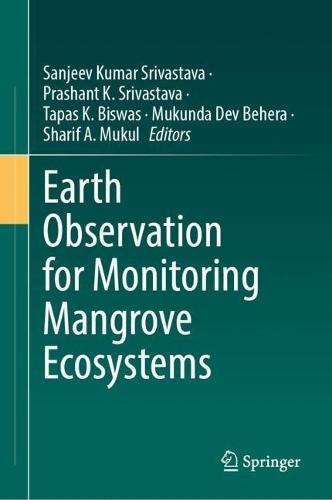
This book provides insight into advancing GIS and remote sensing technology in the field of mangrove ecosystem monitoring, offering traditional as well as advanced techniques for mangrove types, biophysical and biochemical parameters, retrieval, species identification, mapping classification, machine learning, physics-based approaches, challenges, and the way forward. This will incorporate the latest technology to derive biophysical and biochemical parameters using SAR data, hyperspectral data, and integration of data sets for the enhanced accuracy of the results and outcome. It also presents the advancement of geospatial technology using multispectral, hyperspectral, radar microwave, and LiDAR data in mangrove monitoring. The book will benefit academics and the research community with the latest research ideas, problem-solving skills, and future perspectives in forestry monitoring to aid mangrove-related developments globally. It is intended for marine ecologists, climate change scientists, universities, governments, industries, developers of sensors and other sophisticated tools for mangrove monitoring, and policymakers.
Full Product Details
Author: Sanjeev Kumar Srivastava ,
Prashant K. Srivastava ,
Tapas K. Biswas ,
Mukunda Dev Behera
Publisher: Springer Nature Switzerland AG
Imprint: Springer Nature Switzerland AG
ISBN: 9783032166678
ISBN 10: 3032166675
Pages: 315
Publication Date: 31 May 2026
Audience:
Professional and scholarly
,
Professional & Vocational
Format: Hardback
Publisher's Status: Forthcoming
Availability: Not yet available

This item is yet to be released. You can pre-order this item and we will dispatch it to you upon its release.
Author Information
Dr. Sanjeev Kumar Srivastava is teaching and coordinating spatial science courses which include geographical information systems (GIS) and remote sensing and surveying courses. He has several years of experience in the application of geographical information systems (GIS) and remote sensing techniques to natural resource and urban resources management. He has developed several innovative approaches in learning and teaching. He has obtained his PhD degree in Geographical Sciences from the Australian National University, Canberra. He worked with different organisations that include the Australian Defence Force Academy, the Bureau of Rural Sciences, The World Fish Centre, the National Bureau of Fish Genetic Resources etc. Dr Prashant K Srivastava is working at Institute of Environment and Sustainable Development, Banaras Hindu University as a faculty of Remote Sensing and Hydrology and was affiliated with Hydrological Sciences, NASA Goddard Space Flight Center, Maryland, USA. He received his PhD degree from Department of Civil Engineering, University of Bristol, Bristol, UK. Prashant was the recipient of several awards such as NASA Fellowship; USA; University of Maryland Fellowship, USA; Commonwealth Fellowship, U.K. Prashant made 280+ publications in peer-reviewed journals and published 16 books with reputed publishing house such as Springer, Taylor and Francis, AGU-Wiley and Elsevier. He is also acting as Editors of many journals and also featured in world top 2% scientist released by Scopus and Stanford University. Dr Tapas Biswas is a Senior Scientist in the Water Security Program of the CSIRO Environment Division. He has 34 years of research, teaching and consultancy experience in global water resources management. He has worked in a number of countries doing research and teaching in the field of soil and water science and received many national and international awards. His most recent work on digital sensors forms a critical part of the Australia’s first satellite mission, to monitor water quality from space. Dr Biswas has over 150 publications including international journals, conference proceedings and client reports. Dr. Mukunda Dev Behera is working as Professor in the Centre for Oceans, Rivers, Atmosphere and Land Sciences at the Indian Institute of Technology Kharagpur. Prior to this, he has worked for the Indian Space Research Organization (ISRO). Dr. Behera has made outstanding contributions to the fields of forest remote sensing, land and water resource management, and ecological climatology by theorizing, modeling, and conducting innovative experiments and field-based measurements with satellite remote sensing. He has over 110 peer-reviewed journal publications and has co-edited several books. He serves the editorial boards of several reputed environmental journals and contributed to IPCC AR-6 of WG-II. Dr. Sharif A. Mukul is an Associate Professor of Environment at United International University, Bangladesh, and an Adjunct Senior Research Fellow at the University of the Sunshine Coast in Australia. Dr. Mukul currently also serves as an Associate Editor of five international journals on ecology and environment. Dr Mukul has published extensively in international peer-reviewed journals and books. His research has been featured in top international news outlets including The New York Times, CNN, and Smithsonian Magazine. He received his PhD in Environmental Management from the University of Queensland, Australia.