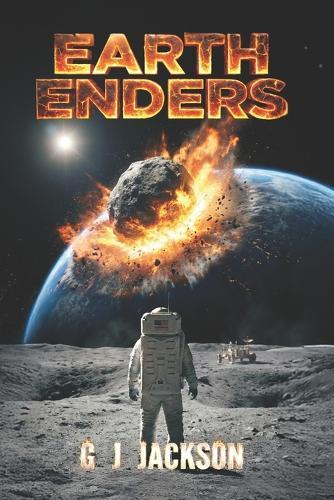
Overview
The world has ended before. Not in metaphor. Not in exaggeration. The world has genuinely ended. Entire civilizations vanished. Species disappeared by the millions. Ice ages buried continents under frozen water. Volcanic winters blackened skies for years. Asteroids struck with forces that make nuclear weapons look like firecrackers. The difference is that we survived. Life, stubborn and adaptable, found ways to persist. This time might be different. We are the first species capable of predicting our own extinction. We are also the first species capable of causing it. We can see the asteroid coming, and we can build the weapon that does what the asteroid might do. We possess both the knowledge to understand catastrophe and the technology to create it. Earth Enders examines eighteen pathways to extinction. Some are human-made. Others are cosmic inevitabilities. A few exist in the uncertain space between what we can control and what we cannot. Each chapter explores a different threat, not to frighten, but to illuminate. The goal is understanding, not panic. Clear-eyed assessment, not paralysis. This book draws on extensive research from climate scientists, epidemiologists, researchers, astrophysicists, nuclear strategists, and historians. You will encounter the work of Alan Robock on nuclear winter. Nick Bostrom on superintelligence. Richard Rhodes on the atomic bomb. Lili Xia on agricultural collapse. John Barry on the 1918 pandemic. Brian Christian on machine learning. Each chapter synthesizes decades of scientific literature into clear, accessible explanations. The final chapters step outside science and into mythology. Buddhism speaks of cycles without end. Christianity describes ultimate judgment and renewal. Norse mythology presents Ragnarök, the twilight of gods and mortals, followed by rebirth. These visions matter because they reveal how humans confront oblivion when rational analysis fails. What unites all eighteen threats is this: they are possible. We live in a universe that permits extinction. The laws of physics do not guarantee our survival. Evolution does not care if humanity continues. The cosmos will persist long after our last light goes out, utterly indifferent to our absence. This is not pessimism. It is realism. And from that realism comes clarity. If the world could end, what does that mean for how we should live? If civilization is fragile, how should we protect it? If our species is temporary, what should we do with the time we have? These are not rhetorical questions. They are the questions that matter most. This book balances seriousness with readability, depth with accessibility. The threats described are genuine and severe, but that does not require academic jargon or emotional manipulation. The facts are disturbing enough without embellishment. Where possible, complex ideas are explained clearly. Where certainty does not exist, ambiguity is acknowledged. Where multiple perspectives exist, they are presented. You are capable of handling difficult information. You do not need protection from reality. What you need is data, context, and space to think. This book provides all three. The world has ended before. It might end again. What matters is what we do with that knowledge. Understanding how civilization might end is the first step toward preventing those endings. Even flawed knowledge, clearly labeled as such, is more valuable than comfortable ignorance. Proceed with awareness. Take what is useful. Question what seems doubtful. Verify what matters. Remember that the purpose of examining how the world might end is not to resign ourselves to that ending, but to see it clearly enough that we might prevent it.
Full Product Details
Author: G J Jackson
Publisher: Independently Published
Imprint: Independently Published
Volume: 3
Dimensions:
Width: 15.20cm
, Height: 1.70cm
, Length: 22.90cm
Weight: 0.422kg
ISBN: 9798261981312
Pages: 314
Publication Date: 18 December 2025
Audience:
General/trade
,
General
Format: Paperback
Publisher's Status: Active
Availability: Available To Order

We have confirmation that this item is in stock with the supplier. It will be ordered in for you and dispatched immediately.