Overview
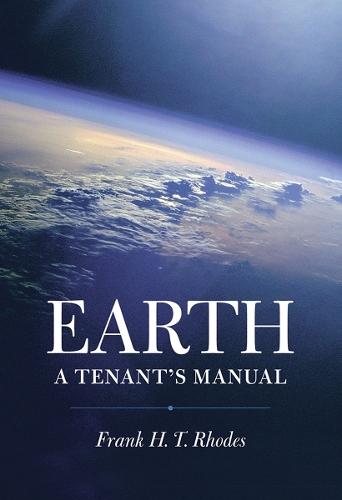
""It's impossible to grasp the whole planet or integrate all the descriptions of it. But because we live here, we have to try. This is not just an artistic compulsion or an existential yearning, still less an academic exercise. It's a survival issue. This is the only planet we have. We're stuck here, and we don't own the place-it would be the height of arrogance to assume that we do. We're tenants here, not owners, but we're tenants with hope for a long-term tenancy. We want to extend our lease just as far as we can.""-from Earth: A Tenant's Manual In Earth: A Tenant's Manual, the distinguished geologist Frank H. T. Rhodes, President Emeritus of Cornell University, provides a sweeping, accessible, and deeply informed guide to the home we all share, showing us how we might best preserve the Earth's livability for ourselves and future generations. Rhodes begins by setting the scene for our active planet and explaining how its location and composition determine how the Earth works and why it teems with life. He emphasizes the changes that are of concern to us today, from earthquakes to climate change and the clashes over the energy resources needed for the Earth's exploding population. He concludes with an extended exploration of humanity's prospects on a complex, protean, and ultimately finite world. It is not a question of whether the planet is sustainable; the challenge facing life on Earth-and the life of the Earth-is whether an expanding and high-consumption species like ours is sustainable. Only new resources, new priorities, new policies and, most of all, new knowledge, can reverse the damage that humanity is doing to our home-and ourselves. A sustainable human future, Rhodes concludes in this eloquent, sobering, but ultimately optimistic book, will require a sense of responsible stewardship, for we are not owners of this planet; we are tenants. Surveying the systems, large and small, that govern Earth's processes and influence its changes, Rhodes addresses the negative consequences of human activities for the health of its regulatory systems but offers practical suggestions as to how we might effect repairs, or at least limit further damage to our home.
Full Product Details
Author: Frank H. T. Rhodes
Publisher: Cornell University Press
Imprint: Cornell University Press
Dimensions:
Width: 17.80cm
, Height: 2.50cm
, Length: 25.40cm
Weight: 0.907kg
ISBN: 9780801478239
ISBN 10: 0801478235
Pages: 400
Publication Date: 15 June 2012
Audience:
College/higher education
,
Professional and scholarly
,
Tertiary & Higher Education
,
Professional & Vocational
Format: Paperback
Publisher's Status: Active
Availability: To order

Stock availability from the supplier is unknown. We will order it for you and ship this item to you once it is received by us.
Reviews
Rhodes reviews earth science, identifies and discusses the major environmental issues currently facing societies, and describes and promotes pathways for sustainable use of Earth and its resources. . . . Overall, the book is highly readable. Although science is a focus, the presentation is such that anyone with an interest in environmental issues will enjoy and learn from the work. It could serve well as a text for students in an upper-division environmental issues class. Summing Up: Highly recommended. Choice (February 2013)
<p> Rhodes reviews earth science, identifies and discusses the major environmental issues currently facing societies, and describes and promotes pathways for sustainable use of Earth and its resources. . . . Overall, the book is highly readable. Although science is a focus, the presentation is such that anyone with an interest in environmental issues will enjoy and learn from the work. It could serve well as a text for students in an upper-division environmental issues class. Summing Up: Highly recommended. Choice (February 2013)
<p> Rhodes reviews earth science, identifies and discusses the major environmental issues currently facing societies, and describes and promotes pathways for sustainable use of Earth and its resources. . . . Overall, the book is highly readable. Although science is a focus, the presentation is such that anyone with an interest in environmental issues will enjoy and learn from the work. It could serve well as a text for students in an upper-division environmental issues class. Summing Up: Highly recommended. -Choice (February 2013)
Rhodes reviews earth science, identifies and discusses the major environmental issues currently facing societies, and describes and promotes pathways for sustainable use of Earth and its resources... Overall, the book is highly readable. Although science is a focus, the presentation is such that anyone with an interest in environmental issues will enjoy and learn from the work. It could serve well as a text for students in an upper-division environmental issues class. Summing Up: Highly recommended. -Choice (February 2013)
Author Information
Frank H. T. Rhodes is President Emeritus of Cornell University. A geologist by training, his numerous published works on geology and education include the books Origins: The Search for Our Prehistoric Past, Earth: A Tenant's Manual,The Creation of the Future: The Role of the American University, all from Cornell, The Evolution of Life, and Language of the Earth. He holds the Bigsby Medal of the Geological Society, the Ian Campbell Medal of the American Geological Institute, and the Clark-Kerr Medal of the University of California-Berkeley. He holds more than thirty honorary degrees from universities both in the United States and abroad.