Overview
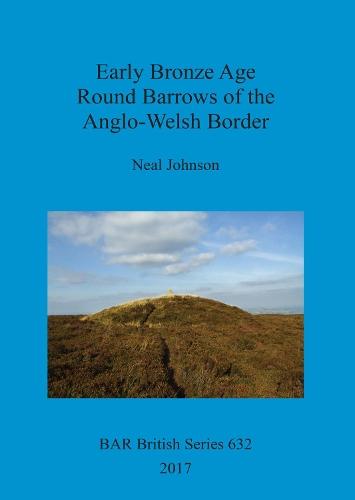
This research focuses on the Early Bronze Age round barrows of the central and northern Anglo-Welsh borderlands. Contextualisation of the barrows is provided by a discussion of the archaeology of the Late Neolithic and Early Bronze Age in the study area. Existing classificatory schemes for barrows and cairns are critically analysed and the variety of taphonomic factors that are likely to have influenced the distribution of these monuments today is reviewed. The topographical context of a series of barrow clusters is examined in detail to demonstrate subtle but important differences in how these monuments were placed in the landscape. The study provides theoretical insights into the role of barrows and cairns. These are seen not solely as mortuary monuments, but as 'interventions' in the landscape that gave material form to particular social concerns through the manipulation of significant materials in special places.
Full Product Details
Author: Neal Johnson
Publisher: BAR Publishing
Imprint: BAR Publishing
Weight: 0.702kg
ISBN: 9781407315966
ISBN 10: 140731596
Pages: 176
Publication Date: 31 August 2017
Audience:
Professional and scholarly
,
Professional & Vocational
Format: Paperback
Publisher's Status: Active
Availability: Available To Order

We have confirmation that this item is in stock with the supplier. It will be ordered in for you and dispatched immediately.
Reviews
'This is a timely and important work that makes an important contribution to our collective knowledge of both the region in the Later Neolithic and Early Bronze Age and ways in which the study of barrows can be more closely integrated into settlement archaeology. It provides a model for future comparative studies.' Dr John Gale, Bournemouth University 'A large amount of new data is presented here and the interpretation of this material is innovative, contributing valuable new ideas and techniques to the field of landscape archaeology. Overall it makes a large and valuable contribution to knowledge.' Dr David Mullin, University of Worcester 'This is a well written and meticulously organized study of Early Bronze Age mounds in a topographically diverse landscape along the Welsh-English borderlands. Johnson's multiscalar approach offers new insights and the approach is nicely presented and well supported by a thoughtful critique of previous work. The mounds are exceptionally well historicized and contextualized in relation to evidence of settlement, mortuary behaviour, and other depositional practices in the study region.' Dr Matthew L. Murray, University of Mississippi
'This is a timely and important work that makes an important contribution to our collective knowledge of both the region in the Later Neolithic and Early Bronze Age and ways in which the study of barrows can be more closely integrated into settlement archaeology. It provides a model for future comparative studies.' Dr John Gale, Bournemouth University 'A large amount of new data is presented here and the interpretation of this material is innovative, contributing valuable new ideas and techniques to the field of landscape archaeology. Overall it makes a large and valuable contribution to knowledge.' Dr David Mullin, University of Worcester 'This is a well written and meticulously organized study of Early Bronze Age mounds in a topographically diverse landscape along the Welsh-English borderlands. Johnson's multiscalar approach offers new insights and the approach is nicely presented and well supported by a thoughtful critique of previous work. The mounds are exceptionally well historicized and contextualized in relation to evidence of settlement, mortuary behaviour, and other depositional practices in the study region.' Dr Matthew L. Murray, University of Mississippi
Author Information
Dr Neal Johnson is a lecturer at the University of Worcester, with broad interests in the archaeology of landscapes and Neolithic and Bronze Age Britain. He enjoys working in the realm of landscape investigation, employing earthwork, topographic and geophysical survey, aerial remote sensing and map analysis.