Overview
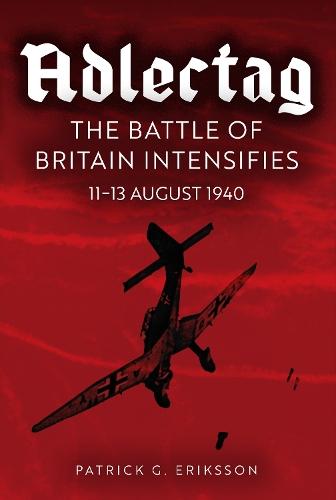
11–13 August 1940 saw the first large raids on the UK in the Battle of Britain. Adlertag or Eagle Day was to open the great offensive after the warm-up of July. The weather disrupted the complex planning and a fiasco ensued. What characterises the 11–13 August period is the contrast in the strategy and tactics applied by the two main German units, Luftflotte 2 under Field Marshal Kesselring and Luftflotte 3 of Field Marshal Sperrle. Kesselring, with a single exception, used only one of his bomber Geschwadern, supported by his two Ju 87 Stuka dive-bomber Gruppen and his sole fighter-bomber outfit, covered by all his fighters. Sperrle on the other hand used multiple conventional bomber Geschwadern, largely those equipped with the modern Ju 88 aircraft, and some Stukas, from across three Fliegerkorps, covered by his fighter resources. These three days were the beginning of the intense part of the Battle of Britain when they applied their chosen methodologies but did not see the errors of their choices, which allowed the RAF to win the Battle. As to witnesses to the Battle, fascinating details are to be found within these pages: a twelve-year-old Jewish schoolboy, for instance, extracted from Germany just before war broke out through the Kindertransport scheme, finds himself conflicted between patriotic feeling for his Luftwaffe countrymen flying over his refugee boarding school and the knowledge that their defeat by the RAF would preserve his own life.
Full Product Details
Author: Patrick G. Eriksson
Publisher: Amberley Publishing
Imprint: Amberley Publishing
Weight: 0.714kg
ISBN: 9781398117389
ISBN 10: 1398117382
Pages: 352
Publication Date: 15 November 2025
Audience:
General/trade
,
General
Format: Hardback
Publisher's Status: Active
Availability: In Print

This item will be ordered in for you from one of our suppliers. Upon receipt, we will promptly dispatch it out to you. For in store availability, please contact us.
Reviews
'This is a scholarly study. It follows the author’s previous books on elements of the air war. He has consulted numerous sources, including combat reports, as well as station, squadron and published records. The many detailed footnotes are testimony to his thorough approach. He drew on his correspondence and conversations with participants from both sides, notably with more than 100 Luftwaffe veterans. The book has many photographs and most informative maps. Helpfully, it incorporates a useful explanation of Luftwaffe terminology.' * RAF News, 6th February 2026 *
Author Information
Having retired after a career as a university lecturer in geology, Professor Patrick G. Eriksson has devoted many years to research for this series of books. He returned to primary sources and, crucially, as an associate member of the German Air Force Veteran's Association since 1974, he has interviewed and corresponded with more than a hundred former members of the Luftwaffe, from junior NCOs to Geschwader commanders. Such primary material is unavailable anywhere else and can never be gathered again. He is the author of 'Alarmstart' Vols I, II and III and 'Tally-Ho'.