Overview
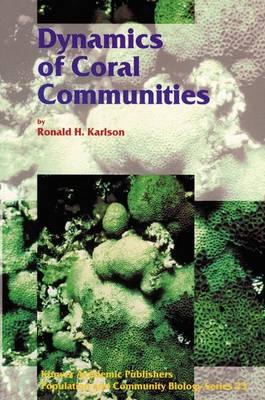
This is a study of the dynamical processes influencing the structure of coral communities, some of the most biologically diverse communities on earth. A variety of biological and physical processes operating across an enormous range of spatiotemporal scales are highlighted (eg niche partitioning, biological interactions, disturbance phenomena, large-scale tectonic, eustatic, climatic and oceanographic processes). The focus on the community provides a framework for presenting some examples from the literature using multiple taxonomic groups (eg corals, fishes, encrusting invertebrates). The theoretical background and relevant evidence are provided for several important processes: the influence of keystone species on community stability; ecological succession; interspecific competition; consumer-resource interactions; disturbance-mediated species coexistence; saturation; limited membership; and regional enrichment. The merits of integrating the local perspective, emphasizing niche theory and biological interactions, with a larger historical-geographical perspective are discussed for coral communities in a biogeographical context.
Full Product Details
Author: R.H. Karlson
Publisher: Chapman and Hall
Imprint: Chapman and Hall
Edition: 1999 ed.
Volume: 23
Dimensions:
Width: 15.50cm
, Height: 1.50cm
, Length: 23.50cm
Weight: 1.210kg
ISBN: 9780412795503
ISBN 10: 0412795507
Pages: 250
Publication Date: 31 August 1999
Audience:
College/higher education
,
Professional and scholarly
,
Undergraduate
,
Postgraduate, Research & Scholarly
Format: Hardback
Publisher's Status: Active
Availability: In Print

This item will be ordered in for you from one of our suppliers. Upon receipt, we will promptly dispatch it out to you. For in store availability, please contact us.
Reviews
The book provides a focus on the rich diversity and strong biological interactions that characterise the most fascinating coral communities. Defining community, guild, assemblage and web, the theme of the book is introduced with descriptions of the dynamics of coral community, especially of the constituent species, the interactions among them, the local environments, oceanographic transport processes, climatic fluctuations and a host of geographical and historical phenomena. The subject is narrated in thoughtfully and admirably organised chapters on diversity, stability, succession, competition and so on. Citing suitable examples, each chapter considers one or more selected principles, theories, hypotheses and models. In this process, new information is provided, for example that 'coexistence competition' can be an alternative to competitive exclusion. Each chapter is closed with an overview, providing a sort of summary. The book includes useful references and subject index. (Professor T.J. Pandian, Madurai Kamaraj University, India)
The book provides a focus on the rich diversity and strong biological interactions that characterise the most fascinating coral communities. Defining community, guild, assemblage and web, the theme of the book is introduced with descriptions of the dynamics of coral community, especially of the constituent species, the interactions among them, the local environments, oceanographic transport processes, climatic fluctuations and a host of geographical and historical phenomena. The subject is narrated in thoughtfully and admirably organised chapters on diversity, stability, succession, competition and so on. Citing suitable examples, each chapter considers one or more selected principles, theories, hypotheses and models. In this process, new information is provided, for example that coexistence competition' can be an alternative to competitive exclusion. Each chapter is closed with an overview, providing a sort of summary. The book includes useful references and subject index.' Professor T.J. Pandian, Madurai Kamaraj University, India
""The book provides a focus on the rich diversity and strong biological interactions that characterise the most fascinating coral communities. Defining community, guild, assemblage and web, the theme of the book is introduced with descriptions of the dynamics of coral community, especially of the constituent species, the interactions among them, the local environments, oceanographic transport processes, climatic fluctuations and a host of geographical and historical phenomena. The subject is narrated in thoughtfully and admirably organised chapters on diversity, stability, succession, competition and so on. Citing suitable examples, each chapter considers one or more selected principles, theories, hypotheses and models. In this process, new information is provided, for example that `coexistence competition' can be an alternative to competitive exclusion. Each chapter is closed with an overview, providing a sort of summary. The book includes useful references and subject index."" (Professor T.J. Pandian, Madurai Kamaraj University, India)