Overview
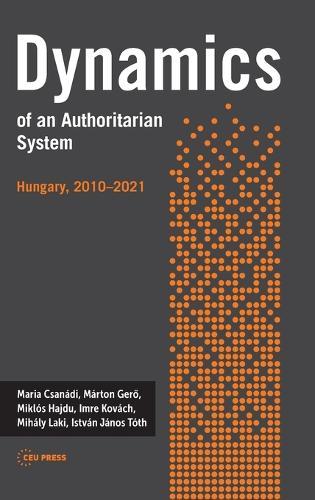
This conceptually synthetic and empirically rich book demonstrates the vulnerability of democratic settings to authoritarianism and populism. Six scholars from various professional fields explore here the metamorphosis of a political party into a centralized authoritarian system. Viktor Orbán and his Fidesz party needed less than ten years to accomplish this transformation in Hungary. In 2010, after winning a majority that could make changes in the constitution – two-thirds of the parliamentary seats, they evolved and stabilized the system, which produced again the two-thirds majority in 2014 and 2018. The authors reveal how a democratic setting can be used as a device for political capture. They show how a political entity managed to penetrate almost all sub-fields of the economy to arrive at institutionalized corruption, and how the centralized power structure reproduces itself. With the help of a powerful empirical apparatus—among others analyses of more than 220,000 public tenders, redistributions of state subsidies, and the interconnectedness of those privileged with the political elite — the authors detail the functioning of a crony system and the network aspects of political connections in the rapid enrichment of politically-linked businesses. Their studies demonstrate the role of political capture in this redistribution and how this capture leads to a new social stratification.
Full Product Details
Author: Mária Csanádi ,
Imre Kovách ,
Márton Gero ,
Miklós Hajdu
Publisher: Central European University Press
Imprint: Central European University Press
Weight: 0.669kg
ISBN: 9789633865774
ISBN 10: 9633865778
Pages: 375
Publication Date: 10 August 2022
Audience:
Professional and scholarly
,
Professional & Vocational
Format: Hardback
Publisher's Status: Active
Availability: In Print

This item will be ordered in for you from one of our suppliers. Upon receipt, we will promptly dispatch it out to you. For in store availability, please contact us.
Reviews
Orchestrated illiberal attacks on constitutional democracies are often discussed by representatives of various disciplines. But systemic problems require systemic analyses--something the authors of this volume master in an exquisite manner. They bring together concepts of different academic fields, offering a clear analysis of the interconnectedness of political capture and institutionalized corruption, and revealing how political capture diffuses into different social subfields. A must-read for anyone who wishes to gain a comprehensive picture of the maladies of constitutional democracies threatened by authoritarian or hybrid regimes. --Petra Bard The authors of this book succeed in a task that is very difficult to accomplish: writing a book with high political relevance, great conceptual clarity, and enormous data sets. All three elements are present throughout and none get in the way of the other. Good books meet one of these standards, very good ones, two, and outstanding ones all three. Dynamics of an Authoritarian System is an outstanding book. --Peter J. Katzenstein Orban's government has gradually infiltrated into all strata of Hungary's social-political-economic life. The particular strength of the presentation and analysis of that process in this collective work consists in the variety of approaches and research methods applied by the authors: theoretical dissection, case studies, and econometrics supporting each other and integrated into a convincing whole.--Karoly Attila Soos This book is a valuable account of the inner workings and dynamics of the Hungarian political regime since Fidesz's landslide 2010 electoral victory. It makes a significant contribution to our understanding of how and why Fidesz was able to capture the Hungarian state and economy since 2010. --Jason Wittenberg
Orchestrated illiberal attacks on constitutional democracies are often discussed by representatives of various disciplines. But systemic problems require systemic analyses--something the authors of this volume master in an exquisite manner. They bring together concepts of different academic fields, offering a clear analysis of the interconnectedness of political capture and institutionalized corruption, and revealing how political capture diffuses into different social subfields. A must-read for anyone who wishes to gain a comprehensive picture of the maladies of constitutional democracies threatened by authoritarian or hybrid regimes.--Petra Bard The authors of this book succeed in a task that is very difficult to accomplish: writing a book with high political relevance, great conceptual clarity, and enormous data sets. All three elements are present throughout and none get in the way of the other. Good books meet one of these standards, very good ones, two, and outstanding ones all three. Dynamics of an Authoritarian System is an outstanding book.--Peter J. Katzenstein Orban's government has gradually infiltrated into all strata of Hungary's social-political-economic life. The particular strength of the presentation and analysis of that process in this collective work consists in the variety of approaches and research methods applied by the authors: theoretical dissection, case studies, and econometrics supporting each other and integrated into a convincing whole.--Karoly Attila Soos This book is a valuable account of the inner workings and dynamics of the Hungarian political regime since Fidesz's landslide 2010 electoral victory. It makes a significant contribution to our understanding of how and why Fidesz was able to capture the Hungarian state and economy since 2010.--Jason Wittenberg
Author Information
Maria Csanádi is DSc in political science, scientific advisor, emerita at Institute of Economics of the Centre for Economic and Regional Studies in Hungary. Imre Kovách is DSc in sociology, Scientific advisor, Institute of Sociology CSS, professor, University of Debrecen, head of Sociology PhD program. Márton Gero is Assistant professor of sociology at the Eötvös Loránd University, Faculty of Social Sciences and a research fellow at the Centre for Social Sciences. Miklós Hajdu is MSc in survey statistics, assistant lecturer at the Corvinus University of Budapest. István János Tóth is a senior research fellow at the Institute of Economics of Centre for Economic and Regional Studies at the Hungarian Academy of Sciences and managing director of Corruption Research Center Budapest (CRCB).