Overview
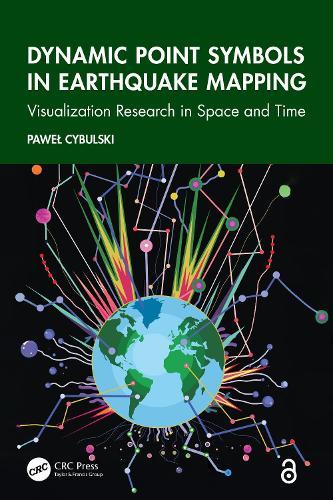
Dynamic Point Symbols in Earthquake Mapping: Visualization Research in Space and Time examines how animated symbols enhance digital map comprehension, particularly for earthquake data visualization. It provides much-needed empirical evidence for the understandability, usability, and utility of congruently using dynamic visualization to depict a particular dynamic environmental process. Through rigorous mixed-methods research combining online surveys and eye-tracking experiments, this book compares static symbols against various motion types across different cartographic tasks and provides evidence-based guidelines for implementing motion in maps, balancing innovation with usability. It serves as a practical resource with recommendations for cartographers and GIS (Geographic Information Systems) professionals. Key Features: Combines large-scale data collection with detailed, lab-based visual behavior analysis, offering breadth and depth, and illustrates how people interact with animated map symbols in both natural and controlled conditions. Evaluates multiple motion forms like pulsation, vibration, and pictorial motion across tasks, helping readers understand what type of motion to use and when. Includes real-world applications in crisis mapping, emergency response, and public communication. Offers quantitative comparisons that allow practitioners to optimize both clarity and speed in their map designs. Provides recommendations on how to transform complex findings into ready-to-use guidance for cartographers, GIS specialists, and UX designers working with digital geovisualization. This book is an excellent resource for GIS professionals, researchers, academics, and cartographers interested in web mapping, emergency response mapping, real-time data visualization, and graduate students taking advanced GIS and cartography courses, and those aiming to enhance their existing skillset in geovisualization mapping.
Full Product Details
Author: Paweł Cybulski (Adam Mickiewicz University Poznan, Poland)
Publisher: Taylor & Francis Ltd
Imprint: CRC Press
ISBN: 9781041216933
ISBN 10: 1041216939
Pages: 275
Publication Date: 17 April 2026
Audience:
Professional and scholarly
,
College/higher education
,
Professional & Vocational
,
Postgraduate, Research & Scholarly
Format: Hardback
Publisher's Status: Forthcoming
Availability: Not yet available

This item is yet to be released. You can pre-order this item and we will dispatch it to you upon its release.
Author Information
Dr. Paweł Cybulski, is an Assistant Professor at the Department of Cartography and Geomatics, Adam Mickiewicz University in Poznań, Poland. He is also a geographer by his first studies at the University of Łódź, as well as a cartographer and surveyor by education at Adam Mickiewicz University. He holds a PhD in Earth Sciences, specializing in animated cartography and visual perception. His expertise includes eye-tracking, dynamic symbol design, geovisualization, and user interaction with digital maps. He has led a National Science Centre (NCN) grant on preattentive attributes of dynamic symbols. Dr. Cybulski has authored over 40 scientific publications, including peer-reviewed journal articles and book chapters, and has received recognition for interdisciplinary research in GIScience and cognitive cartography.