|
|
|||
|
||||
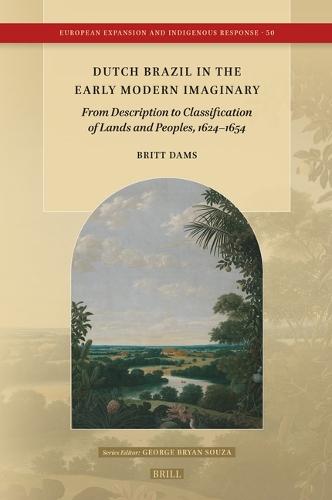
OverviewBetween 1624 and 1654 Dutch authors shifted from marvellous travel tales to methodical inventories that aimed at deeper comprehension of Brazil. This book traces that evolution through four cornerstone texts—Nieuwe Wereldt, Iaerlijck Verhael, Rerum per Octennium, and Historia naturalis Brasiliae—read alongside maps, West India Company papers, and incisive illustrations. Planters, soldiers, and Indigenous go-betweens supplied the field notes that allowed for ethnography and natural history to take empirical form. By tracking how writers labelled landscapes, plants, animals, and peoples, the study shows how description itself became a tool of Dutch colonial power. Full Product DetailsAuthor: Britt DamsPublisher: Brill Imprint: Brill Volume: 50 Dimensions: Width: 15.50cm , Height: 2.50cm , Length: 23.50cm Weight: 0.623kg ISBN: 9789004754386ISBN 10: 9004754385 Pages: 300 Publication Date: 26 March 2026 Audience: College/higher education , Postgraduate, Research & Scholarly Format: Hardback Publisher's Status: Active Availability: Manufactured on demand We will order this item for you from a manufactured on demand supplier. Table of ContentsReviewsAuthor InformationBritt Dams is a literary scholar specializing in early modern, colonial, and post-colonial writing with an emphasis on seventeenth-century Dutch Brazil. She earned her PhD in literature from Ghent University in 2015 with the dissertation Comprehending the New World in the Early Modern Period: Descriptions of Dutch Brazil (1624–1654). At Ghent she teaches Portuguese and French language courses, and she belongs to the Group for Early Modern Studies (GEMS). She also lectures on comparative—especially colonial and post-colonial—literature at Université Paul-Valéry Montpellier 3, where she is a member of the Institut de Recherche Intersite d’Études Culturelles (IRIEC). She is the author of several journal articles and book chapters. Tab Content 6Author Website:Countries AvailableAll regions |
||||