Overview
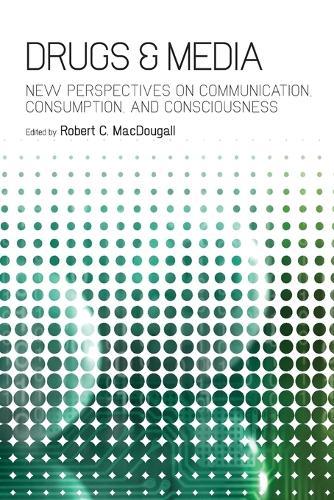
We have developed into a culture that is over-reliant upon pharmaceutical and recreational drugs; where drugs are incessantly advertised and promoted to us via our mass media. Like drugs, communication media alter the way we interact with the world; they direct our attention in various ways, sometimes enabling certain behaviors and experiences, and prohibiting others. The contributors to this cutting-edge collection apply media ecological concepts to consider how drugs function as communication technologies; literally media in and for the human sensorium. In these essays, drugs are considered as communication media in a practical sense, not merely in the metaphorical way they tend to be discussed in the popular press. Media and drugs are thus conceived as communicative tools that enhance and/or inhibit physical, social and symbolic experience - our ways of seeing and being in the world. Drugs & Media: New Perspectives on Communication, Consumption and Consciousness is the first book to examine this parallel, promoting a critical awareness of the significant impact of drugs and media on individuals, society and our wider human culture.
Full Product Details
Author: Dr. Robert C. MacDougall ,
Robert MacDougall ,
Ronan Hallowell ,
Val Peterson
Publisher: Continuum Publishing Corporation
Imprint: Continuum Publishing Corporation
Dimensions:
Width: 15.30cm
, Height: 2.30cm
, Length: 22.80cm
Weight: 0.574kg
ISBN: 9781441134929
ISBN 10: 1441134921
Pages: 368
Publication Date: 24 November 2011
Audience:
College/higher education
,
Undergraduate
,
Postgraduate, Research & Scholarly
Format: Paperback
Publisher's Status: Active
Availability: Manufactured on demand

We will order this item for you from a manufactured on demand supplier.
Language: English
Reviews
We all of course know the cliche 'don't judge a book by its cover.' But to anyone who is perusing this cover and reading this note, you would be well advised to heed the following extension of that cliche 'Do not be too quick to judge this book by its title.' This is by no means a book that treats of media like Cheech and Chong's movie Up in Smoke or Hunter S. Thompson's drug-addled journalistic endeavors, or what happens when music fans fuel up on Ecstasy and rave all night at a club. It is a book that takes on, in a deeply serious and scholarly way, the serious matters that: (a) drugs are media in that they come between us and our ways of being in and experiencing our world; (b) our uses of and gratifications from media in certain ways smack of and parallel the use of and addiction to drugs; and (c) both drugs and media operate on our consciousness at the same time our consciousness operates on them - in significant ways, for significant reasons, and with significant effects.<p> Thom
Media addiction is quietly acknowledged but never discussed, for obvious reasons. It is a dirty little secret which could revolutionize every aspect of innovation and marketing if it were known. Such a revolution would have the most beneficial effects on preservation of culture and the easing of social and individual unrest...It gives the reader, for the first time, some means of ascertaining how media do and will affect his life and society and culture. --Eric Mcluhan, Independent Scholar and co-author of The Laws of Media We all of course know the cliche 'don't judge a book by its cover.' But to anyone who is perusing this cover and reading this note, you would be well advised to heed the following extension of that cliche: 'Do not be too quick to judge this book by its title.' This is by no means a book about media like Cheech and Chong's movie Up in Smoke or Hunter S. Thompson's drug-addled journalistic endeavors, or what happens when music fans fuel up on Ecstasy and rave all night at a club. It is a book that takes on, in a deeply serious and scholarly way, the serious matters that: (a) drugs are media in that they come between us and our ways of being in and experiencing our world; (b) our uses of and gratifications from media in certain ways smack of and parallel the use of and addiction to drugs; and (c) both drugs and media operate on our consciousness at the same time our consciousness operates on them - in significant ways, for significant reasons, and with significant effects. --Thom Gencarelli, Associate Professor of Communication, Manhattan College
Media addiction is quietly acknowledged but never discussed, for obvious reasons. It is a ""dirty little secret"" which could revolutionize every aspect of innovation and marketing if it were known. Such a revolution would have the most beneficial effects on preservation of culture and the easing of social and individual unrest...It gives the reader, for the first time, some means of ascertaining how media do and will affect his life and society and culture. --Eric Mcluhan, Independent Scholar and co-author of The Laws of Media We all of course know the cliché 'don't judge a book by its cover.' But to anyone who is perusing this cover and reading this note, you would be well advised to heed the following extension of that cliché: 'Do not be too quick to judge this book by its title.' This is by no means a book about media like Cheech and Chong's movie Up in Smoke or Hunter S. Thompson's drug-addled journalistic endeavors, or what happens when music fans fuel up on Ecstasy and rave all night at a club. It is a book that takes on, in a deeply serious and scholarly way, the serious matters that: (a) drugs are media in that they come between us and our ways of being in and experiencing our world; (b) our uses of and gratifications from media in certain ways smack of and parallel the use of and addiction to drugs; and (c) both drugs and media operate on our consciousness at the same time our consciousness operates on them - in significant ways, for significant reasons, and with significant effects. --Thom Gencarelli, Associate Professor of Communication, Manhattan College
Media addiction is quietly acknowledged but never discussed, for obvious reasons. It is a dirty little secret which could revolutionize every aspect of innovation and marketing if it were known. Such a revolution would have the most beneficial effects on preservation of culture and the easing of social and individual unrest...It gives the reader, for the first time, some means of ascertaining how media do and will affect his life and society and culture.<p>--Eric Mcluhan, Independent Scholar and co-author of The Laws of Media
Author Information
Robert MacDougall is a Professor of communication and media studies at Curry College on the outskirts of Boston, MA. He is an avid member of the Media Ecology Association, and continues to work toward articulating a biological approach to understand the human-technology interface. His most recent investigations incorporate the use of EEG technology in an effort to better understand some of the interactions, effects and side-effects associated with everyday multimedia use.