|
|
|||
|
||||
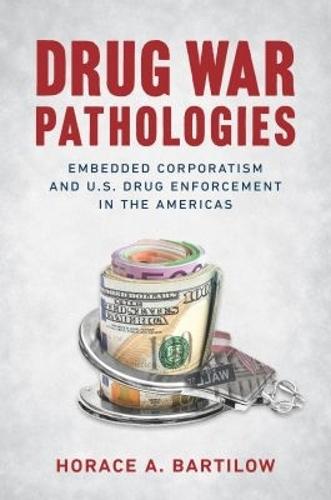
OverviewIn this book, Horace Bartilow develops a theory of embedded corporatism to explain the U.S. government's war on drugs. Stemming from President Richard Nixon's 1971 call for an international approach to this ""war,"" U.S. drug enforcement policy has persisted with few changes to the present day, despite widespread criticism of its effectiveness and of its unequal effects on hundreds of millions of people across the Americas. While researchers consistently emphasize the role of race in U.S. drug enforcement, Bartilow's empirical analysis highlights the class dimension of the drug war and the immense power that American corporations wield within the regime. Drawing on qualitative case study methods, declassified U.S. government documents, and advanced econometric estimators that analyze cross-national data, Bartilow demonstrates how corporate power is projected and embedded—in lobbying, financing of federal elections, funding of policy think tanks, and interlocks with the federal government and the military. Embedded corporatism, he explains, creates the conditions by which interests of state and nonstate members of the regime converge to promote capital accumulation. The subsequent human rights repression, illiberal democratic governments, antiworker practices, and widening income inequality throughout the Americas, Bartilow argues, are the pathological policy outcomes of embedded corporatism in drug enforcement. Full Product DetailsAuthor: Horace A. BartilowPublisher: The University of North Carolina Press Imprint: The University of North Carolina Press Dimensions: Width: 15.50cm , Height: 2.20cm , Length: 23.30cm Weight: 0.635kg ISBN: 9781469652542ISBN 10: 1469652544 Pages: 320 Publication Date: 30 August 2019 Audience: Professional and scholarly , Professional & Vocational Format: Hardback Publisher's Status: Active Availability: Manufactured on demand We will order this item for you from a manufactured on demand supplier. Table of ContentsReviewsThe strong narrative is reinforced by data-driven analysis organized in a cohesive theoretical framework. . . . Bartilow ably demonstrates the deeply embedded private interests in American drug enforcement policymaking, the economic calculus underwriting state and corporate decisionmaking, and the human cost of the drug war in the Americas.--Pharmacy in History Author InformationHorace Bartilow, associate professor of political science at the University of Kentucky, is the author of The Debt Dilemma. Tab Content 6Author Website:Countries AvailableAll regions |
||||