Overview
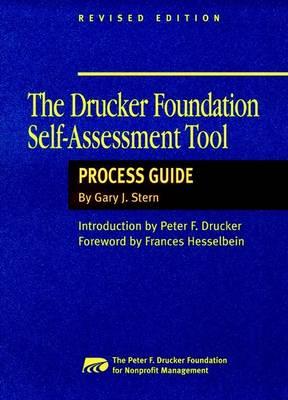
The Peter F. Drucker Foundation for Nonprofit ManagementThe National Space Society board of directors held its retreat and it was an amazing success. The Self-Assessment Tool was an excellent tool to guide us through the process. -Richard E. Biehl, National Space SocietyWe have found the Self-Assessment Tool to be particularly helpful in assisting organizations to clarify their missions and reconceptualize strategy and tactics. The concepts presented and the carefully formulated questions are relevant to both established groups and those just starting out. -Aliza Mazor, resource development coordinator, Shatil, a support project for voluntary organizations in Israel Since its original publication in 1993, the best-selling Drucker Foundation Self-Assessment Tool has helped and inspired countless nonprofit boards, executives, and teams to rediscover the direction and potential of their organizations. This completely revised edition of the Self-Assessment Tool combines long-range planning and strategic marketing with a passion for dispersed leadership. It allows an organization to plan for results, to learn from its customers, and to release the energy of its people to further its mission.Considered to be the father of modern management, Peter F. Drucker applies a lifetime of wisdom and expertise to help nonprofit organizations uncover the truth about their performance, focus their direction, and improve their overall effectiveness. Regardless of your organization's size and planning experience, the Self-Assessment Tool provides the means to apply Peter Drucker's invaluable insights directly to your organization and its needs. The fully enhanced edition not only provides expanded methods of evaluation and planning, but also places special emphasis on implementing the decisions made in the self-assessment process.Fully enhanced from extensive user feedback, the Process Guide features step-by-step guidelines as well as sample reports, customer surveys, agendas for discussions or retreats, and a completed plan. Nonprofit leaders and their teams will find detailed instructions on how to work through the three phases of self-assessment: Preparing for Self-Assessment, Conducting the Self-Assessment Process, and Completing the Plan. The revised guide contains the tools necessary to complete the self-assessment process and an effective plan. These resources include sample customer research formats, practical facilitation techniques, methods for developing a mission statement, and a more comprehensive reference section. Designed to be flexible for your specific needs, the Process Guide offers valuable tools that will help
Full Product Details
Author: Peter F. Drucker Foundation for Nonprofit Management ,
Gary J. Stern
Publisher: John Wiley & Sons Inc
Imprint: Jossey-Bass Inc.,U.S.
Edition: 2nd Revised edition
Dimensions:
Width: 21.80cm
, Height: 1.20cm
, Length: 28.00cm
Weight: 0.562kg
ISBN: 9780787944360
ISBN 10: 078794436
Pages: 176
Publication Date: 23 October 1998
Audience:
Professional and scholarly
,
Professional & Vocational
Format: Paperback
Publisher's Status: Out of Stock Indefinitely
Availability: In Print

Limited stock is available. It will be ordered for you and shipped pending supplier's limited stock.
Reviews
The National Space Society board of directors held its retreat and it was an amazing success. The Self-Assessment Tool was an excellent tool to guide us through the process. (Richard E. Biehl, National Space Society)<br> <br> We have found the Self-Assessment Tool to be particularly helpful in assisting organizations to clarify their missions and reconceptualize strategy and tactics. The concepts presented and the carefully formulated questions are relevant to both established groups and those just starting out. (Aliza Mazor, resource development coordinator, Shatil, a support project for voluntary organizations in Israel)
The National Space Society board of directors held its retreat and it was an amazing success. The Self-Assessment Tool was an excellent tool to guide us through the process. (Richard E. Biehl, National Space Society)<br><br> We have found the Self-Assessment Tool to be particularly helpful in assisting organizations to clarify their missions and reconceptualize strategy and tactics. The concepts presented and the carefully formulated questions are relevant to both established groups and those just starting out. (Aliza Mazor, resource development coordinator, Shatil, a support project for voluntary organizations in Israel)