Overview
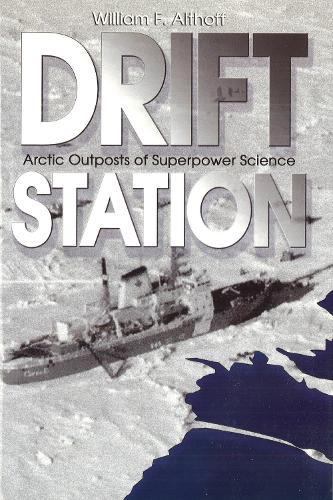
Closed to conventional passage, the Arctic Ocean and peripheral seas have nevertheless known European explorers since the sixteenth century. Systematic observation, however, dates only from the last years of the nineteenth century, with the epic drift of Fridtjof Nansen's ice ship Fram (1893-1896), the first scientific expedition of the modern era. Twentieth-century technology - the icebreaker, radio transmission, nuclear power, and aircraft - opened the Arctic for survey, basic research, and observation. World War II saw the inhospitable circumpolar Arctic transformed into a theater of military operations. The Cold War and the missile age saw governments staking further claims, because only a relatively short arc of maritime boreal waste separated North America and Eurasia. The complex interactions of air, ice, and water that drive circumpolar systems also serve as engines of oceanic and atmospheric circulation. As a result, meteorology, oceanography, geophysics, and many other areas of scientific research in the region soon became acutely linked to the economic, political, and particularly the politico-military interests of the Soviet Union, the United States, Canada, and the oth
Full Product Details
Author: William F. Althoff
Publisher: Potomac Books Inc
Imprint: Potomac Books Inc
Dimensions:
Width: 15.20cm
, Height: 3.30cm
, Length: 22.90cm
Weight: 0.680kg
ISBN: 9781574887716
ISBN 10: 1574887718
Pages: 320
Publication Date: 01 January 2007
Audience:
General/trade
,
Professional and scholarly
,
College/higher education
,
General
,
Professional & Vocational
Format: Hardback
Publisher's Status: Active
Availability: In Print

This item will be ordered in for you from one of our suppliers. Upon receipt, we will promptly dispatch it out to you. For in store availability, please contact us.
Reviews
""William F. Althoff’s work is factual, well-written, and interesting. With the current worldwide interest in global warming and the Arctic’s part in those studies, DRIFT STATION makes valuable contributions to the history of science and research in the Arctic Ocean.""-Vice Adm. John H. Nicholson, USN (Ret.) ""Congratulations to William Althoff for his masterful effort in preparing such a detailed account of the activities of ice camps, ships, and submarines helping to gather scientific data on the Polar Basin. Drift Station is the first publication where the scientific activities of the United States, Russia, Canada, and the drift of the Norwegian vessel FRAM have been integrated as a historical overview.""-Brig. Gen. Keith R. Greenaway, RCAF (Ret.) ""Imagine a frozen ocean that is an endless expanse of ice and snow. Imagine a place where there are months of darkness followed by a summer without a sunset. DRIFT STATION takes you there, to the floating, drifting pack ice of the Arctic Ocean. It tells the tales of more than one hundred years of scientific research on the sea ice, from the pioneering drift of Nansen’s FRAM to the Cold War outposts of North Pole stations and ice islands to present day efforts to understand climate change. William Althoff escorts us on these voyages to the cold, austere, and beguiling Arctic Ocean and conveys their challenges, rewards, and scientific discoveries.""-Dr. Donald K. Perovich, sea-ice geophysicist, Cold Regions Research and Engineering Laboratory ""What historian William F. Althoff calls the ‘White Desert’ emerged as a key arena for superpower rivalry during the Cold War era. A world set apart, the Arctic has drawn over time a succession of explorers, scientists, aviators, mariners, and military figures to its inhospitable terrain. A geologist by profession and a military historian, Althoff is no stranger to the northern latitudes, having made three field trips to Arctic Canada. He masterfully shows how this ‘cruel, vast, faraway’ polar region attracted the United States and the Soviet Union over many decades, a rivalry where the pursuit of strategic military goals mixed awkwardly with ongoing strides in scientific research. Beyond the Cold War, as Althoff notes, the Arctic became the ‘last frontier in oceanography.’ His engaging narrative offers a fascinating blend of history and science, prompting a new appreciation of the Arctic polar region.""-Von Hardesty, curator, Smithsonian National Air and Space Museum ""Drift Station is an excellent and unique contribution to arctic literature. A 'well done' to Althoff for undertaking this difficult task and doing it in a way that is very readable.""-Naval History ""Polar history enthusiasts will want to add this book to their collections.""-ARCTIC
William F. Althoff's work is factual, well-written, and interesting. With the current worldwide interest in global warming and the Arctic's part in those studies, DRIFT STATION makes valuable contributions to the history of science and research in the Arctic Ocean. --Vice Adm. John H. Nicholson, USN (Ret.)--Vice Adm. John H. Nicholson, USN (Ret.) Congratulations to William Althoff for his masterful effort in preparing such a detailed account of the activities of ice camps, ships, and submarines helping to gather scientific data on the Polar Basin. Drift Station is the first publication where the scientific activities of the United States, Russia, Canada, and the drift of the Norwegian vessel FRAM have been integrated as a historical overview. --Brig. Gen. Keith R. Greenaway, RCAF (Ret.)--Brig. Gen. Keith R. Greenaway, RCAF (Ret.) Imagine a frozen ocean that is an endless expanse of ice and snow. Imagine a place where there are months of darkness followed by a summer without a sunset. DRIFT STATION takes you there, to the floating, drifting pack ice of the Arctic Ocean. It tells the tales of more than one hundred years of scientific research on the sea ice, from the pioneering drift of Nansen's FRAM to the Cold War outposts of North Pole stations and ice islands to present day efforts to understand climate change. William Althoff escorts us on these voyages to the cold, austere, and beguiling Arctic Ocean and conveys their challenges, rewards, and scientific discoveries. --Dr. Donald K. Perovich, sea-ice geophysicist, Cold Regions Research and Engineering Laboratory--Dr. Donald K. Perovich, sea-ice geophysicist, Cold Regions Research and Engineering Laboratory What historian William F. Althoff calls the 'White Desert' emerged as a key arena for superpower rivalry during the Cold War era. A world set apart, the Arctic has drawn over time a succession of explorers, scientists, aviators, mariners, and military figures to its inhospitable terrain. A geologist by profession and a military historian, Althoff is no stranger to the northern latitudes, having made three field trips to Arctic Canada. He masterfully shows how this 'cruel, vast, faraway' polar region attracted the United States and the Soviet Union over many decades, a rivalry where the pursuit of strategic military goals mixed awkwardly with ongoing strides in scientific research. Beyond the Cold War, as Althoff notes, the Arctic became the 'last frontier in oceanography.' His engaging narrative offers a fascinating blend of history and science, prompting a new appreciation of the Arctic polar region. --Von Hardesty, curator, Smithsonian National Air and Space Museum--Von Hardesty, curator, Smithsonian National Air and Space Museum Polar history enthusiasts will want to add this book to their collections. --ARCTIC--ARCTIC (12/20/2007) Drift Station is an excellent and unique contribution to arctic literature. A 'well done' to Althoff for undertaking this difficult task and doing it in a way that is very readable. --Naval History-- (10/02/2007)
What historian William F. Althoff calls the White Desert emerged as a key arena for superpower rivalry during the Cold War era. A world set apart, the Arctic has drawn over time a succession of explorers, scientists, aviators, mariners, and military figures to its inhospitable terrain. A geologist by profession and a military historian, Althoff is no stranger to the northern latitudes, having made three field trips to Arctic Canada. He masterfully shows how this cruel, vast, faraway polar region attracted the United States and the Soviet Union over many decades, a rivalry where the pursuit of strategic military goals mixed awkwardly with ongoing strides in scientific research. Beyond the Cold War, as Althoff notes, the Arctic became the last frontier in oceanography. His engaging narrative offers a fascinating blend of history and science, prompting a new appreciation of the Arctic polar region. Von Hardesty, curator, Smithsonian National Air and Space Museum--Von Hardesty, curator, Smithsonian National Air and Space Museum
Congratulations to William Althoff for his masterful effort in preparing such a detailed account of the activities of ice camps, ships, and submarines helping to gather scientific data on the Polar Basin. Drift Station is the first publication where the scientific activities of the United States, Russia, Canada, and the drift of the Norwegian vessel FRAM have been integrated as a historical overview. --Brig. Gen. Keith R. Greenaway, RCAF (Ret.)--Brig. Gen. Keith R. Greenaway, RCAF (Ret.) Imagine a frozen ocean that is an endless expanse of ice and snow. Imagine a place where there are months of darkness followed by a summer without a sunset. DRIFT STATION takes you there, to the floating, drifting pack ice of the Arctic Ocean. It tells the tales of more than one hundred years of scientific research on the sea ice, from the pioneering drift of Nansen's FRAM to the Cold War outposts of North Pole stations and ice islands to present day efforts to understand climate change. William Althoff escorts us on these voyages to the cold, austere, and beguiling Arctic Ocean and conveys their challenges, rewards, and scientific discoveries. --Dr. Donald K. Perovich, sea-ice geophysicist, Cold Regions Research and Engineering Laboratory--Dr. Donald K. Perovich, sea-ice geophysicist, Cold Regions Research and Engineering Laboratory What historian William F. Althoff calls the 'White Desert' emerged as a key arena for superpower rivalry during the Cold War era. A world set apart, the Arctic has drawn over time a succession of explorers, scientists, aviators, mariners, and military figures to its inhospitable terrain. A geologist by profession and a military historian, Althoff is no stranger to the northern latitudes, having made three field trips to Arctic Canada. He masterfully shows how this 'cruel, vast, faraway' polar region attracted the United States and the Soviet Union over many decades, a rivalry where the pursuit of strategic military goals mixed awkwardly with ongoing strides in scientific research. Beyond the Cold War, as Althoff notes, the Arctic became the 'last frontier in oceanography.' His engaging narrative offers a fascinating blend of history and science, prompting a new appreciation of the Arctic polar region. --Von Hardesty, curator, Smithsonian National Air and Space Museum--Von Hardesty, curator, Smithsonian National Air and Space Museum William F. Althoff's work is factual, well-written, and interesting. With the current worldwide interest in global warming and the Arctic's part in those studies, DRIFT STATION makes valuable contributions to the history of science and research in the Arctic Ocean. --Vice Adm. John H. Nicholson, USN (Ret.)--Vice Adm. John H. Nicholson, USN (Ret.) Polar history enthusiasts will want to add this book to their collections. --ARCTIC--Von Hardesty, curator, Smithsonian National Air and Space Museum ARCTIC (12/20/2007 12:00:00 AM) Drift Station is an excellent and unique contribution to arctic literature. A 'well done' to Althoff for undertaking this difficult task and doing it in a way that is very readable. --Naval History--Von Hardesty, curator, Smithsonian National Air and Space Museum Naval History (10/2/2007 12:00:00 AM)
"""Congratulations to William Althoff for his masterful effort in preparing such a detailed account of the activities of ice camps, ships, and submarines helping to gather scientific data on the Polar Basin. Drift Station is the first publication where the scientific activities of the United States, Russia, Canada, and the drift of the Norwegian vessel FRAM have been integrated as a historical overview.""--Brig. Gen. Keith R. Greenaway, RCAF (Ret.) ""Imagine a frozen ocean that is an endless expanse of ice and snow. Imagine a place where there are months of darkness followed by a summer without a sunset. DRIFT STATION takes you there, to the floating, drifting pack ice of the Arctic Ocean. It tells the tales of more than one hundred years of scientific research on the sea ice, from the pioneering drift of Nansen's FRAM to the Cold War outposts of North Pole stations and ice islands to present day efforts to understand climate change. William Althoff escorts us on these voyages to the cold, austere, and beguiling Arctic Ocean and conveys their challenges, rewards, and scientific discoveries.""--Dr. Donald K. Perovich, sea-ice geophysicist, Cold Regions Research and Engineering Laboratory ""What historian William F. Althoff calls the 'White Desert' emerged as a key arena for superpower rivalry during the Cold War era. A world set apart, the Arctic has drawn over time a succession of explorers, scientists, aviators, mariners, and military figures to its inhospitable terrain. A geologist by profession and a military historian, Althoff is no stranger to the northern latitudes, having made three field trips to Arctic Canada. He masterfully shows how this 'cruel, vast, faraway' polar region attracted the United States and the Soviet Union over many decades, a rivalry where the pursuit of strategic military goals mixed awkwardly with ongoing strides in scientific research. Beyond the Cold War, as Althoff notes, the Arctic became the 'last frontier in oceanography.' His engaging narrative offers a fascinating blend of history and science, prompting a new appreciation of the Arctic polar region.""--Von Hardesty, curator, Smithsonian National Air and Space Museum ""William F. Althoff's work is factual, well-written, and interesting. With the current worldwide interest in global warming and the Arctic's part in those studies, DRIFT STATION makes valuable contributions to the history of science and research in the Arctic Ocean.""--Vice Adm. John H. Nicholson, USN (Ret.) ""Drift Station is an excellent and unique contribution to arctic literature. A 'well done' to Althoff for undertaking this difficult task and doing it in a way that is very readable.""--Naval History-- (10/2/2007 12:00:00 AM) ""Polar history enthusiasts will want to add this book to their collections.""--ARCTIC-- (12/20/2007 12:00:00 AM)"
What historian William F. Althoff calls the White Desert emerged as a key arena for superpower rivalry during the Cold War era. A world set apart, the Arctic has drawn over time a succession of explorers, scientists, aviators, mariners, and military figures to its inhospitable terrain. A geologist by profession and a military historian, Althoff is no stranger to the northern latitudes, having made three field trips to Arctic Canada. He masterfully shows how this cruel, vast, faraway polar region attracted the United States and the Soviet Union over many decades, a rivalry where the pursuit of strategic military goals mixed awkwardly with ongoing strides in scientific research. Beyond the Cold War, as Althoff notes, the Arctic became the last frontier in oceanography. His engaging narrative offers a fascinating blend of history and science, prompting a new appreciation of the Arctic polar region.
Author Information
William F. Althoff enjoys dual careers as a geologist and historian. His research and writing concern U.S. naval aviation, polar aeronautics, and the history of technology. Althoff has logged numerous visits to the Arctic, working with Canadian and American officials, and, as a guest of the Russian government, conducted research at the renowned Arctic and Antarctic Research Institute in St. Petersburg. He was Ramsey Fellow in Naval Aviation History at the Smithsonian National Air and Space Museum. He is the author of USS Los Angeles: The Navy's Venerable Airship and Aviation Technology (Brassey's, Inc. 2003).