Overview
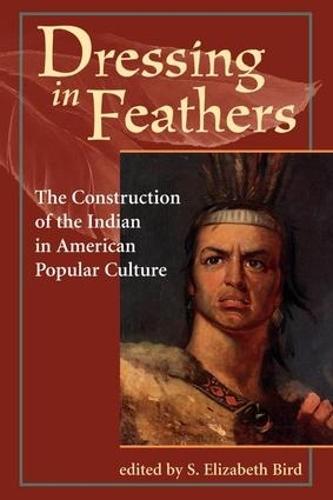
One hundred members of NatChat, an electronic mail discussion group concerned with Native American issues, responded to the recent Disney release Pocahontas by calling on parents to boycott the movie, citing its historical inaccuracies and saying that Disney has let us down in a cruel, irresponsible manner."" Their anger was rooted in the fact that, although Disney claimed that the film's portrayal of American Indians would be authentic,"" the Pocahontas story their movie told was really white cultural myth. The actual histories of the characters were replaced by mythic narratives depicting the crucial moments when aid was given to the white settlers. As reconstructed, the story serves to reassert for whites their right to be here, easing any lingering guilt about the displacement of the native inhabitants. To understand current imagery, it is essential to understand the history of its making, and these essays mesh to create a powerful, interconnected account of image creation over the past 150 years. The contributors, who represent a range of disciplines and specialties, reveal the distortions and fabrications white culture has imposed on significant historical and current events, as represented by treasured artefacts, such as photographic images taken of Sitting Bull following his surrender, the national monument at the battlefield of Little Bighorn, nineteenth-century advertising, the television phenomenon Northern Exposure, and the film Dances with Wolves. Well illustrated, this volume demonstrates the complacency of white culture in its representation of its troubled relationship with American Indians.
Full Product Details
Author: S. Elizabeth Bird ,
S. Elizabeth Bird
Publisher: Taylor & Francis Inc
Imprint: Westview Press Inc
Dimensions:
Width: 22.70cm
, Height: 2.00cm
, Length: 15.20cm
Weight: 0.442kg
ISBN: 9780813326672
ISBN 10: 0813326672
Pages: 336
Publication Date: 03 May 1996
Audience:
College/higher education
,
Professional and scholarly
,
Undergraduate
,
Postgraduate, Research & Scholarly
Format: Paperback
Publisher's Status: No Longer Our Product
Availability: Awaiting stock

The supplier is currently out of stock of this item. It will be ordered for you and placed on backorder. Once it does come back in stock, we will ship it out for you.
Reviews
An insightful if occasionally dry collection of historical and sociological studies by academics demonstrating how whites have portrayed Native Americans in a wide range of media for the last two centuries. Bird (Anthropology and Humanities/Univ. of Minn.) sounds the central theme of these pieces in her introduction: From the popular, early 19th century play Metamora to Disney's recent animated rendering of Pocahontas, Native Americans have been predominantly depicted in ways that suit the mythic, psychological, and political needs of white America. An essay titled The Narrative of Sitting Bull's Surrender describes how a series of staged photographs shot in the 1880s show not only the capture of the famous warrior but also the civilizing of the Sioux Indians. An account of how newspapers and public relations pronouncements covered an Indian boarding school homecoming and football game in the 1920s reveals a vision of a similar progression of Native Americans from noble savages to assimilation and the removal of long-dead traditions that were no longer a threat to white people. A chapter discussing Seminole tourist sites in the Florida Everglades notes how white entrepeneurs first sought to display the Indians as primitives at one with nature in the early 20th century; by mid-century, the Seminoles were depicted as sharing in the technological benefits of modern civilization while still portrayed as noble children of the swamp. There is an especially persuasive study of the cultural myths reflected in recent television shows and films, covering movies such as Dances With Wolves and Little Big Man, the lack of cultural identity afforded the Native Americans depicted in the TV series Northern Exposure, and even worse, the lack of any realistic portrayal of the Cheyenne in Dr. Quinn, Medicine Woman. For the serious reader, this volume of essays will have a decided impact on how the next western is viewed. (Kirkus Reviews)
Author Information
S. Elizabeth Bird is professor of anthropology at the University of South Florida.