Overview
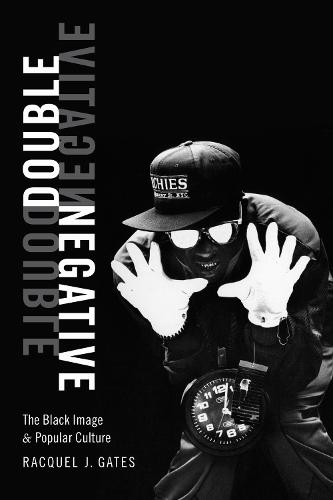
From the antics of Flavor Flav on Flavor of Love to the brazen behavior of the women on Love & Hip Hop, so-called negative images of African Americans are a recurrent mainstay of contemporary American media representations. In Double Negative Racquel J. Gates examines the generative potential of such images, showing how some of the most disreputable representations of black people in popular media can strategically pose questions about blackness, black culture, and American society in ways that more respectable ones cannot. Rather than falling back on claims that negative portrayals hinder black progress, Gates demonstrates how reality shows such as Basketball Wives, comedians like Katt Williams, and movies like Coming to America play on ""negative"" images to take up questions of assimilation and upward mobility, provide a respite from the demands of respectability, and explore subversive ideas. By using negativity as a framework to illustrate these texts' social and political work as they reverberate across black culture, Gates opens up new lines of inquiry for black cultural studies.
Full Product Details
Author: Racquel J. Gates
Publisher: Duke University Press
Imprint: Duke University Press
Weight: 0.363kg
ISBN: 9781478000549
ISBN 10: 1478000546
Pages: 248
Publication Date: 10 August 2018
Audience:
Professional and scholarly
,
Professional & Vocational
Format: Paperback
Publisher's Status: Active
Availability: In Print

This item will be ordered in for you from one of our suppliers. Upon receipt, we will promptly dispatch it out to you. For in store availability, please contact us.
Reviews
Gates considers not only formal producers of media but also black audiences who engage with these works, successfully arguing for a more nuanced understanding of what makes for black cultural production. -- Anna J. Clutterbuck-Cook * Library Journal *
An exciting entry into the academic study of African American media representations. . . . Gates reclaims negative images and foregrounds their importance for understanding hierarchies of media taste and the complexities of minoritarian identity and experience. The result is an evocative and provocative foray into what she calls the 'metaphorical gutter' of representation. . . . Highly accessible and engaging, Double Negative should be required reading for academics, students, and even pop-culture journalists who are interested in the complexities of race, identity, and contemporary media. -- Brandy Monk-Payton * Journal of Cinema and Media Studies * Double Negative offers evocative academic insight into past and present representations of black identity. -- Audrey Liow * Continuum * Double Negative is unique for recovering and giving value to texts that are assumed to be without value. Gates' sharp analysis of how negative images interrogate American society in ways that the more positive ones do not is an important contribution to the fields of media studies, popular culture, and cultural studies. -- Linnete Manrique * Ethnic and Racial Studies * Its potential for broader application across identity studies and the culture/media industries makes Double Negative essential reading. -- Leah Aldridge * Film Quarterly * Racquel J. Gates' unpacking of black racial media figures postulates that negative images derived from cultural theorist Stuart Hall's encoding/decoding practice can be reconfigured to provide agency and hybridity to black figures. . . . Recommended. All readers. -- S. Lenig * Choice * Gates considers not only formal producers of media but also black audiences who engage with these works, successfully arguing for a more nuanced understanding of what makes for black cultural production. -- Anna J. Clutterbuck-Cook * Library Journal *
In Double Negative, Racquel J. Gates places us in front of image after black image that folks concerned with the 'positive' representation of the race have tried, unsuccessfully, to repress. In the process, this willfully disobedient book challenges us to look at ourselves, as readers--the aesthetic judgments, political assumptions, old anxieties, and surprising pleasures that animate our encounters with blackness on screen. --Jacqueline Stewart, author of Migrating to the Movies: Cinema and Black Urban Modernity
Its potential for broader application across identity studies and the culture/media industries makes Double Negative essential reading. -- Leah Aldridge * Film Quarterly * Racquel J. Gates' unpacking of black racial media figures postulates that negative images derived from cultural theorist Stuart Hall's encoding/decoding practice can be reconfigured to provide agency and hybridity to black figures. . . . Recommended. All readers. -- S. Lenig * Choice * Gates considers not only formal producers of media but also black audiences who engage with these works, successfully arguing for a more nuanced understanding of what makes for black cultural production. -- Anna J. Clutterbuck-Cook * Library Journal *
Author Information
Racquel J. Gates is Assistant Professor of Media Culture at the College of Staten Island, City University of New York.