Overview
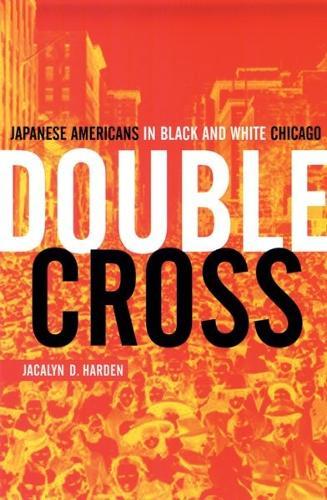
Examines relations between peoples of color to offer a compelling new approach to understanding race in America Since the Great Migration of the early twentieth century, Chicago has been a cauldron of race relations, symbolizing the tenacity of discrimination and segregation. But as in other cities with significant populations of Latinos and Asians, Arabs and Jews, this image belies complex racial dynamics. In Double Cross, Jacalyn D. Harden provides an essential rethinking of the ways we understand and talk about race, using an examination of the Japanese American community of Chicago's Far North Side to form an innovative new framework for looking at race, identity, and political change. The Japanese American community in Chicago rapidly expanded between 1940 and 1950 in the aftermath of wartime internment and government relocation programs. Harden tells their story through archival research and interviews with some of the first Japanese Americans who were relocated to Chicago in the 1940s, incorporating her own experiences as an African American scholar who has lived in Japan. The result is a compelling and surprising account of racial interactions, one that clarifies the complex interweaving between black and Asian lives and reclaims a lost history of solidarity between the two groups. Moving from the Great Migration to the ""great relocation"" to gentrification, Harden explores the shared history of civil rights struggles that firmly links Japanese and African Americans, most importantly the issue of reparations (for internment during World War II and slavery, respectively). She describes the efforts of Japanese Americans to ""double-cross the color line"" by building coalitions across race, age, and class boundaries, and their vexed position as sometimes ""colored,"" sometimes white (for example, the Japanese American soldier who was instructed to use the white washrooms at boot camp in Alabama during World War II, while thousands were being relocated to internment camps). Double Cross is a major contribution to our thought about race relations, challenging orthodoxy and shedding new light on the complex identities, conflicting interests, and external forces that have defined the concept of race in the United States.
Full Product Details
Author: Jacalyn D. Harden
Publisher: University of Minnesota Press
Imprint: University of Minnesota Press
Dimensions:
Width: 14.90cm
, Height: 1.80cm
, Length: 22.90cm
Weight: 0.276kg
ISBN: 9780816640447
ISBN 10: 0816640440
Pages: 200
Publication Date: 12 June 2003
Audience:
Professional and scholarly
,
College/higher education
,
Professional & Vocational
,
Undergraduate
Format: Paperback
Publisher's Status: Active
Availability: Temporarily unavailable

The supplier advises that this item is temporarily unavailable. It will be ordered for you and placed on backorder. Once it does come back in stock, we will ship it out to you.
Reviews
In order for race to become and remain a 'black only thing, ' all Chicagoans, including Japanese Americans themselves, had to be convinced that Japanese Americans were not colored. They had to cross the color line. Crossing the color line meant not only not being associated with blacks and possibly other non-whites, but also not being considered a problem.
Author Information
Jacalyn D. Harden is assistant professor of anthropology at Seattle University.