Awards
- Commended for Nautilus Award (Social Change) 2005
Overview
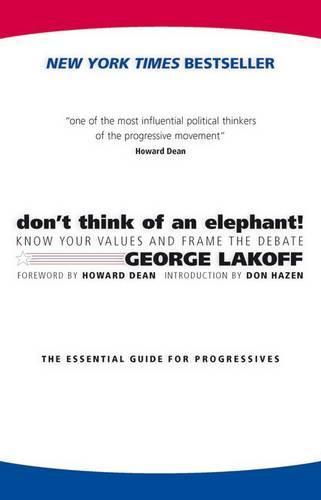
Donit Think of an Elephant! is the definitive handbook for understanding what happened in the 2004 US election and communicating effectively about key issues facing America today. Author George Lakoff has become a key advisor to the Democratic party, helping them develop their message and frame the political debate. In this book Lakoff explains how conservatives think, and how to counter their arguments. His years of research and work with environmental and political leaders have been distilled into this essential guide, which shows progressives how to think in terms of values instead of programmes, and why people vote for their values and identities, often against their best interests. Donit Think of An Elephant! is the antidote to the last forty years of conservative strategizing and the right wingis stranglehold on political dialogue in the United States
Full Product Details
Author: George Lakoff
Publisher: Chelsea Green Publishing Co
Imprint: Chelsea Green Publishing Co
Dimensions:
Width: 13.80cm
, Height: 1.00cm
, Length: 21.60cm
Weight: 0.186kg
ISBN: 9781931498715
ISBN 10: 1931498717
Pages: 144
Publication Date: 10 September 2004
Audience:
General/trade
,
General
Format: Paperback
Publisher's Status: Out of Print
Availability: Awaiting stock

Reviews
Publishers Weekly-Lakoff, a cognitive scientist and linguist at Berkeley, believes he knows why conservatives have been so successful in recent years and how progressives like himself can beat them at their own game. This slim book presents a simple, accessible overview of his theory of moral politics and a call to action for Democrats mourning November's election results. Lakoff's persuasive argument focuses on two ideas: what he calls framing, and the opposition of liberals' and conservatives' concepts of the family. Conservatives, he says, have easily framed tax cuts as tax relief because of widespread, preexisting views of taxes as burdensome, and liberals have had little success conveying the idea that taxes are a social responsibility. In Lakoff's view, conservatives adhere to a strict father model of family, in contrast to liberals' nurturant parent view, and he sees this difference as the key to understanding most of the two sides' clashes. His writing is clear and succinct, and he illuminates his theories through easy-to-follow examples from current politics. Although the book has been updated since the election, many of its sections were originally written long beforehand, so some comments are outdated (at one point Lakoff wonders, for example, whether George Bush's support of the gay marriage amendment will help him keep the White House). However, the process of regaining power may be a long one for Democrats, and Lakoff's insights into how to deal with conservatives and appeal to the general public are bound to light a fire under many progressives.
Publishers Weekly-Lakoff, a cognitive scientist and linguist at Berkeley, believes he knows why conservatives have been so successful in recent years and how progressives like himself can beat them at their own game. This slim book presents a simple, accessible overview of his theory of moral politics and a call to action for Democrats mourning November's election results. Lakoff's persuasive argument focuses on two ideas: what he calls framing, and the opposition of liberals' and conservatives' concepts of the family. Conservatives, he says, have easily framed tax cuts as tax relief because of widespread, preexisting views of taxes as burdensome, and liberals have had little success conveying the idea that taxes are a social responsibility. In Lakoff's view, conservatives adhere to a strict father model of family, in contrast to liberals' nurturant parent view, and he sees this difference as the key to understanding most of the two sides' clashes. His writing is clear and succinct, and he illuminates his theories through easy-to-follow examples from current politics. Although the book has been updated since the election, many of its sections were originally written long beforehand, so some comments are outdated (at one point Lakoff wonders, for example, whether George Bush's support of the gay marriage amendment will help him keep the White House). However, the process of regaining power may be a long one for Democrats, and Lakoff's insights into how to deal with conservatives and appeal to the general public are bound to light a fire under many progressives. Fascinating insights into why progressives lose good causes and how they can start winning again. You will never listen to a political speech the same way after reading this book. --Tina Brown, Host of CNBC's Topic A with Tina Brown
<p>Publishers Weekly-Lakoff, a cognitive scientist and linguist at Berkeley, believes he knows why conservatives have been so successful in recent years and how progressives like himself can beat them at their own game. This slim book presents a simple, accessible overview of his theory of moral politics and a call to action for Democrats mourning November's election results. Lakoff's persuasive argument focuses on two ideas: what he calls framing, and the opposition of liberals' and conservatives' concepts of the family. Conservatives, he says, have easily framed tax cuts as tax relief because of widespread, preexisting views of taxes as burdensome, and liberals have had little success conveying the idea that taxes are a social responsibility. In Lakoff's view, conservatives adhere to a strict father model of family, in contrast to liberals' nurturant parent view, and he sees this difference as the key to understanding most of the two sides' clashes. His writing is clear and succinct, and he illuminates his theories through easy-to-follow examples from current politics. Although the book has been updated since the election, many of its sections were originally written long beforehand, so some comments are outdated (at one point Lakoff wonders, for example, whether George Bush's support of the gay marriage amendment will help him keep the White House). However, the process of regaining power may be a long one for Democrats, and Lakoff's insights into how to deal with conservatives and appeal to the general public are bound to light a fire under many progressives.
Author Information
George Lakoff is a Professor of Cognitive Science and Linguistics at the University of California, Berkeley, and is a founding senior fellow at the Rockridge Institute. He is one of the worldis best-known linguists. Since the mid-1980s he has been applying cognitive linguistics to the study of politics, especially the framing of public political debate. He is the author of the influential book, Moral Politics: How Liberals and Conservatives Think (2nd edition, 2002).