|
|
|||
|
||||
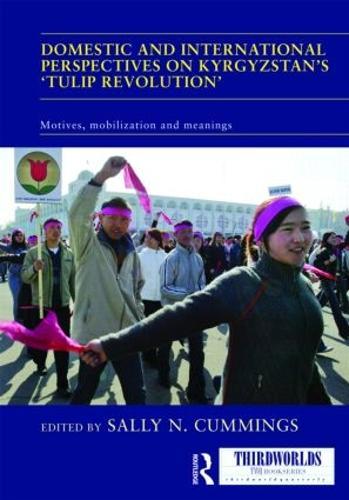
OverviewIn early 2005 regional protests in Kyrgyzstan soon became national ones as protesters seized control of the country's capital, Bishkek. The country's president for fifteen years, Askar Akaev, fled the country and after a night of extensive looting, a new president, Kurmanbek Bakiev, came to power. The events quickly earned the epithet 'Tulip Revolution' and were interpreted as the third of the colour revolutions in the post-Soviet space, following Ukraine and Georgia. But did the events in Kyrgyzstan amount to a 'revolution'? How much change followed and with what academic and policy implications? This innovative, unique study of these events brings together a new generation of Kyrgyz scholars together with established international observers to assess what happened in Kyrgyzstan and after, and the wider implications. This book was published as a special issue of Central Asian Survey. Full Product DetailsAuthor: Sally Cummings (University of St Andrews, UK)Publisher: Taylor & Francis Ltd Imprint: Routledge Dimensions: Width: 17.40cm , Height: 1.80cm , Length: 24.60cm Weight: 0.460kg ISBN: 9780415491907ISBN 10: 0415491908 Pages: 160 Publication Date: 23 October 2009 Audience: College/higher education , Postgraduate, Research & Scholarly Format: Hardback Publisher's Status: Active Availability: In Print This item will be ordered in for you from one of our suppliers. Upon receipt, we will promptly dispatch it out to you. For in store availability, please contact us. Table of Contents1. Introduction: ‘Revolution’ not Revolution Sally N. Cummings 2. March and After: What has Changed? What has Stayed the Same? Erica Marat 3. Situating the ‘Tulip Revolution’ Sally N. Cummings and Maxim Ryabkov 4. Kyrgyz Democracy? The Tulip Revolution and Beyond Shairbek Juraev 5. The Dynamics of Regime Change: Domestic and International Factors in the ‘Tulip Revolution’ David Lewis 6. Organized Crime Before and After the Tulip Revolution: The Changing Dynamics of Upperworld-Underworld Networks Alexander Kupatadze 7. The North–South Cleavage and Political Support in Kyrgyzstan Maxim Ryabkov 8. Informal Actors and Institutions in Mobilization: The Periphery in the ‘Tulip Revolution’ Azamat Temirkulov 9. March 2005: Parliamentary Elections as a Catalyst of Protests Emir Kulov 10. The Power of Precedent? Bermet Tursunkulova 11. Diffusion as Discourse of Danger: Russian Self-Representations and the Framing of the Tulip Revolution Stefanie OrtmannReviewsAuthor InformationSally N. Cummings teaches in the School of International Relations, University of St. Andrews, UK. Tab Content 6Author Website:Countries AvailableAll regions |
||||