Overview
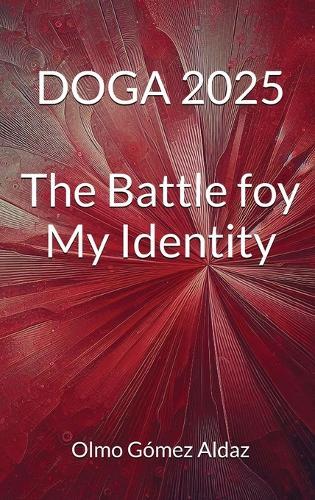
""There are stories proven by documents and court rulings that are nevertheless still silenced. This is one of them."" DOGA 2025 is neither a novel nor a conventional autobiography. It is a statement of facts: a book of memory, evidence, and restitution that documents a real case of identity theft and fraudulent adoption that took place in Spain in 1971, and the decades-long struggle to recover biological filiation, name, and erased genealogy. Born in Bilbao during the Franco dictatorship, Olmo Gómez Aldaz was separated from his mother at birth, registered under a false identity, and handed over through an irregular adoption within an organized network involving religious, medical, administrative, and judicial institutions. Years later, a sustained investigation-supported by DNA evidence, historical archives, and court rulings-made it possible to prove the facts and culminated in a final judgment restoring biological filiation and establishing an unprecedented legal precedent in the Spanish legal system. DOGA is not a closed legal case file nor a sentimental testimony. It is a living archive structured as a public declaration. The book articulates three interrelated layers: a first-person account of the loss of identity and the search for origins; an archive of original, verifiable documentation (civil registry records, adoption deeds, DNA tests, expert reports, court orders, and judgments); and a historical and analytical reconstruction of the institutional apparatus that enabled these practices, from foundling systems and religious associations to registry secrecy, the medicalization of motherhood, and institutional continuity between dictatorship and democracy. The book advances a clear thesis: adoption, as it has been historically practiced, is not a neutral or benevolent act but a form of structural violence that erases filiations, breaks genealogies, and manufactures administrative identities. Against adoptive ideology and reparative sentimentalism, DOGA asserts the right to truth, biological filiation, and memory. This second edition expands the conflict with an unpublished section, DOGA Is Still Alive, documenting what occurred after the ruling: institutional reactions, discursive resistance, and the real limits of public recognition. Among these events is the disappearance of judicial information initially published by the newspaper Público and later removed from its digital archive, reinforcing the book's central claim: the struggle over identity does not end when the truth is proven. At its core, DOGA exposes a legally exceptional situation-the coexistence of restored biological filiation and an adoptive filiation that remains in force-revealing the unresolved tension between biological truth and legal fiction, and opening a fundamental debate on justice, reparation, memory, and the need to dismantle the mechanisms that made these practices possible.
Full Product Details
Author: Olmo Gómez Aldaz
Publisher: Genus Homo
Imprint: Genus Homo
Dimensions:
Width: 15.20cm
, Height: 1.40cm
, Length: 22.90cm
Weight: 0.490kg
ISBN: 9788409814671
ISBN 10: 8409814676
Pages: 240
Publication Date: 26 February 2026
Audience:
General/trade
,
General
Format: Hardback
Publisher's Status: Active
Availability: Not yet available

This item is yet to be released. You can pre-order this item and we will dispatch it to you upon its release.