Overview
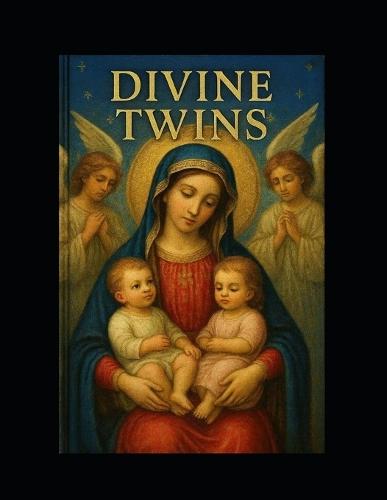
Divine twins are a recurring theme in mythology, legends, and the history of many cultures and ancient peoples, often symbolizing duality and complementarity, representing two opposing forces that balance each other. For many people, it may seem like an unusual theme, as the subject is not very frequently encountered in specialized literature, even though history and mythology abound with representative examples. This symbolism is evident in their stories, where they are portrayed as protectors, heroes, or healers. Additionally, divine twins are often associated with the idea of brotherhood and loyalty, emphasizing the importance of the bond between brothers and mutual support, with the most well-known examples being from Greek and Roman mythology, as well as Norse, Indian, and Thracian-Getic-Dacian traditions. There are also other, less studied variants, such as the one we will focus on in this paper, namely the version from Thracian-Geto-Dacian mythology, which, as we will observe, presents many similarities with the Greek one. Moreover, between these two ancient peoples, there were many interconnections and often many confusions of a cultural and historical nature, especially due to the tendency for excessive mythologization by Greek authors, who, during their period of glory and in their desire to create as vast and impactful works as possible, diluted the historical substance of many events and figures. The role of the divine twins has, over time, acquired various aspects, culminating in their introduction into the universal zodiac. Although there are multiple debates for and against the identification of the two divine twins within the zodiac, recently, it seems that the prevailing opinion is related to identifying the Dioscuri, Castor and Pollux, as representative figures of the Gemini zodiac sign. Since in many pictorial representations of this zodiac sign, within various archaeological artifacts, there appear characters of the type man/man, man/woman, and more rarely woman/woman, this being also one of the main reasons that have led to the lack of a unanimously accepted conclusion among researchers, we aimed, through this work, to present as accurate a description as possible of the main candidates from the history and universal mythology of the world, which may lead to an approximation of historical truth. That is why we consider it imperative to make a comprehensive presentation, on multiple levels, encompassing the most well-known hypotheses within the most representative ancient civilizations that studied astrology and the planets, as well as their influences on human activity (Babylonian, Greek, Indian, Thracian-Geto-Dacian, Nordic, Egyptian, Chinese), so that we maintain the ability to make comparisons and create cause-and-effect connections, capable of leading us to the most accurate conclusion possible.We can conclude, in a more contemporary expression, that the ancient Greek authors were prolific creators of science fiction works. Obviously, the absolute champion of this trend of excessive mythologizing is Homer, but also other authors who followed him or were his contemporaries, such as Hesiod, with the mythologizing and deification of real characters from the history of other peoples being a fairly common procedure in the works of Greek authors. As the great ancient author Plutarch said, referring to Homer's works, calling them pleasing inventions. He also adds that they are nonetheless useful inventions, as they contain many examples and life lessons beneficial to society. Mythologization is a literary and cultural process through which characters, events, and places are transformed into myths, thus becoming essential elements of a civilization's cultural heritage. In Homer's works, this phenomenon is evident and profound, contributing to the creation of a fascinating and complex world in which heroes and gods coexist and interact.
Full Product Details
Author: John Carols
Publisher: Independently Published
Imprint: Independently Published
Dimensions:
Width: 21.60cm
, Height: 0.30cm
, Length: 27.90cm
Weight: 0.186kg
ISBN: 9798276327433
Pages: 50
Publication Date: 26 November 2025
Audience:
General/trade
,
General
Format: Paperback
Publisher's Status: Active
Availability: Available To Order

We have confirmation that this item is in stock with the supplier. It will be ordered in for you and dispatched immediately.