Overview
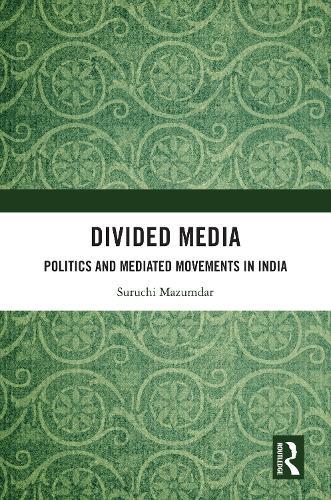
This book addresses the complex relationship between India’s evolving, emerging media landscape, the political and economic interests of diverse media actors, and movements opposing contentious issues such as market-based economic reforms and religious nationalism. Through the complexities of mainstream news media and emerging digital culture in the eastern city of Kolkata, this book foregrounds regional and linguistic variations in the studies of media, movements, and politics in India. By focusing on popular movements against agricultural land acquisition in the state of West Bengal, in 2006 and 2007, and contemporary citizen-led activisms, this book captures the tension between mainstream media’s political and commercial logic, movements and digital activisms questioning dominant development and religious nationalist agenda, and the possibilities of political diversity and democratic participation. Situating the study in a multi-hybrid digital space that intimately integrates the old and new media, this book draws on critical, thematic analysis of newspaper coverage, digital qualitative studies of techno-commercial features such as hashtags and viral videos, and extensive interviews. This book proposes the theoretical concept of a hybrid partisan system, and argues that heterogeneity –– the complex, dynamic interaction of commercially-run media’s political alliances, the commercial logic, and hybrid professional norms –– remains consequential for movement visibilities, but contributes to deep ambiguities and commonalities in core issues such as industrialization in a developing economy. This book would be relevant to scholars of journalism, political communication, media systems, and mediated activisms in communication studies, sociology, political science, and South Asian studies.
Full Product Details
Author: Suruchi Mazumdar (Jindal Global University, India)
Publisher: Taylor & Francis Ltd
Imprint: Routledge India
Weight: 0.440kg
ISBN: 9781032140636
ISBN 10: 1032140631
Pages: 136
Publication Date: 20 May 2025
Audience:
College/higher education
,
Tertiary & Higher Education
Format: Hardback
Publisher's Status: Active
Availability: In Print

This item will be ordered in for you from one of our suppliers. Upon receipt, we will promptly dispatch it out to you. For in store availability, please contact us.
Reviews
This book recovers the prehistory of the partisan hybrid digital media landscape using the case of the Singur and Nandigram protests. Through a multilayered analysis, she shows how the interaction between the complex partisan media and popular grassroots politics has given rise to contemporary politics in India. The book compellingly demonstrates how commercial logic and political logic played out in the media’s representation of the populist uprisings and public debates on industrial development, which created the fertile ground to displace the Left’s ideological dominance in the state with the practice of a new politics that was a creative mix of maa-mati-manush with ideological ambiguity. Anup Kumar, Ph.D. Professor, School of Communication, Cleveland State University. ____________________ In Divided Media, Suruchi Mazumdar provides a historically grounded study of print and digital news media in the state of West Bengal. The crux of the book focuses on an often under-explored but vital area of research in media studies, the anti-democratic privatization of land and its mediated contestation against the backdrop of growing ethnonationalism. The book is thus a careful political economic analysis of the shifting terrain of 21st century capitalist news-cultures with lessons for scholars of media and democracy well beyond India. Paula Chakravartty, James Weldon Johnson Associate Professor, MCC and Gallatin, NYU. ______________ Suruchi Mazumdar’s book is welcome precisely because the story of regional media is highly specific, shaped by both national and regional contexts, by the compulsions of political economy, regional politics and the context-specific singularities of mediation. Suruchi deals with the contested mediascape in West Bengal. The narrative is compelling precisely because of its regional specificities. And it is this makes it an important addition to the literature on the media in India. Pradip Thomas, University of Queensland. _________________ Suruchi Mazumdar’s book is an essential read for anyone interested in understanding the intricate dynamics at the intersection of media, politics, and social movements in India. It not only explores the tensions and interactions between mainstream media’s political and commercial imperatives and grassroots activism, but also offers a nuanced examination of how these forces shape public discourse and democratic engagement in the context of rapid economic and digital transformations. Taberez Ahmed Neyazi, Associate Professor & Director of Digital Campaign Asia Project, Department of Communications and New Media, National University of Singapore. _____________________
Author Information
Suruchi Mazumdar (PhD) is an Associate Professor with O.P. Jindal Global University India. She has teaching and research interests in mediated politics and movements, digital activisms, and everyday digital cultures. She has been part of multiple transdisciplinary collaborative research projects. Her research has been published in peer-reviewed journals such as International Journal of Communication, Journalism, Global Media and China, and Television & New Media, and edited volumes.