Awards
- Runner-up for Dissonant Divas in Chicana Music 2013
- Runner-up for LASA Latino 2013
- Winner of IASPM Guthrie 2013
- Winner of NACCS 2014
Overview
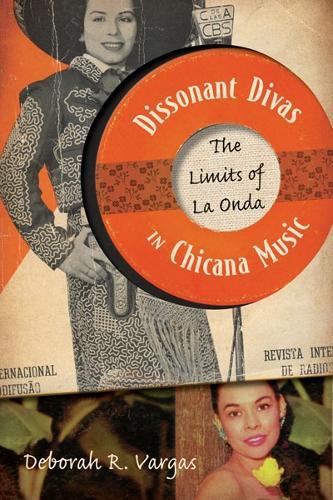
Musical sound has been central to heteromasculinist productions of nation and homeland, whether Chicano, Tejano, Texan, Mexican, or American. If this assertion holds true, as Deborah R. Vargas suggests, then what are we to make of those singers and musicians whose representations of gender and sexuality are irreconcilable with canonical Chicano/Tejano music or what Vargas refers to as 'la onda'? These are the 'dissonant divas' Vargas discusses, performers who stimulateour listening for alternative borderlands imaginaries that are inaudible within the limits of 'la onda'.
Full Product Details
Author: Deborah R. Vargas
Publisher: University of Minnesota Press
Imprint: University of Minnesota Press
Dimensions:
Width: 14.00cm
, Height: 2.50cm
, Length: 21.60cm
Weight: 0.408kg
ISBN: 9780816673162
ISBN 10: 0816673160
Pages: 288
Publication Date: 16 October 2012
Audience:
General/trade
,
General
Format: Hardback
Publisher's Status: Active
Availability: Temporarily unavailable

The supplier advises that this item is temporarily unavailable. It will be ordered for you and placed on backorder. Once it does come back in stock, we will ship it out to you.
Reviews
This arrival is at a keen theory of musical dissonance, not unlike many of the culturally entwined elevations already in your own music collection. Dissonant Divas is high quality feminist academic scribing, worth it alone for turning the unfamiliar on to the bold, bawdy boleros of Chado Silva, but has much else to offer as well. --KEXP Radio Vargas's sustained engagement of race, class, gender, and sexuality with Chicana/o borderlands music is thoroughly new. --Sounding Out! Professor Vargas provides a new lens into the identities and histories that emerge from the new cultural space Anzaldua referred to as the borderlands. --New Books Network An accessible and thought-provoking project seeking not only a space and recognition for these musicians without a Mexican-American sonic landscape, but also creating a site for the emergence of alternative genealogies and topographies. --Latino Studies In Dissonant Divas, Deborah Vargas examines the lived experiences, musical contributions, and performative transgressions that led a select group of women to not only break new ground as artists and reimagine largely male-dominated canons of Chicano, Tejano and Mexicano popular music styles, but to challenge dominant notions of sound, visibility and integration. --Ethnomusicology With Dissonant Divas, Deborah R. Vargas makes us the gift of a more vibrant and expansive soundscape for hemispheric cultural studies. By broadening and interrogating the archive of Mexican and Mexican American popular music, Vargas restores a pantheon of Mejicana recording artists to their place at the center of a musical scene where artists contested the boundaries of gender, sex and nation through innovative performance and subversive self-styling. Like the music it so artfully engages, Dissonant Divas is a landmark text, beautifully conceived and written, with much to offer a wide range of audiences. --Alicia Schmidt Camacho, Yale University
This arrival is at a keen theory of musical dissonance, not unlike many of the culturally entwined elevations already in your own music collection. Dissonant Divas is high quality feminist academic scribing, worth it alone for turning the unfamiliar on to the bold, bawdy boleros of Chado Silva, but has much else to offer as well. -KEXP Radio Vargas's sustained engagement of race, class, gender, and sexuality with Chicana/o borderlands music is thoroughly new. -Sounding Out! Professor Vargas provides a new lens into the identities and histories that emerge from the new cultural space Anzaldua referred to as the borderlands. -New Books Network An accessible and thought-provoking project seeking not only a space and recognition for these musicians without a Mexican-American sonic landscape, but also creating a site for the emergence of alternative genealogies and topographies. -Latino Studies In Dissonant Divas, Deborah Vargas examines the lived experiences, musical contributions, and performative transgressions that led a select group of women to not only break new ground as artists and reimagine largely male-dominated canons of Chicano, Tejano and Mexicano popular music styles, but to challenge dominant notions of sound, visibility and integration. -Ethnomusicology With Dissonant Divas, Deborah R. Vargas makes us the gift of a more vibrant and expansive soundscape for hemispheric cultural studies. By broadening and interrogating the archive of Mexican and Mexican American popular music, Vargas restores a pantheon of Mejicana recording artists to their place at the center of a musical scene where artists contested the boundaries of gender, sex and nation through innovative performance and subversive self-styling. Like the music it so artfully engages, Dissonant Divas is a landmark text, beautifully conceived and written, with much to offer a wide range of audiences. -Alicia Schmidt Camacho, Yale University
This arrival is at a keen theory of musical dissonance, not unlike many of the culturally entwined elevations already in your own music collection. Dissonant Divas is high quality feminist academic scribing, worth it alone for turning the unfamiliar on to the bold, bawdy boleros of Chado Silva, but has much else to offer as well. --KEXP Radio Vargas's sustained engagement of race, class, gender, and sexuality with Chicana/o borderlands music is thoroughly new. --Sounding Out! Professor Vargas provides a new lens into the identities and histories that emerge from the new cultural space Anzaldua referred to as the borderlands. --New Books Network An accessible and thought-provoking project seeking not only a space and recognition for these musicians without a Mexican-American sonic landscape, but also creating a site for the emergence of alternative genealogies and topographies. --Latino Studies In Dissonant Divas, Deborah Vargas examines the lived experiences, musical contributions, and performative transgressions that led a select group of women to not only break new ground as artists and reimagine largely male-dominated canons of Chicano, Tejano and Mexicano popular music styles, but to challenge dominant notions of sound, visibility and integration. --Ethnomusicology With Dissonant Divas, Deborah R. Vargas makes us the gift of a more vibrant and expansive soundscape for hemispheric cultural studies. By broadening and interrogating the archive of Mexican and Mexican American popular music, Vargas restores a pantheon of Mejicana recording artists to their place at the center of a musical scene where artists contested the boundaries of gender, sex and nation through innovative performance and subversive self-styling. Like the music it so artfully engages, Dissonant Divas is a landmark text, beautifully conceived and written, with much to offer a wide range of audiences. --Alicia Schmidt Camacho, Yale University
"""With Dissonant Divas, Deborah R. Vargas makes us the gift of a more vibrant and expansive soundscape for hemispheric cultural studies. By broadening and interrogating the archive of Mexican and Mexican American popular music, Vargas restores a pantheon of Mejicana recording artists to their place at the center of a musical scene where artists contested the boundaries of gender, sex and nation through innovative performance and subversive self-styling. Like the music it so artfully engages, Dissonant Divas is a landmark text, beautifully conceived and written, with much to offer a wide range of audiences.""—Alicia Schmidt Camacho, Yale University ""This arrival is at a keen theory of musical dissonance, not unlike many of the culturally entwined elevations already in your own music collection. Dissonant Divas is high quality feminist academic scribing, worth it alone for turning the unfamiliar on to the bold, bawdy boleros of Chado Silva, but has much else to offer as well.""—KEXP Radio ""Vargas’s sustained engagement of race, class, gender, and sexuality with Chicana/o borderlands music is thoroughly new.""—Sounding Out! ""Professor Vargas provides a new lens into the identities and histories that emerge from the new cultural space Anzaldua referred to as the borderlands.""—New Books Network ""An accessible and thought-provoking project seeking not only a space and recognition for these musicians without a Mexican-American sonic landscape, but also creating a site for the emergence of alternative genealogies and topographies.""—Latino Studies ""In Dissonant Divas, Deborah Vargas examines the lived experiences, musical contributions, and performative transgressions that led a select group of women to not only break new ground as artists and reimagine largely male-dominated canons of Chicano, Tejano and Mexicano popular music styles, but to challenge dominant notions of sound, visibility and integration.""—Ethnomusicology"
This arrival is at a keen theory of musical dissonance, not unlike many of the culturally entwined elevations already in your own music collection. <i>Dissonant Divas</i> is high quality feminist academic scribing, worth it alone for turning the unfamiliar on to the bold, bawdy boleros of Chado Silva, but has much else to offer as well. --KEXP Radio</p> Vargas's sustained engagement of race, class, gender, and sexuality with Chicana/o borderlands music is thoroughly new. --<i>Sounding Out!</i></p> Professor Vargas provides a new lens into the identities and histories that emerge from the new cultural space Anzaldua referred to as the borderlands. --<i>New Books Network</i></p> An accessible and thought-provoking project seeking not only a space and recognition for these musicians without a Mexican-American sonic landscape, but also creating a site for the emergence of alternative genealogies and topographies. --<i>Latino Studies</i></p> In <i>Dissonant Divas, </i> Deborah Vargas examines the lived experiences, musical contributions, and performative transgressions that led a select group of women to not only break new ground as artists and reimagine largely male-dominated canons of Chicano, Tejano and Mexicano popular music styles, but to challenge dominant notions of sound, visibility and integration. --<i>Ethnomusicology</i></p>
Author Information
Deborah R. Vargas is associate professor of Chicano/Latino studies at the University of California, Irvine.