Overview
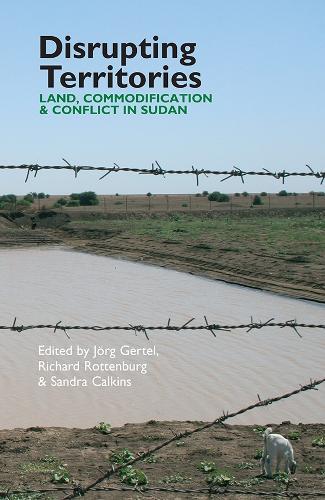
Examines the commodification of land rights and the effect of international licences for resource extraction on the pastoral communities of Sudan. Nowhere has a range of case studies of Sudan been brought together in a single volume. Given the concern with the growing number and complexity of conflicts in Sudan and South Sudan there is a significant readership in academic circles and from those involved in humanitarian organisations of all kinds. Professor Peter Woodward, University of Reading ""A timely contribution to an important set of debates ... tackles questions emerging from discussions about modernisation, urbanisation and globalisation from an explicitly local angle with regards to Sudan."" Dr Harry Verhoeven, University of Oxford Sudan experiences one of the most severe fissures between society and territory in Africa. Not only were its international borders redrawn when South Sudan separated in 2011, but conflicts continue to erupt over access to land: territorial claims are challenged by local and international actors; borders are contested; contracts governing the privatization of resources are contentious; and the legal entitlements to agricultural land are disputed. Under these new dynamics of land grabbing and resource extraction, fundamental relationships between people and land are being disrupted: while land has become a global commodity, for millions it still serves as a crucial reference for identity-formation and constitutes their most important source of livelihood. This book seeks to disentangle the emerging relationships between people and land in Sudan. The first part focuses on the spatial impact of resource-extracting economies: foreign agricultural land acquisitions; Chinese investments in oil production; and competition between artisanal and industrial gold mining. Detailed ethnographic case studies in the second part, from Darfur, South Kordofan, Red Sea State, Kassala, Blue Nile, and Khartoum State, show how rural people experience ""their"" land vis-a-vis the latest wave of privatization and commercialization of land rights. Joerg Gertel is Professor of Economic Geography at Leipzig University; Richard Rottenburg is Chair of Anthropology at the University of Halle; Sandra Calkins is a Research Fellow at the Max Planck Institute for Social Anthropology in Halle
Full Product Details
Author: Jörg Gertel ,
Richard Rottenburg ,
Sandra Calkins
Publisher: James Currey
Imprint: James Currey
Dimensions:
Width: 15.60cm
, Height: 1.60cm
, Length: 23.40cm
Weight: 0.610kg
ISBN: 9781847010544
ISBN 10: 1847010547
Pages: 271
Publication Date: 15 May 2014
Audience:
Professional and scholarly
,
Professional & Vocational
Format: Hardback
Publisher's Status: Active
Availability: In Print

This item will be ordered in for you from one of our suppliers. Upon receipt, we will promptly dispatch it out to you. For in store availability, please contact us.
Reviews
An excellent account of the problems.each of the ten chapters are well researched by authors. SUDAN STUDIES All the contributions offer rich empirical and theoretical insights into understanding the complex and volatile dynamics of land-related contestations in Sudan. The strong theoretical harmony between the chapters makes the value of the book a strong and illuminating collection of pieces. AFRICAN STUDIES QUARTERLY
All the contributions offer rich empirical and theoretical insights into understanding the complex and volatile dynamics of land-related contestations in Sudan. The strong theoretical harmony between the chapters makes the value of the book a strong and illuminating collection of pieces. AFRICAN STUDIES QUARTERLY
An excellent account of the problems.each of the ten chapters are well researched by authors. SUDAN STUDIES All the contributions offer rich empirical and theoretical insights into understanding the complex and volatile dynamics of land-related contestations in Sudan. The strong theoreticaling the complex and volatile dynamics of land-related contestations in Sudan. The strong theoretical harmony between the chapters makes the