Overview
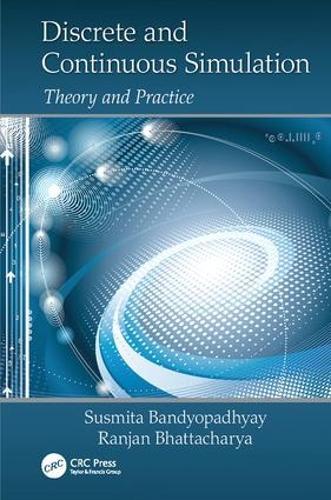
When it comes to discovering glitches inherent in complex systems—be it a railway or banking, chemical production, medical, manufacturing, or inventory control system—developing a simulation of a system can identify problems with less time, effort, and disruption than it would take to employ the original. Advantageous to both academic and industrial practitioners, Discrete and Continuous Simulation: Theory and Practice offers a detailed view of simulation that is useful in several fields of study. This text concentrates on the simulation of complex systems, covering the basics in detail and exploring the diverse aspects, including continuous event simulation and optimization with simulation. It explores the connections between discrete and continuous simulation, and applies a specific focus to simulation in the supply chain and manufacturing field. It discusses the Monte Carlo simulation, which is the basic and traditional form of simulation. It addresses future trends and technologies for simulation, with particular emphasis given to .NET technologies and cloud computing, and proposes various simulation optimization algorithms from existing literature. Includes chapters on input modeling and hybrid simulation Introduces general probability theory Contains a chapter on Microsoft® Excel™ and MATLAB®/Simulink® Discusses various probability distributions required for simulation Describes essential random number generators Discrete and Continuous Simulation: Theory and Practice defines the simulation of complex systems. This text benefits academic researchers in industrial/manufacturing/systems engineering, computer sciences, operations research, and researchers in transportation, operations management, healthcare systems, and human–machine systems.
Full Product Details
Author: Susmita Bandyopadhyay ,
Ranjan Bhattacharya
Publisher: Taylor & Francis Ltd
Imprint: CRC Press
Weight: 0.700kg
ISBN: 9781138076990
ISBN 10: 1138076996
Pages: 376
Publication Date: 29 March 2017
Audience:
College/higher education
,
General/trade
,
Tertiary & Higher Education
,
General
Format: Paperback
Publisher's Status: Active
Availability: In Print

This item will be ordered in for you from one of our suppliers. Upon receipt, we will promptly dispatch it out to you. For in store availability, please contact us.
Reviews
...presents topics of practical importance for both using and building simulation models, and introduces these in a way that emphasizes how each new concept is applied in practice. The book also offers a unique overview of how broadly simulation is applied in industry and for research... --James Nutaro, Oak Ridge National Laboratory, Tennessee, USA The book provides a comprehensive, elaborate, extensive account of computer simulation, of discrete and continuous simulation with basic probability theory, stochastic processes with application to manufacturing, supply chains, cellular automata and agent-based simulation, and systems simulation and optimization.The also book provides a detailed description of simulation software and languages with application to cloud computing, discussion of NET technologies and many software tools. The authors mention several disciples in engineering. There are many figures and tables to explain the process of simulation. -Nirode C. Mohanty, Zentralblatt MATH (zbMATH), Germany
...presents topics of practical importance for both using and building simulation models, and introduces these in a way that emphasizes how each new concept is applied in practice. The book also offers a unique overview of how broadly simulation is applied in industry and for research... --James Nutaro, Oak Ridge National Laboratory, Tennessee, USA The book provides a comprehensive, elaborate, extensive account of computer simulation, of discrete and continuous simulation with basic probability theory, stochastic processes with application to manufacturing, supply chains, cellular automata and agent-based simulation, and systems simulation and optimization.The also book provides a detailed description of simulation software and languages with application to cloud computing, discussion of NET technologies and many software tools. The authors mention several disciples in engineering. There are many figures and tables to explain the process of simulation. -Nirode C. Mohanty, Zentralblatt MATH (zbMATH), Germany
Author Information
Susmita Bandyopadhyay, Ranjan Bhattacharya