|
|
|||
|
||||
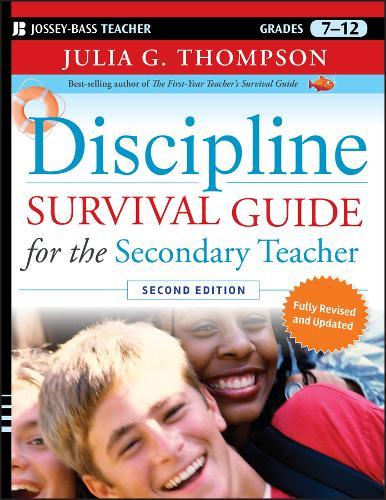
OverviewIdeas for creating an orderly classroom where learning can thrive This unique, hands-on book is packed with tested ideas and strategies to help you create a classroom environment where good conduct and high achievement are the norm and where students become self- motivated and take responsibility for their actions. The second edition is fully revised and updated to reflect changes in the past decade. Puts the focus on the teacher as a leader and coach who encourages students to buy into a classroom management approach Offers information about setting limits, safety issues, and protecting student's privacy Covers topics including technology; disruptions in the classroom form i-pods and cell phones; computers in the classroom; motivating, engaging, instructing students; and communicating with students and parents This must have resource offers a comprehensive and accessible guide to disciple in the school setting, complete with handy forms, checklists, and self-assessments. Full Product DetailsAuthor: Julia G. ThompsonPublisher: John Wiley & Sons Inc Imprint: Jossey-Bass Inc.,U.S. Edition: 2nd edition Dimensions: Width: 21.30cm , Height: 2.50cm , Length: 27.20cm Weight: 0.839kg ISBN: 9780470547434ISBN 10: 047054743 Pages: 368 Publication Date: 19 November 2010 Audience: Professional and scholarly , Professional & Vocational Format: Paperback Publisher's Status: Active Availability: Out of stock The supplier is temporarily out of stock of this item. It will be ordered for you on backorder and shipped when it becomes available. Table of ContentsAbout This Book v About the Author vi Acknowledgments vii Introduction xvii Section One: Successful Discipline Rests with You 1 You Can Make a Difference 1 Accept Responsibility 2 You are Not Alone 3 Why Punishment and Other Ineffective Discipline Techniques Do Not Work 4 What You Should Know About Adolescents 5 How Much Autonomy Should You Allow? 9 The Behaviors You Can Expect from Your Students 10 Proactive Attitudes That Can Help You Create a Positive Discipline Climate 12 Making Positive Choices 14 Questions for Reflection 14 Section Two: Adopt a Comprehensive Approach for a Successful Discipline Climate 15 Begin the Process with a Broad View 15 The Characteristics of a Well-Managed Twenty-First-Century Classroom 16 Five Commonsense Steps to a Productive Classroom Environment 18 The Most Common Discipline Mistakes That Secondary Teachers Make 18 Effective Management and Discipline Practices 21 Teacher Self-Assessment: How Well-Disciplined is Your Class? 23 Teacher Worksheet: Develop Your Classroom Discipline Plan 24 Teacher Self-Assessment: Think it Through: How Would You Rate Your New Discipline Plan? 27 Put Your High Expectations to Work 28 How to Communicate Your High Expectations 30 Making Positive Choices 30 Questions for Reflection 31 Section Three: Cultivate Your Role as a Classroom Leader 33 Become an Effective Classroom Leader 33 Students Should Come First 34 View Yourself as a Coach 34 The Importance of Assessing Your Performance 35 Teacher Self-Assessment: How Well Do You Convey Your Enthusiasm? 36 Teacher Self-Assessment: Classroom Leadership Self-Assessment 37 How to Gather Other Data on Your Classroom Competence 38 Teacher Self-Assessment: Sample Self-Rating Rubric 39 Teacher Worksheet: Setting Goals for Improving Your Classroom Leadership 40 Avoid Unreasonable Expectations 45 How to Manage Your Stressful Career 45 The Promise of Professionalism 47 How to Be Prepared for Class Every Day 50 How to Make Your Students Pay Attention to You 51 Show Respect to Gain Respect 52 Teacher Self-Assessment: Are You Too Permissive? 54 Teacher Self-Assessment: Determine What You Want Your Students to Say About You 57 Watch Your Body Language 58 Know Your Audience 59 Be Careful About Your Language 61 Making Positive Choices 61 Questions for Reflection 62 Section Four: Foster a Positive Classroom Environment 63 Establish a Positive Classroom Environment 63 Safety Must Come First 64 How to Determine If Students are Stressed Instead of Challenged 66 Student Worksheet: How Stressed are You? 67 Protect Your Students from Bullies 68 Making Your Classroom Safe by Enforcing School Rules 71 Establish a Physical Environment Conducive to Learning 71 Seating Arrangements 75 Sharing Classroom Space 75 Overcrowded Classrooms 76 Dealing with Noise Levels 78 Promoting Classroom Ownership 79 Create a Student-Centered Class Atmosphere 80 Structure Your Class to Use Time Wisely 80 Quick Tips to Make Every Minute Count 80 The First Ten Minutes of Class 81 Reducing Disruptions Through Effective Transitions 83 Activities to Keep Students Engaged in Learning During Transition Times 84 The Last Ten Minutes of Class 86 Making Positive Choices 88 Questions for Reflection 89 Section Five: Promote Self-Discipline 91 Moving Beyond Crowd Control to Promote Self-Discipline 91 Become a Consistent Teacher 93 Teach Students How to Monitor Themselves 94 Student Worksheet: Your Class Goals 96 Student Worksheet: Assignment Checklist 97 Student Worksheet: My Goals for Today 98 Student Worksheet: The Progress of My Grades 99 Student Worksheet: Self-Evaluation Form 100 Focus on Your Students’ Strengths 101 Increase Positive Interactions with Your Students 102 How to Encourage Students Who are Struggling 102 How to Help Impulsive Students 104 How to Assist Students with Attention Deficit Disorders 104 How to Support Students Who are Underachievers 105 How to Help Students Make Up Missed Work 106 Promoting Self-Discipline Through Improved Self-Image 107 Teach Your Students to Set and Achieve Goals 109 Student Worksheet: Setting Long-Term Goals 111 Student Worksheet: Setting Mid-Term Goals 113 Student Worksheet: Setting Short-Term Goals 114 Teach Students to Make Good Decisions 115 Creating Self-Disciplined Students Through Problem-Solving Activities 116 Behavior Modeling That Can Transform Your Class 118 Teacher Worksheet: Behavior Modeling Chart 119 Use Behavior Contracts to Promote Responsibility 120 Teacher Worksheet: Sample Assignment Contract 121 Teacher Worksheet: Sample Behavior Contract 1 124 Teacher Worksheet: Sample Behavior Contract 2 125 Student Worksheet: Sample Group Contract 127 Hold Students Accountable for Their Own Success 128 Making Positive Choices 130 Questions for Reflection 130 Section Six: Use Classroom Management Systems 131 Classroom Management Decisions You Will Have to Make 131 How Classroom Rules, Policies, and Procedures Promote Self-Discipline 132 A Simple Technique to Make Rules, Procedures, and Policies Easy to Remember 133 Setting Limits and Abiding by Them 133 How to Say “No” without Being Negative 134 Create Classroom Rules 135 How to Teach Classroom Rules Successfully 138 Enforce Classroom Rules 139 Policies That Guide Your Students 140 Establish Control Through Class Procedures 141 Teacher Worksheet: Student Sign-Out Sheet 144 Student Worksheet: Missing Work Reminder List 146 Making Positive Choices 147 Questions for Reflection 148 Section Seven: Create and Maintain a Partnership with Students’ Families 149 Why All Teachers Need This Positive Relationship 149 Positive Attitudes to Help You Work with Parents and Guardians 150 Avoid Confrontation with a Transparent Classroom 151 How to Generate a Positive Working Relationship 151 Teacher Worksheet: Sample Introductory Letter 152 Student Worksheet: Student Progress Checkup Form 154 What You Can Expect from Your Students’ Parents and Guardians 156 What Your Students’ Parents and Guardians Should Expect from You 156 Hold Beneficial Conferences 157 Documenting Home Contacts 160 Teacher Worksheet: Contact Documentation Form 161 Manage Electronic Correspondence 162 Make Productive Phone Calls 162 Maintain a Class Web Page 163 How to Maintain Student Privacy 164 Making Positive Choices 165 Questions for Reflection 166 Section Eight: Establish a Cooperative Classroom Climate 167 The Synergy of a Cooperative Classroom Climate 167 What to Do When Your School’s Climate is Not Positive 168 Connect with Your Students 169 The Basics of a Good Teacher-Student Relationship 171 How to Get to Know Your Students 172 Student Worksheet: Student Inventory: Impressions 173 Student Worksheet: Student Inventory: Attitudes 175 Student Worksheet: Student Inventory: Reactions of Others 178 Teacher Worksheet: Parent or Guardian Inventory 179 How to Let Your Students Know That You Care 180 Boundaries in Teacher-Student Relationships 181 Seeking Feedback from Your Students 182 Teach Social Skills 183 Teacher Worksheet: Checklist of Social Skills All Secondary Students Should Master 184 What to Do When a Student Confides in You 185 The Importance of Modeling Courtesy 186 Use Conflict Resolution Strategies to Create a Productive Classroom 187 Arming Our Students: Teaching the Art of the Alternative Response to Rude Classmates 189 Create a Sense of Community by Helping Students Learn About Each Other 190 Use Interview Projects to Help Students Learn About Each Other 192 Enjoy the Benefits of a Diverse Classroom 192 Build a Positive Classroom Culture 194 Making Positive Choices 196 Questions for Reflection 196 Section Nine: Maintain Order with Effective Instruction 197 The Relationship Between Instruction and Discipline 197 Provide Engaging Instruction 198 Activities to Engage Students 199 Build in Relevance 201 Pace Instruction to Keep Every Student on Task 201 What to Do When Wasted Time Causes Problems 202 Differentiate Instruction to Engage Your Students 204 How to Have Successful Homework Assignments 207 Student Worksheet: Homework Questionnaire for Students 209 Teacher Worksheet: Sample Syllabus 211 Student Worksheet: Parent-Teacher-Student Homework Notification Form 213 Student Worksheet: Missing Homework Explanation Form 214 Teach the Process of Long-Term Projects 215 Student Notebooks: Organizing for Success 217 Ask Productive Questions 218 Play Games with Your Students 220 How to Use Technology to Enhance Instruction 224 Help Students Stay on Task When Working with Computers 228 Teaching Students to Work Well Together 229 Teacher Worksheet: Group Monitoring Form 230 Some Quick Collaborative Activities without Technology Support 234 Some Quick Collaborative Activities with Technology Support 235 Monitoring Students’ Behavior 235 Quick Monitoring Techniques 237 Use a Syllabus to Prevent Problems 238 When You Need a Substitute 239 Making Positive Choices 241 Questions for Reflection 241 Section Ten: Promote Achievement and Learning 243 The Role Motivation Plays in a Positive Discipline Plan 243 Make Sure Students Know How to Do Their Work 244 Teacher Self-Assessment: How Well Do You Give Instructions? 245 Study Skills Appropriate for Secondary Students 246 Positive Reinforcement Makes the Difference 249 Use Encouragement and Praise 249 How to Use Encouragement and Praise Effectively 250 Employ Extrinsic Motivation 250 Techniques for Increasing Intrinsic Motivation 252 Arouse Student Curiosity 255 Build Critical-Thinking Skills 256 Questions That Spark Critical Thinking 258 Task Stems to Motivate Students Through Critical-Thinking Activities 260 Active Learning Strategies for Active Students 261 Use Inductive Learning to Engage Students 263 Another Useful Method of Using Inductive Teaching: Case Studies 264 Appeal to Your Students’ Altruism 264 Internet Resources for Service Projects in Your Classroom 266 Show Students How to Benefit from Formative Assessments 266 Student Worksheet: What Did You Learn from This Assignment? 269 Student Worksheet: Reflection Sheet for Formative Assessments 270 Enlarge the Learning Environment 271 Create a Culture of Excellence in Your Classroom 272 Making Positive Choices 274 Questions for Reflection 274 Section Eleven: Prevent Discipline Problems 275 Create a Positive Classroom When You Prevent Discipline Problems 275 When You are the Cause of the Problem 276 When What You Say Causes Problems 279 Conducting Useful Student Conferences 280 Strategies for Successful Student Conferences 280 Making Detentions Beneficial for Your Students 281 Essay Questions That Will Help Solve Discipline Problems 283 How to Handle the Difficult Class 284 Win Over Your Difficult Students 288 How to Increase the Positive Behavior in Your Class 289 How to Decrease the Negative Behavior in Your Class 292 Making Positive Choices 294 Questions for Reflection 294 Section Twelve: Cope Successfully with Discipline Problems Once They Occur 295 The Difficult Task of Responding to Discipline Problems 295 How to Successfully Investigate a Behavior Problem 296 Employ the Steps of the Problem-Solving Approach 297 The Importance of Early Intervention 297 Teacher Worksheet: Behaviors and Interventions Checklist 299 The Choices Teachers Have When Dealing with Discipline Problems 304 Teacher Self-Assessment: How You Can Determine If a Discipline Action is Appropriate 307 How to Refer a Student to the Office 308 The Importance of Anecdotal Behavior Records 310 Teacher Worksheet: Behavior Record Form 311 Teacher Worksheet: Behavior Analysis Log 312 How to Preserve Your Students’ Dignity 313 How to Handle Chronic Misbehavior 313 How to Manage Students Who Want to Sleep Instead of Participate in Class 314 What to Do When Students Lack Materials 315 How to Help Students Who Daydream 316 How to Manage Student Cell Phone Use in Class 317 How to Manage Hallway Misbehavior 317 How to Handle Requests to See the School Nurse 319 How to Handle Vandalism 320 How to Manage Profanity 321 How to Intervene When Students are Tardy 322 How to Intervene When Students are Truant 324 How to Reduce Excessive Talking 325 How to Avoid Power Struggles 327 How to Intervene When Students Cheat 329 How to Cope When Students Steal 333 What to Do When Students are Defiant 334 Substance Abuse 336 What to Do When Students are Violent 338 Warning Signs You Should Not Ignore 341 Making Positive Choices 342 Questions for Reflection 342 Index 343ReviewsAuthor InformationJULIA G. THOMPSON has been a public school teacher for more than twenty-five years. Thompson currently teaches in Fairfax County, Virginia, and is an active speaker, consultant, teacher trainer, and workshop presenter. Author of the best-selling The First-Year Teacher's Survival Guide and The First-Year Teacher's Checklist, she also publishes a Web site (http://juliagthompson.com) offering tips for teachers on a wide variety of topics. Tab Content 6Author Website:Countries AvailableAll regions |
||||