Overview
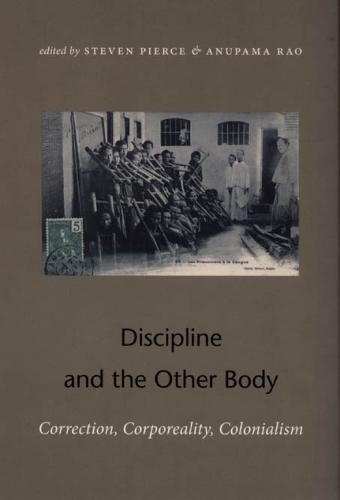
Discipline and the Other Body reveals the intimate relationship between violence and difference underlying modern governmental power and the human rights discourses that critique it. The comparative essays brought together in this collection show how, in using physical violence to discipline and control colonial subjects, governments repeatedly found themselves enmeshed in a fundamental paradox: Colonialism was about the management of difference-the ""civilized"" ruling the ""uncivilized""-but colonial violence seemed to many the antithesis of civility, threatening to undermine the very distinction that validated its use. Violation of the bodies of colonial subjects regularly generated scandals, and eventually led to humanitarian initiatives, ultimately changing conceptions of ""the human"" and helping to constitute modern forms of human rights discourse. Colonial violence and discipline also played a crucial role in hardening modern categories of difference-race, gender, ethnicity, sexuality, and religion. The contributors, who include both historians and anthropologists, address instances of colonial violence from the early modern period to the twentieth century and from Asia to Africa to North America. They consider diverse topics, from the interactions of race, law, and violence in colonial Louisiana to British attempts to regulate sex and marriage in the Indian army in the early nineteenth century. They examine the political dilemmas raised by the extensive use of torture in colonial India and the ways that British colonizers flogged Nigerians based on beliefs that different ethnic and religious affiliations corresponded to different degrees of social evolution and levels of susceptibility to physical pain. An essay on how contemporary Sufi healers deploy bodily violence to maintain sexual and religious hierarchies in postcolonial northern Nigeria makes it clear that the state is not the only enforcer of disciplinary regimes based on ideas of difference. Contributors. Laura Bear, Yvette Christianse, Shannon Lee Dawdy, Dorothy Ko, Isaac Land, Susan O'Brien, Douglas M. Peers, Steven Pierce, Anupama Rao, Kerry Ward
Full Product Details
Author: Anupama Rao ,
Steven Pierce
Publisher: Duke University Press
Imprint: Duke University Press
Weight: 0.653kg
ISBN: 9780822337317
ISBN 10: 0822337312
Pages: 368
Publication Date: 03 May 2006
Audience:
Professional and scholarly
,
Professional & Vocational
Format: Hardback
Publisher's Status: Active
Availability: In Print

This item will be ordered in for you from one of our suppliers. Upon receipt, we will promptly dispatch it out to you. For in store availability, please contact us.
Reviews
Discipline and the Other Body offers a brilliant and multifaceted exploration of the ways in which colonial power worked with the human body. Covering a great variety of colonial contexts, the contributors bring to light the connections between what Michel Foucault called biopower and the lived experience of colonial violence. -Timothy Mitchell, author of Rule of Experts: Egypt, Techno-Politics, Modernity Here, finally, is a collection that forces us to think broadly and comparatively about the relationship between colonial power and the body, about the very interventions and invasions that made colonialism so embodied a practice. This volume will allow people like myself to teach colonialism in a way that bridges culture, politics, and gender in powerful ways. -Luise White, author of Speaking with Vampires: Rumor and History in Colonial Africa
Here, finally, is a collection that forces us to think broadly and comparatively about the relationship between colonial power and the body, about the very interventions and invasions that made colonialism so embodied a practice. This volume will allow people like myself to teach colonialism in a way that bridges culture, politics, and gender in powerful ways. Luise White, author of Speaking with Vampires: Rumor and History in East and Central Africa Discipline and the Other Body offers a brilliant and multifaceted exploration of the ways in which colonial power worked with the human body. Covering a great variety of colonial contexts, the contributors bring to light the connections between what Michel Foucault called biopower and the lived experience of colonial violence. Timothy Mitchell, author of Rule of Experts: Egypt, Techno-Politics, Modernity
Here, finally, is a collection that forces us to think broadly and comparatively about the relationship between colonial power and the body, about the very interventions and invasions that made colonialism so embodied a practice. This volume will allow people like myself to teach colonialism in a way that bridges culture, politics, and gender in powerful ways. Luise White, author of Speaking with Vampires: Rumor and History in East and Central Africa Discipline and the Other Body offers a brilliant and multifaceted exploration of the ways in which colonial power worked with the human body. Covering a great variety of colonial contexts, the contributors bring to light the connections between what Michel Foucault called biopower and the lived experience of colonial violence. Timothy Mitchell, author of Rule of Experts: Egypt, Techno-Politics, Modernity
Author Information
Steven Pierce is Lecturer in Colonial and Postcolonial History at the University of Manchester. He is the author of Farmers and the State in Colonial Kano: Land Tenure and the Legal Imagination. Anupama Rao is Assistant Professor of History at Barnard College. She is the editor of Gender and Caste: Contemporary Issues in Indian Feminism and a coeditor of Violence, Vulnerability, and Embodiment.