|
|
|||
|
||||
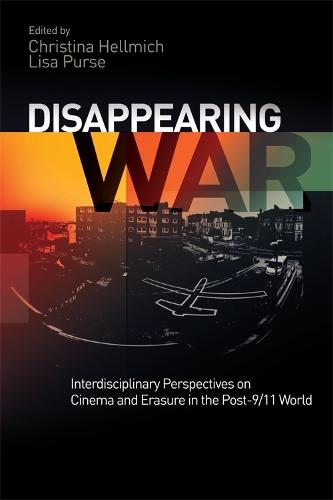
OverviewThe battles fought in the name of the 'war on terror' have re-ignited questions about the changing nature of war, and the experience of war for those geographically distant from its real world consequences. What is missing from our highly mediated experience of war? What are the intentional and unintentional processes of erasure through which the distortion happens? What are their consequences? Cinema is a key site at which questions about our highly mediated experience of war can be addressed or, more significantly, elided. Looking at a range of films that have provoked debate, from award-winning features like Zero Dark Thirty and American Sniper, to documentaries like Kill List and Dirty Wars, as well as at the work of visual artists like Harun Farocki and Omer Fast, this book examines the practices of erasure in the cinematic representation of recent military interventions. Drawing on representations of war-related death, dying and bodily damage, this provocative collection addresses 'what's missing' in existing scholarly responses to modern warfare; in film studies, as well as in politics and international relations. Full Product DetailsAuthor: Christina Hellmich (Associate Professor in IR & Middle East Studies, University of Reading) , Lisa Purse (Associate Professor in Film, University of Reading)Publisher: Edinburgh University Press Imprint: Edinburgh University Press Edition: 90,000 ed. Weight: 0.340kg ISBN: 9781474437523ISBN 10: 1474437524 Pages: 216 Publication Date: 10 August 2018 Audience: College/higher education , Postgraduate, Research & Scholarly Format: Paperback Publisher's Status: Active Availability: Manufactured on demand We will order this item for you from a manufactured on demand supplier. Table of ContentsIllustrationsContributorsAcknowledgments1. Introduction: Film and the epistemology of war, Christina Hellmich & Lisa Purse 2. Good Kill? U.S. soldiers and the killing of civilians in American film, Cora Sol Goldstein3. ‘5000 feet is the best’: drone warfare, targets, and Paul Virilio’s ‘accident’, Agnieszka Piotrowska 4. Post-heroic war / the body at risk, Robert Burgoyne 5. Disappearing bodies: visualising the Maywand District murders, Thomas Gregory 6. The unknowable soldier: the face of Freddie Quell, James Harvey-Davitt 7. Visible dead bodies and the technologies of erasure in the war on terror, Jessica Auchter 8. Ambiguity, ambivalence and absence in Zero Dark Thirty, Lisa Purse9. Invisible war: broadcast television documentary and Iraq, Janet Harris10. Nine cinematic devices for staging (in)visible war and the (vanishing) colonial present, Shohini Chaudhuri11. Afterword: Reflections on knowing war, Christina HellmichReviewsFrom mainstream news coverage of conflict to the use of close-ups in The Master this searching edited collection explores the dialectic between the seen and the unseen in the contemporary war film. The contributors tackle the question of whether the myriad changes to war and the representation of war - via embedded reporting, drones, virtual reality and so on - constitute a deep ideological erasure. Their insights are intellectually and ethically illuminating and advance our understanding of the cultural imagination of war in important ways.--Guy Westwell, QMUL Author InformationChristina Hellmich is Associate Professor in IR & Middle East Studies at the University of Reading Dr Lisa Purse is Associate Professor in Film in the Department of Film, Theatre & Television at the University of Reading. Tab Content 6Author Website:Countries AvailableAll regions |
||||