Overview
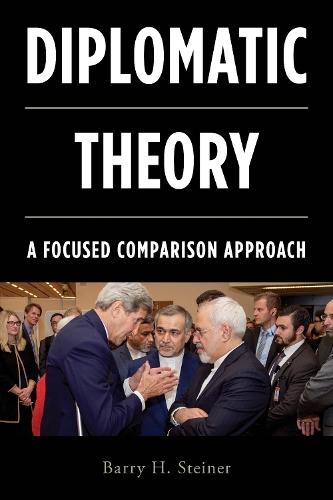
This book is intended as a primer for generalizing on a case-comparison basis about diplomatic statecraft, including resources and techniques available to states to attain their objectives. Twenty years in the making, it employs an inductive method in which small samples of cases occurring at different times and between different states are studied to track and understand specific variable diplomatic behavior. Its concern with empirically-grounded generalization, in which hypotheses are formulated and tested by case similarities and differences, is a new approach to diplomatic analysis. Diplomacy, though central to international relations study and practice, has generally been studied normatively rather than theoretically, in contrast to other international relations topics. Students of diplomacy, emphasizing statecraft’s complexity, have generally shied away from theory, while theory-minded international relations analysts have neglected statecraft and highlighted military capabilities and positional rivalries as determiners of state behavior. This book instead builds diplomatic theory by investigating variation in case experience, especially in the diplomatic choices made by states. It shows that theorizing is enhanced by a diplomatic point of view and by distinguishing diplomatic behavior as cause and as effect.
Full Product Details
Author: Barry H. Steiner
Publisher: Bloomsbury Publishing Plc
Imprint: Rowman & Littlefield
Dimensions:
Width: 15.60cm
, Height: 2.70cm
, Length: 23.90cm
Weight: 0.590kg
ISBN: 9781442239050
ISBN 10: 1442239050
Pages: 272
Publication Date: 20 March 2018
Audience:
College/higher education
,
Tertiary & Higher Education
Format: Hardback
Publisher's Status: Active
Availability: Manufactured on demand

We will order this item for you from a manufactured on demand supplier.
Reviews
"An important and ambitious contribution to the understudied and underappreciated subject of international diplomacy. Steiner situates the diplomacy of war and peace within an impressive range of theoretical literature and backs his claims with abundant historical evidence. His book will prove a useful resource for students and scholars alike. -- James Lebovic, Elliott School of International Affairs, The George Washington University This book fills a longstanding gap in the study of diplomacy: the need for a theory to explain why some policies and practices succeed while others fail. By analyzing targeted questions across a wide range of comparative case studies – that address diplomatic communications, alliance strategy, mediation, public opinion and arms control – Steiner builds a convincing and constructive pathway to diplomatic theory that can offer useful insights for both researchers and practitioners. -- Bertram Spector, Editor-in-Chief, ""International Negotiation: A Journal of Theory and Practice"" Diplomatic analysis tends to be submerged in the overlap between foreign policy and international politics, or lost in the gap between those two fields. Barry Steiner is dedicated to reviving it from its current alternative fates, and he does it with his customary command of a wide span of events and his ability to bring out new insights that make this revived field of inquiry stand on its own and also throw light on the two adjoining fields. -- I. William Zartman, The Paul H. Nitze School of Advanced International Studies, Johns Hopkins University"
This book fills a longstanding gap in the study of diplomacy: the need for a theory to explain why some policies and practices succeed while others fail. By analyzing targeted questions across a wide range of comparative case studies - that address diplomatic communications, alliance strategy, mediation, public opinion and arms control - Steiner builds a convincing and constructive pathway to diplomatic theory that can offer useful insights for both researchers and practitioners. -- Bertram Spector, Editor-in-Chief, International Negotiation: A Journal of Theory and Practice Diplomatic analysis tends to be submerged in the overlap between foreign policy and international politics, or lost in the gap between those two fields. Barry Steiner is dedicated to reviving it from its current alternative fates, and he does it with his customary commend of a wide span of events and his ability to bring out new insights that make this revived field of inquiry stand on its own and also throw light on the two adjoining fields. -- I. William Zartman, professor emeritus, The Paul H. Nitze School of Advanced International Studies, Johns Hopkins University An important and ambitious contribution to the understudied and underappreciated subject of international diplomacy. Steiner situates the diplomacy of war and peace within an impressive range of theoretical literature and backs his claims with abundant historical evidence. His book will prove a useful resource for students and scholars alike. -- James Lebovic, Elliott School of International Affairs, The George Washington University
This book fills a longstanding gap in the study of diplomacy: the need for a theory to explain why some policies and practices succeed while others fail. By analyzing targeted questions across a wide range of comparative case studies - that address diplomatic communications, alliance strategy, mediation, public opinion and arms control - Steiner builds a convincing and constructive pathway to diplomatic theory that can offer useful insights for both researchers and practitioners.--Bertram Spector, Editor-in-Chief, International Negotiation: A Journal of Theory and Practice An important and ambitious contribution to the understudied and underappreciated subject of international diplomacy. Steiner situates the diplomacy of war and peace within an impressive range of theoretical literature and backs his claims with abundant historical evidence. His book will prove a useful resource for students and scholars alike.--James Lebovic, Elliott School of International Affairs, The George Washington University Diplomatic analysis tends to be submerged in the overlap between foreign policy and international politics, or lost in the gap between those two fields. Barry Steiner is dedicated to reviving it from its current alternative fates, and he does it with his customary command of a wide span of events and his ability to bring out new insights that make this revived field of inquiry stand on its own and also throw light on the two adjoining fields.--I. William Zartman, The Paul H. Nitze School of Advanced International Studies, Johns Hopkins University
Author Information
Barry H. Steiner is Emeritus Professor of Political Science at California State University, Long Beach.