Overview
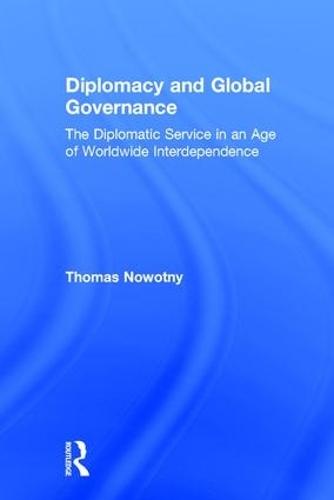
Traditional diplomacy is based on the notion of competing nation-states, each attempting to maximize its autonomy and independence. This notion is at odds with today's world in which even mighty states are enmeshed in a web of interdependence. Much of the world's economy, information, industry, and culture have become global. Given these massive changes, argues Thomas Nowotny, much of traditional diplomacy has become redundant and sometimes counterproductive. Notwithstanding worldwide interdependence, states still anchor this complex global system. In a timelier version of their craft, diplomats retain an important function in safeguarding and shaping that worldwide interdependence. They are trained to transform differences into consensus and to navigate zones of conflict. But to do so effectively, and to meet today's challenges, they will have to adjust their ways and institutions. Nowotny bases his arguments on his unique experiences in internal organizational politics and in bilateral and multilateral international diplomacy, as well as on his theoretical reflections as an academic. His work aims to merge lessons from these distinct spheres into one comprehensive whole, intertwining practice and theory. To affect outcomes one, thus, has to deal with practice and theory at the same time. This is what Novotny aims to achieve, and he succeeds admirably.
Full Product Details
Author: Thomas Nowotny
Publisher: Taylor & Francis Inc
Imprint: Routledge
Dimensions:
Width: 15.20cm
, Height: 2.30cm
, Length: 22.90cm
Weight: 0.544kg
ISBN: 9781412818445
ISBN 10: 1412818443
Pages: 322
Publication Date: 15 May 2011
Audience:
College/higher education
,
Postgraduate, Research & Scholarly
Format: Hardback
Publisher's Status: Active
Availability: In Print

This item will be ordered in for you from one of our suppliers. Upon receipt, we will promptly dispatch it out to you. For in store availability, please contact us.
Reviews
According to Nowotny, multilateral organizations like the World Bank, the UN, and nongovernmental relief agencies are at least as important as governments and often have better technical expertise on staff. To succeed in this more complex setting, Nowotny recommends recruiting technical experts to serve in a country's diplomatic corps and establishing a multilateral track to allow some diplomats to specialize in working with other agencies ... By setting his real-world experience on an academic foundation, Nowotny has produced a thoughtful study that will interest those in the diplomatic services and those who hope to enter. -- Marcia L. Sprules, Council on Foreign Relations Lib., Library Journal <p> Drawing on his experience as a diplomat, a scholar, and an astute observer of international politics, Nowotny has produced a book as wise as it is interesting. He offers an important and compelling vision of how to update the art of diplomacy to a changed and changing world. <p> --Charles A. Kupchan, professor of international affairs at Georgetown University and former director for European affairs at the US National Security Council <p> Thomas Nowotny has dared to write three books between two covers. Here is the autobiography of a seasoned and shrewd Austrian diplomat who has served in Cairo, New York, Paris, and London, as well as a personal adviser in Chancellor Bruno Kreisky's cabinet. His is also the profound analysis about recent transformations in global governance from the perspective of a well-informed political scientist. If this were not enough, he gives us the benefit of his experience as a diplomat about how today's national diplomatic services ought to cope with, and adapt to, a new era of multilateral diplomacy. This book is a real bargain--for the price of one you get a happy threesome of keen insights. <p> --Gunter Bischof, Marshall Plan Professor of History and director of Center Austria, University of New Orleans <p> What role is left for
Author Information
Thomas Nowotny teaches political science at the University of Vienna in Austria. He has been an Austrian diplomat, private secretary to Austrian Chancellor Bruno Kreisky, senior political counselor to the European Bank for Reconstruction and Development, and a consultant to the Organization for Economic Co-operation and Development.