|
|
|||
|
||||
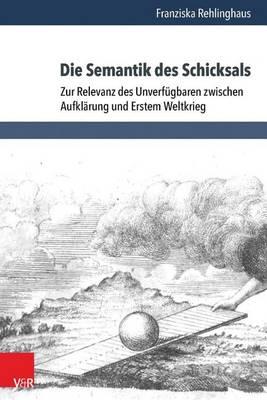
OverviewEnglish summary: How could modern society, with its rational self-understanding, come to be so dependent on such an occult-like term such as ""fate""? Franziska Rehlinghaus shows that since its establishment around 1650 the German idea of fate (""Schicksal"") was a central concept for dealing with the respective problems of each era. Indeed, one can speak of modern times as the ""Fatalistic Age."" The author reconstructs for the first time the semantic and functional changes as well as the conjunctures this term underwent from the time of the Enlightenment to the beginning of the 20th century. German description: Warum ist eine moderne, in ihrem Selbstverstandnis rationale Gesellschaft auf einen so okkult anmutenden Begriff wie den des Schicksals angewiesen? Franziska Rehlinghaus weist nach, dass der deutsche Schicksalsbegriff seit seiner Etablierung um 1650 ein zentraler Ausdruck epochenspezifischer Problemstellungen war, so dass man von der Neuzeit als einem fatalisierten Zeitalter sprechen kann. Dafur rekonstruiert sie erstmals den semantischen und den funktionalen Wandel sowie die Konjunkturen des Schicksalsbegriffs von der Aufklarung bis zum Beginn des 20. Jahrhunderts. Full Product DetailsAuthor: Franziska RehlinghausPublisher: Vandenhoeck & Ruprecht Imprint: Vandenhoeck & Ruprecht Volume: 22 Weight: 0.358kg ISBN: 9783525367247ISBN 10: 3525367244 Pages: 479 Publication Date: 28 January 2015 Audience: General/trade , General Format: Hardback Publisher's Status: Active Availability: Available To Order We have confirmation that this item is in stock with the supplier. It will be ordered in for you and dispatched immediately. Language: German Table of ContentsReviewsAuthor InformationDr. Franziska Rehlinghaus ist Wissenschaftliche Mitarbeiterin am Zentrum fur Zeithistorische Forschung Potsdam. Tab Content 6Author Website:Countries AvailableAll regions |
||||