Overview
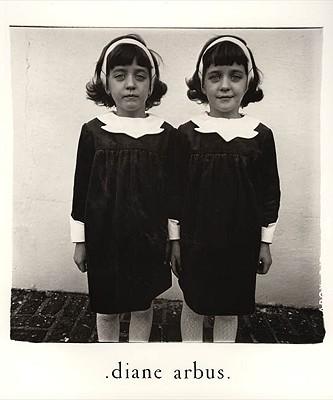
New technology has made possible this lustrous new printing from all new film. These landmark images now have a clarity and depth not achievable in earlier editions.
Full Product Details
Author: Diane Arbus ,
Doon Arbus ,
Marvin Israel
Publisher: Aperture
Imprint: Aperture
Edition: Special edition
Dimensions:
Width: 23.30cm
, Height: 1.40cm
, Length: 27.90cm
Weight: 0.300kg
ISBN: 9780893816940
ISBN 10: 0893816949
Pages: 184
Publication Date: 15 June 2005
Audience:
College/higher education
,
Professional and scholarly
,
General/trade
,
Undergraduate
,
Professional & Vocational
Format: Paperback
Publisher's Status: Unknown
Availability: Out of stock

Reviews
Diane Arbus was no a theorist but an artist. Her concern was not to buttress philosophical positions but to make pictures. She loved photography for the miracles it performs each day by accident, and respected it for the precise intentional tool that it could be, given talent, intelligence, dedication and discipline. Her pictures are concerned with private rather than social realities, with psychological rather than visual coherence, with the prototypical and mythic rather than the topical and temporal. Her real subject is no less than the unique interior lives of those she photographed. --John Szarkowski, 1972, Director, Department of Photography, The Museum of Modern Art <br> I have never seen pictured like them before, and I am sure I will never see their equal again. They are the product of something beyond the camera, the result of a long, complex and intensely human process. No one can go into the street tomorrow and take a Diane Arbus photograph. That would be merely adjusting a lens and pressing a button. What made her pictures great was everything that happened before she pressed the button. --Douglas Davis, Newsweek, 1984 <br> Diane Arbus is one of our legends, her monograph a pivotal classic that changed the direction of photography in America. She captures the complexity and the art in reality. The quality that defines her work and separates it from almost all other photography is her ability to empathize on a level far beyond language. --Nan Goldin, Bookforum, 1995<br>
Diane Arbus was no a theorist but an artist. Her concern was not to buttress philosophical positions but to make pictures. She loved photography for the miracles it performs each day by accident, and respected it for the precise intentional tool that it could be, given talent, intelligence, dedication and discipline. Her pictures are concerned with private rather than social realities, with psychological rather than visual coherence, with the prototypical and mythic rather than the topical and temporal. Her real subject is no less than the unique interior lives of those she photographed. --John Szarkowski, 1972, Director, Department of Photography, The Museum of Modern Art I have never seen pictured like them before, and I am sure I will never see their equal again. They are the product of something beyond the camera, the result of a long, complex and intensely human process. No one can go into the street tomorrow and take a Diane Arbus photograph. That would be merely adjusting a lens and pressing a button. What made her pictures great was everything that happened before she pressed the button. --Douglas Davis, Newsweek, 1984 Diane Arbus is one of our legends, her monograph a pivotal classic that changed the direction of photography in America. She captures the complexity and the art in reality. The quality that defines her work and separates it from almost all other photography is her ability to empathize on a level far beyond language. --Nan Goldin, Bookforum, 1995
Grossfeld, a Pulitzer Prize - winning photographer for the Boston Globe, has traveled to various continents to document the appalling conditions many of the world's children endure, and his angry, precise, haunting images bring home the reality of some staggering statistics: Twelve million children go to bed hungry every night in the US; more than four million children under the age of five die in India every year; some 200 million children under the age of 15 labor full time, for little or no pay; there are some 800,000 child prostitutes in Thailand alone. These black-and-white photographs portray child prostitutes waiting for clients; an Indian child being bathed in water drawn from a sewer (the only source available); a terribly frail Romanian five-year-old dying of AIDS; the bodies of Lebanese youngsters, killed during a rocket attack; children in the last stages of starvation in Ethiopia. These are painful, infuriating, and unforgettable images. (Kirkus Reviews)