Overview
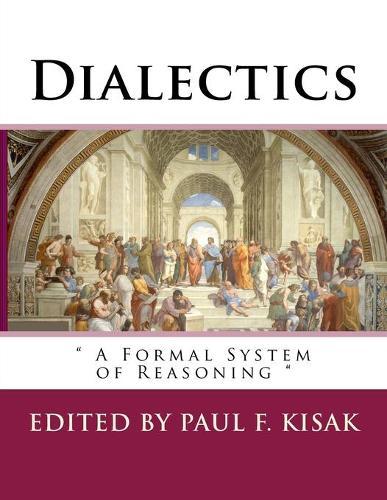
Dialectic or dialectics, also known as the dialectical method, is a discourse between two or more people holding different points of view about a subject but wishing to establish the truth through reasoned arguments. The term was popularized by Plato's Socratic dialogues but the act itself has been central to European and Indian philosophy since ancient history. The term dialectic is not synonymous with the term debate. While in theory debaters are not necessarily emotionally invested in their point of view, in practice debaters frequently display an emotional commitment that may cloud rational judgment. Debates are won through a combination of persuading the opponent, proving one's argument correct, or proving the opponent's argument incorrect. Debates do not necessarily require promptly identifying a clear winner or loser; however clear winners are frequently determined by either a judge, jury, or by group consensus. The term dialectics is also not synonymous with the term rhetoric, a method or art of discourse that seeks to persuade, inform, or motivate an audience. Concepts, like logos or rational appeal, pathos or emotional appeal, and ethos or ethical appeal, are intentionally used by rhetoricians to persuade an audience. The Sophists taught excellence as the highest value, and the determinant of one's actions in life. The Sophists taught artistic quality in oratory (motivation via speech) as a manner of demonstrating one's excellence. Oratory was taught as an art form, used to please and to influence other people via excellent speech; nonetheless, the Sophists taught the pupil to seek excellence in all endeavours, not solely in oratory. Socrates favoured truth as the highest value, proposing that it could be discovered through reason and logic in discussion: ergo, dialectic. Socrates valued rationality (appealing to logic, not emotion) as the proper means for persuasion, the discovery of truth, and the determinant for one's actions. To Socrates, truth, not excellence, was the greater good, and each person should, above all else, seek truth to guide one's life. Therefore, Socrates opposed the Sophists and their teaching of rhetoric as art and as emotional oratory requiring neither logic nor proof. Different forms of dialectical reasoning have emerged throughout history from the Indosphere (Greater India) and the West (Europe). These forms include the Socratic method, Hindu, Buddhist, Medieval, Hegelian dialectics, Marxist, Talmudic, and Neo-orthodoxy.This book discusses the methods and history of the dialectic argument and is designed to be a reference and provide an overview of the topic and give the reader a structured knowledge to familiarize yourself with the topic at the most affordable price possible.The accuracy and knowledge is of an international viewpoint as the edited articles represent the inputs of many knowledgeable individuals and some of the most current knowledge on the topic, based on the date of publication.
Full Product Details
Author: Paul F Kisak
Publisher: Createspace Independent Publishing Platform
Imprint: Createspace Independent Publishing Platform
Dimensions:
Width: 21.60cm
, Height: 1.80cm
, Length: 28.00cm
Weight: 0.785kg
ISBN: 9781533317216
ISBN 10: 1533317216
Pages: 338
Publication Date: 17 May 2016
Audience:
General/trade
,
General
Format: Paperback
Publisher's Status: Active
Availability: Available To Order

We have confirmation that this item is in stock with the supplier. It will be ordered in for you and dispatched immediately.