|
|
|||
|
||||
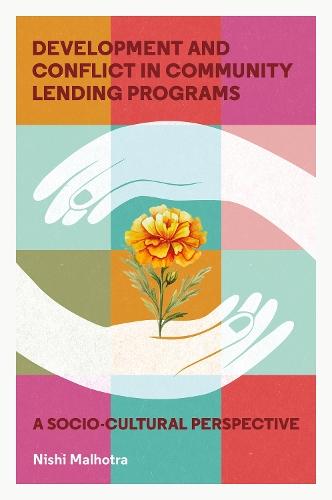
OverviewCommunity lending programs play a pivotal role in promoting financial inclusion for marginalized populations, offering access to resources and opportunities that traditional financial systems often overlook. However, these initiatives frequently grapple with deep-seated conflicts driven by social inequities, power imbalances, and group dynamics. As marginalized individuals navigate the complexities of group membership, intersecting factors such as caste, gender, and economic status exacerbate tensions, sometimes leading to extreme measures like coercion and exclusion. Addressing these conflicts is critical for realizing the potential of community lending programs as tools for socio-economic development. Development and Conflict in Community Lending Programs: A Socio-Cultural Perspective explores the intricate challenges and opportunities within community lending initiatives. This comprehensive study uses case studies and theoretical frameworks, including development conflict theory, mass communication theory, and transformational leadership theory, to examine the root causes of conflict and offer strategies for resolution. Author Nishi Malhotra highlights the roles of state intervention, financial leadership, and communication strategies in mitigating conflicts and building consensus. Drawing on examples from both developed and developing nations, this work provides a nuanced analysis of how institutional designs and leadership approaches shape the outcomes of community lending programs, ultimately advancing financial inclusion and development goals. Offering theoretical insights and practical guidance, this study is an essential resource for policymakers, academics, practitioners, and entrepreneurs committed to fostering equitable and sustainable financial systems. Its case studies and actionable recommendations make it a valuable tool for understanding and addressing the socio-cultural dimensions of community lending. Full Product DetailsAuthor: Nishi Malhotra (Indian Institute of Management, Sambalpur, India)Publisher: Emerald Publishing Limited Imprint: Emerald Publishing Limited Dimensions: Width: 15.20cm , Height: 1.50cm , Length: 22.90cm Weight: 0.372kg ISBN: 9781837082919ISBN 10: 183708291 Pages: 200 Publication Date: 12 November 2025 Audience: Professional and scholarly , Professional & Vocational Format: Hardback Publisher's Status: Active Availability: In Print This item will be ordered in for you from one of our suppliers. Upon receipt, we will promptly dispatch it out to you. For in store availability, please contact us. Table of ContentsChapter 1. Conflicts in a community lending program: Interaction of individual and structural factors Chapter 2. Literature review: Lack of financial literacy as the main cause of conflict in community lending groups Chapter 3. Conflicts in a community lending program: Socio cultural perspective Chapter 4. Leadership a panacea to cause of poverty reduction and financial inclusion through Self-help groups Chapter 5. Transformational financial leadership: A key to conflict resolution in a community lending program Chapter 6. Communication strategies and their role in the resolution of conflicts Chapter 7. Incubation through NGOs: A road to sustainability of group initiatives Chapter 8. Technology and its impact on microfinance Chapter 9. Role of State intervention in development through community lending, and recommendations for various stakeholdersReviewsAuthor InformationNishi Malhotra is Assistant Professor at the Indian Institute of Management (IIM) Sambalpur, India. Tab Content 6Author Website:Countries AvailableAll regions |
||||