Overview
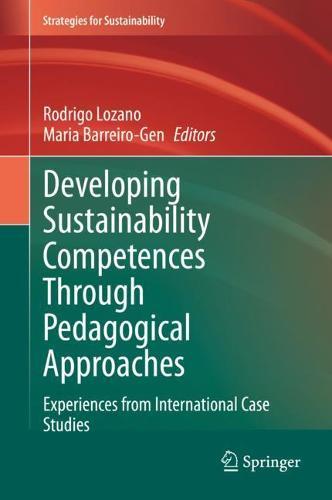
This book is aimed at developing sustainability competences through pedagogical approaches by comparing 15 case studies from 12 countries in 4 continents (Africa, America, Australia, and Europe) analysing how Sustainable Development (SD) is being taught in their courses, which competences are being developed, and which pedagogical approaches are being used to develop the competences. The book brings together practice-based original research on the connection between developing sustainability competences and the pedagogical approaches used, utilizing a framework aimed at helping educators in creating and updating their courses to provide a more complete, holistic, and systemic sustainability education to future leaders, decision makers, educators, and change agents. Compared to previous works addressing SD in education, which often mostly cover tools for improving the sustainability of campus operations, this approach uses assessment tools to uniquely focus on how courses and programmes (i.e. curricula) incorporate SD. Through the case studies, readers will learn about how the 3 major groups of pedagogical approaches have been used: (1) Universal, meaning broadly applicable pedagogies that have been used in many disciplines and contexts; (2) Community and social justice, which are pedagogies developed specifically for use in addressing social justice and community-building; and (3) Environmental education, which are pedagogies emerging from environmental sciences and environmental education practices.
Full Product Details
Author: Rodrigo Lozano , Maria Barreiro-Gen
Publisher: Springer Nature Switzerland AG
Imprint: Springer Nature Switzerland AG
Edition: 2021 ed.
Weight: 0.672kg
ISBN: 9783030649647
ISBN 10: 3030649644
Pages: 283
Publication Date: 18 March 2021
Audience:
Professional and scholarly
,
Professional & Vocational
Format: Hardback
Publisher's Status: Active
Availability: Manufactured on demand 
We will order this item for you from a manufactured on demand supplier.
Table of Contents
Chapter 1-Introduction.- Chapter 2-Sustainability in curricula-assessment tools, competences, pedagogical approaches, and frameworks, and the methods used in the case studies.- Chapter 3-Central University of Technology (CUT), South Africa.- Chapter 4-European University of Lefke, North Cyprus.- Chapter 5-Nyíregyháza University, Hungary.- Chapter 6-Open University, Portugal.- Chapter 7-Universidad Autonoma de Madrid, Spain.- Chapter 8-Universidade de a Coruña.- Chapter 9-Universidad de Ciencieas Aplicadas y Politicas Ambientales.- Chapter 10-Universidad de Las Américas Puebla, México.- Chapter 11-University of Belgrade, Serbia.- Chapter 12-University of Gävle, Sweden.- Chapter 13-University of Helsinki, Finland.- Chapter 14-University of Parma, Italy.- Chapter 15-University of Zaragoza, Spain.- Chapter 16-Warsaw University of Technology, Poland.- Chapter 17-Conclusions-synthesing curricula contribution to sustainability, sustainability competences, and pedagogical approaches.
Reviews
Author Information
Rodrigo Lozano: Rodrigo is Professor of Organisational Sustainability at the University of Gävle, Sweden. For over twenty years Rodrigo has been working towards incorporating and implementing sustainability in Higher Education Institutions, NGO's, corporations, and public sector organisations. Maria Barreiro-Gen: Maria is Assistant Professor of Organisational Sustainability at the University of Gävle, Sweden. For the last eight years, she has been working with sustainability, focussing on social sustainability and education for sustainable development.
Tab Content 6
Author Website:
Countries Available
All regions
|